

Located on the island of Djurgården in Stockholm, Sweden, Skansen is the world’s first open-air museum, established in 1891 by Artur Hazelius. Covering 75 acres, Skansen offers a unique journey into Sweden’s past, presenting a vivid snapshot of Swedish life, culture, and history from different periods and regions.
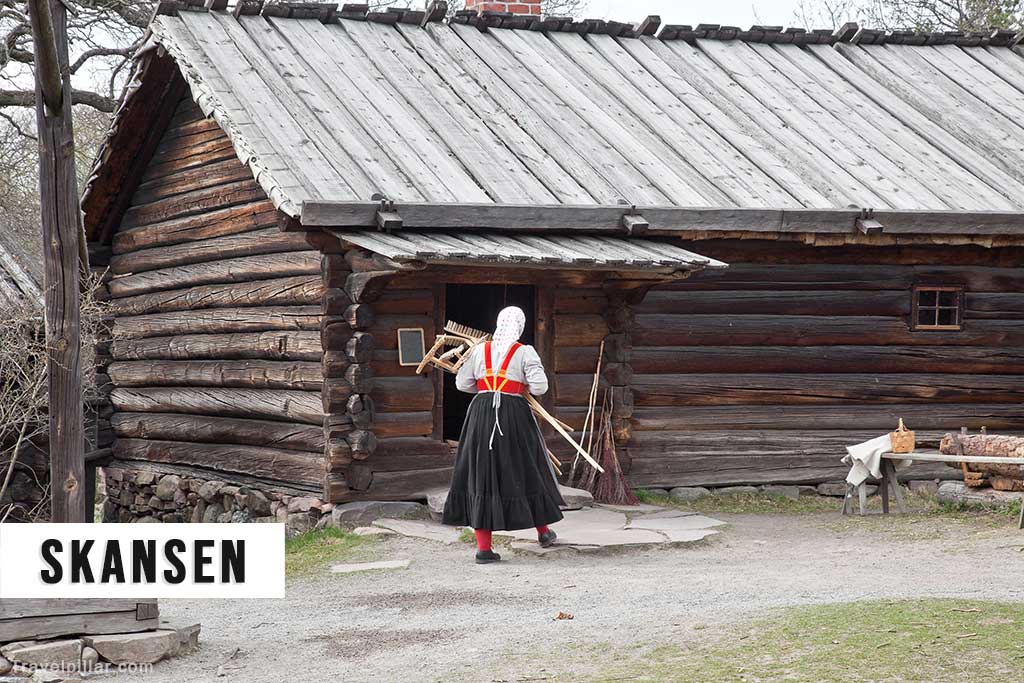
Skansen houses over 150 historical buildings collected from all over Sweden, including farmsteads, manor houses, a school, a post office, and even a full-scale replica of a 19th-century town. These structures, staffed by costumed interpreters, demonstrate traditional crafts, trades, and customs, providing a living history experience to visitors. The Seglora Church, a wooden church dating from 1730, and the Bollnäs House, a wealthy farmer’s residence from the 17th century, are among the significant highlights.
The museum also features a zoo, home to a range of Nordic animals such as wolves, bears, moose, and seals, along with farm animals like horses, pigs, and sheep. The zoo was an original part of Hazelius’s vision to showcase all aspects of Swedish life, including its wildlife.
Skansen is not only a historical showcase but also a venue for seasonal events and festivals, such as the popular Midsummer and Christmas celebrations, preserving and perpetuating traditional Swedish festivities.
A visit to Skansen offers a deep dive into Swedish heritage, making history tangible and engaging. Whether one seeks a lesson in Swedish culture, an encounter with Nordic wildlife, or a simple stroll amid historical buildings, Skansen provides an enriching experience within the heart of Stockholm.
Google map 4.4/5 of Skansen