
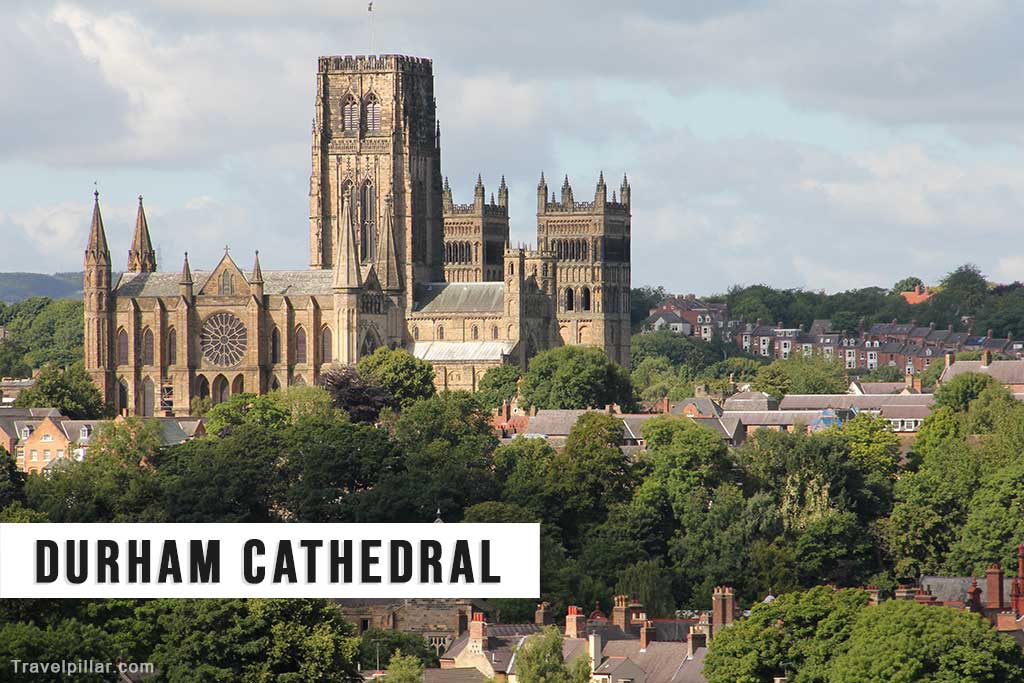
Durham Cathedral, formally known as the Cathedral Church of Christ, Blessed Mary the Virgin and St Cuthbert of Durham, is one of the finest examples of Norman architecture in the world. Situated in the city of Durham in North East England, the cathedral was designated a UNESCO World Heritage Site in 1986 for its outstanding architectural innovation and its significance as a place of pilgrimage and learning.
Constructed mainly between 1093 and 1133, Durham Cathedral exhibits the robust and monumental style of Norman Romanesque architecture. It is noted for its innovative ‘ribbed vault’ ceiling over the nave and transepts — the first of its kind in Europe — which replaced the flat wooden roofs common in Romanesque buildings. This vaulting enabled the construction of higher, wider buildings without increasing the number of supporting pillars, a significant advancement in architectural design.
The cathedral’s plan, with a nave, choir, transepts, and aisles, set a pattern for many cathedrals and large churches built in the subsequent centuries. The impressive west front, with its paired towers, creates a striking facade that has remained largely unaltered since its completion. Inside, the cathedral holds many notable artefacts, including the relics of Saint Cuthbert, the Venerable Bede’s tomb, and a sanctuary knocker used by fugitives seeking church protection.
Durham Cathedral also housed the Durham Priory library, one of the most important libraries in England until the dissolution of the monasteries under King Henry VIII. The cathedral continues to serve as a place of worship, pilgrimage, and education, maintaining its historic role within the community.
Official website: https://www.durhamcathedral.co.uk
Google map 4.8/5