
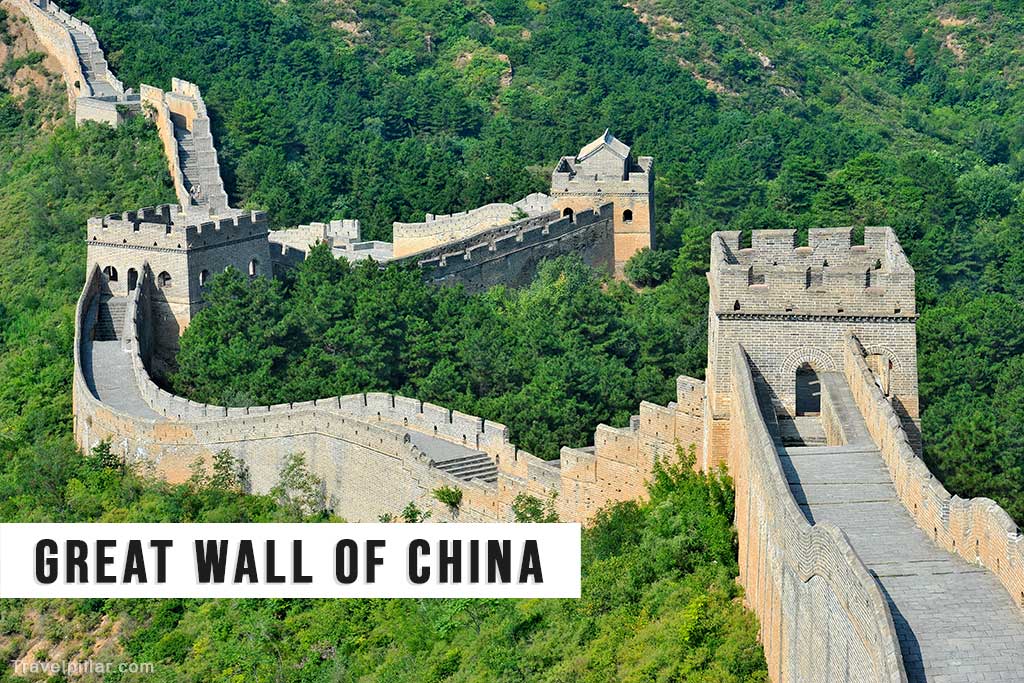
The Great Wall of China is one of the world’s most iconic historical structures. Built over the course of more than 2,000 years, the Wall spans a remarkable 21,196 kilometers from east to west of China. While not one continuous structure, it’s actually a collection of walls and fortifications made of stone, tamped earth, wood, and other materials.

The initial construction commenced as early as the 7th century BC, with different sections being built, rebuilt, and maintained by various Chinese dynasties to protect the northern borders of the Chinese Empire from nomadic invasions. The most well-known sections were erected by the Ming dynasty (1368–1644), demonstrating impressive military defensive techniques such as watchtowers for surveillance, beacon towers for communications, and passes for administration and transportation.

Contrary to popular myth, the Wall cannot be seen from space with the naked eye. However, this doesn’t diminish its historical, architectural, and cultural significance. The Wall stands today as a symbol of China’s ancient history, perseverance, and architectural ingenuity. In 1987, UNESCO recognized the Great Wall as a World Heritage Site.
The preservation of the Great Wall is an ongoing effort due to natural erosion and human activities. Its survival is seen as a vital aspect of world heritage and an enduring testament to human civilization.
Official website: https://en.mutianyugreatwall.com
Google map 4.4/5