
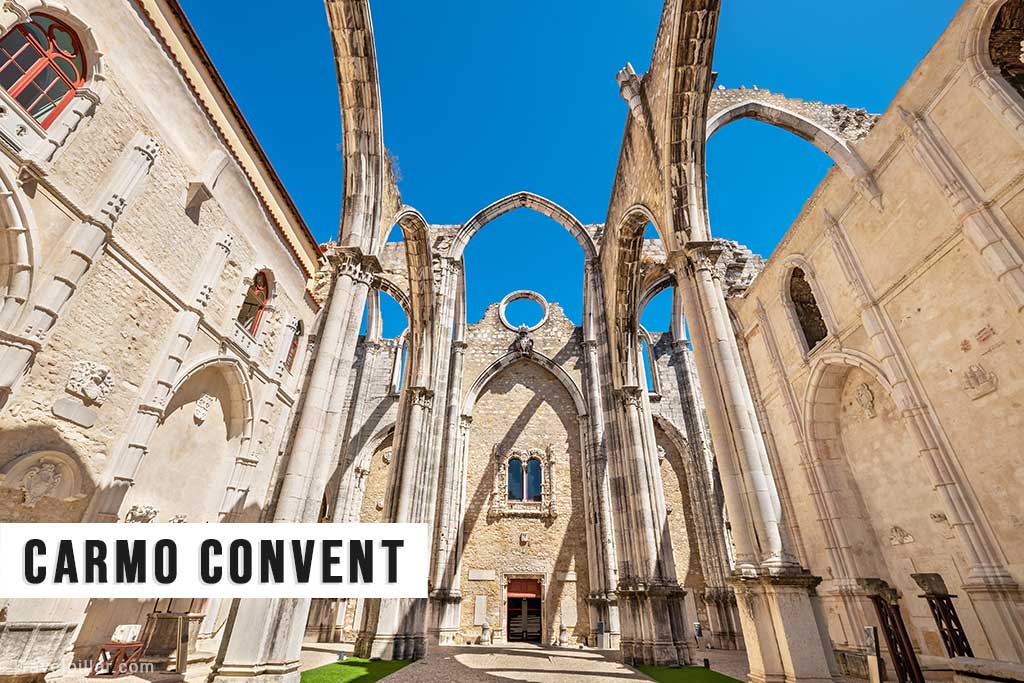
The Carmo Convent, also known as the Museu Arqueológico do Carmo or the Carmo Archaeological Museum, is a striking historical site and museum located in the heart of Lisbon, Portugal. This former convent, now in ruins, bears witness to Portugal’s tumultuous history and serves as a captivating cultural and historical landmark.
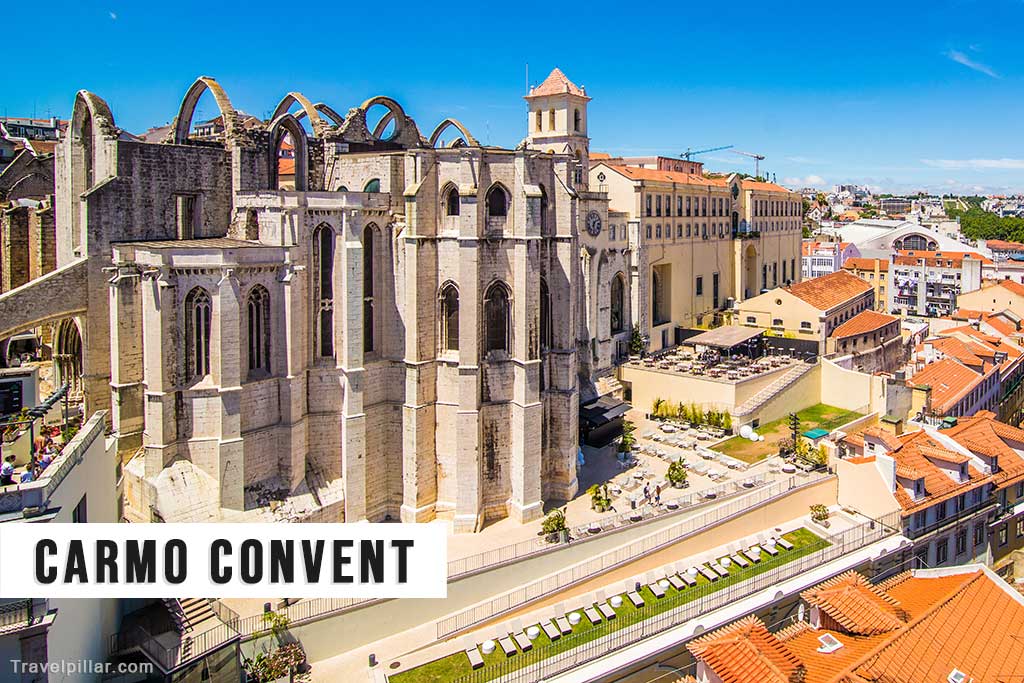
The Carmo Convent was originally founded in the 14th century by Nuno Álvares Pereira, a Portuguese military leader and Carmelite friar. The convent complex was constructed in the Gothic architectural style, reflecting the religious fervor and architectural trends of the time.
In 1755, a catastrophic earthquake and subsequent fire severely damaged the Carmo Convent, leaving it in ruins. These ruins have been preserved as a poignant reminder of the earthquake’s destructive power and its impact on Lisbon’s history.
Today, the Carmo Convent houses the Carmo Archaeological Museum, which is dedicated to preserving and showcasing Portugal’s rich archaeological heritage. The museum’s collections include artifacts from various historical periods, including prehistoric, Roman, and medieval artifacts, as well as objects related to the Age of Exploration.
One of the most notable exhibits in the museum is the Tomb of Fernão Sanches, a striking Gothic tombstone from the 14th century. The museum also features a collection of Azulejos, traditional Portuguese ceramic tiles, and an impressive collection of medieval weaponry and armor.
The Carmo Convent and Archaeological Museum’s location in Lisbon’s Chiado district, one of the city’s vibrant cultural hubs, adds to its appeal. The ruins themselves create a unique ambiance, with the open-air nave allowing visitors to admire the skeletal remains of the convent’s Gothic architecture while taking in views of the surrounding city.
The convent’s tranquil courtyard provides a peaceful escape from the bustling streets of Lisbon, making it a lovely spot for relaxation and contemplation.
Official website: https://www.museuarqueologicodocarmo.pt/
Google map 4.5/5