
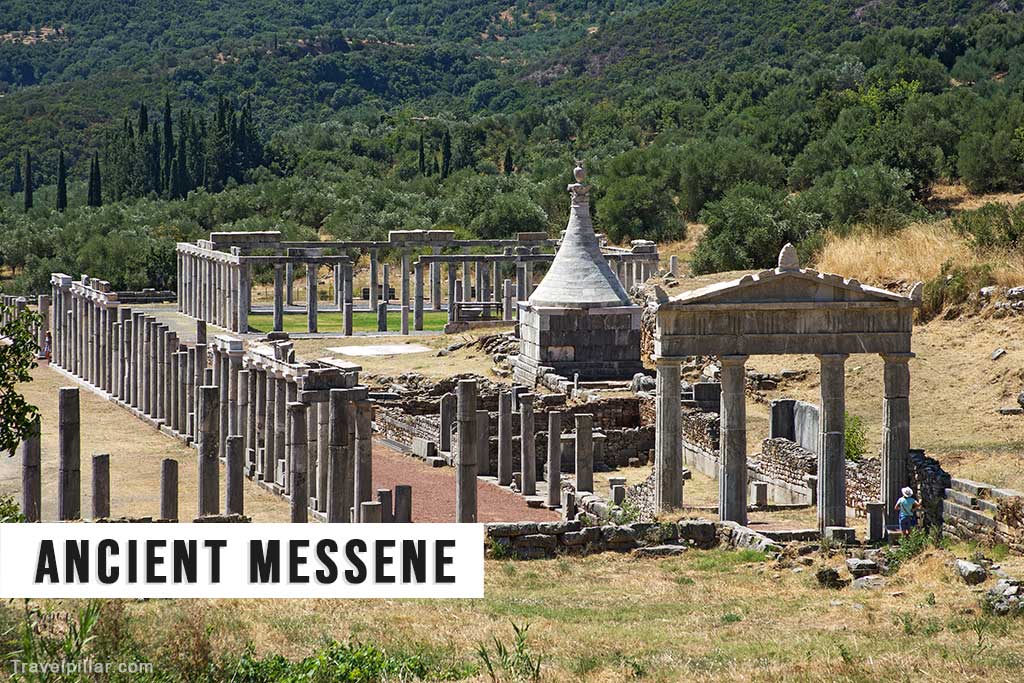
Ancient Messene is a significant archaeological site located in the southwestern Peloponnese, near the modern village of Mavrommati. Founded in 369 BCE by the Theban general Epaminondas following the defeat of Sparta at the Battle of Leuctra, the city was established as the capital of the liberated region of Messenia. It was built on the site of the earlier city of Ithome and served both strategic and symbolic purposes, representing Messenian independence from Spartan domination.
The ruins of Ancient Messene are extensive and well-preserved, making the site one of the most important classical cities in Greece. The urban plan follows the Hippodamian grid system and includes a fortified city wall stretching over 9 kilometers, several gates, and defensive towers. Notable structures within the archaeological area include the agora, a large theatre, the Asklepieion complex, a stadium, gymnasium, and a Roman-era villa. The well-preserved stadium and gymnasium are particularly striking for their architectural coherence and state of preservation.
The Asklepieion functioned as both a religious sanctuary and a medical center and was central to civic life in Messene. Inscriptions found at the site provide insight into the political, religious, and social life of the city. The theatre, partially restored, continues to host cultural events during the summer months.
Excavations at Ancient Messene have been ongoing since the early 20th century, with significant contributions from Greek archaeologists. The nearby museum houses many of the artifacts discovered at the site, including statues, reliefs, and inscriptions.
Unlike more heavily visited archaeological sites, Ancient Messene offers a relatively tranquil experience due to its rural setting and lower tourist numbers. Its combination of monumental architecture, historical significance, and scenic location at the foot of Mount Ithome makes it an important destination for those interested in ancient Greek urbanism, architecture, and regional history. Access is typically by car from Kalamata or other parts of the Peloponnese.
Google map 4.8/5