
Art Deco architecture is one of the most recognisable architectural styles of the 20th century. Emerging during the 1920s and reaching its peak in the 1930s, it celebrated the excitement of the modern age through bold geometric forms, streamlined designs and luxurious decorative details. Inspired by technological progress, industrial innovation and the optimism that followed the First World War, Art Deco transformed the skylines of cities around the world with elegant skyscrapers, cinemas, hotels, ocean liners and public buildings.
Unlike the flowing curves and floral decoration of Art Nouveau, Art Deco embraced symmetry, clean lines and striking geometric patterns. Zigzags, chevrons, sunbursts and stepped forms became defining motifs, while architects incorporated modern materials such as stainless steel, aluminium, chrome and reinforced concrete alongside polished stone and decorative glass. The result was a style that successfully combined elegance with the confidence of the machine age.
Art Deco flourished during a period of rapid urban growth, particularly in the United States, where advances in steel-frame construction allowed architects to build ever taller skyscrapers. The style quickly spread across Europe, South America, Australia and New Zealand, influencing everything from railway stations and theatres to apartment buildings and seaside resorts.
Although the outbreak of the Second World War brought the movement to an end, Art Deco remains one of the world’s most popular architectural styles. Many of its finest buildings have been carefully restored, while entire districts have been preserved as important examples of early 20th-century design.
For travellers, Art Deco architecture offers a fascinating glimpse into the glamour and optimism of the interwar years. Whether exploring New York’s iconic skyline, strolling through Miami Beach’s colourful hotels or discovering the beautifully preserved streets of Napier, Art Deco continues to define some of the world’s most distinctive urban landscapes.
History of Art Deco Architecture
Art Deco takes its name from the Exposition Internationale des Arts Décoratifs et Industriels Modernes, held in Paris in 1925. Although many of its ideas had already begun to develop, the exhibition introduced a bold new decorative style that combined traditional craftsmanship with modern materials and industrial design.
The movement drew inspiration from a wide range of sources. Ancient Egyptian, Aztec and Mayan motifs became fashionable following major archaeological discoveries, while Cubism, Futurism and advances in engineering also influenced designers. The growing popularity of automobiles, aircraft and ocean liners encouraged architects to celebrate speed, progress and technology through streamlined forms and sleek geometric designs.
The United States quickly became the world’s leading centre for Art Deco architecture. During the economic boom of the 1920s and early 1930s, cities such as New York and Chicago competed to build ever taller skyscrapers. Landmark buildings including the Chrysler Building and Empire State Building demonstrated how Art Deco could combine engineering innovation with decorative elegance.
Art Deco also spread throughout Europe, Australia, New Zealand, India and South America, where architects adapted the style to local traditions and climates. Cities including Miami Beach, Napier, Mumbai and Havana still contain remarkable collections of Art Deco buildings that attract visitors from around the world.
By the late 1930s, changing tastes and the demands of wartime construction led to the rise of Modernism, bringing the Art Deco era to a close. Despite its relatively short lifespan, the movement remains one of the most influential and instantly recognisable architectural styles of the 20th century.
Key Characteristics of Art Deco Architecture
Art Deco architecture is defined by its bold geometry, elegant proportions and celebration of modern materials and technology.
Geometric Shapes
Straight lines, stepped forms and geometric patterns are among the most distinctive features of Art Deco. Buildings often incorporate zigzags, chevrons, triangles and stylised motifs that create a bold, modern appearance.
Vertical Emphasis
Many Art Deco skyscrapers draw the eye upwards through strong vertical lines and stepped towers. This emphasis on height reflected both technological progress and the ambition of rapidly growing cities.
Symmetrical Design
Art Deco buildings are usually carefully balanced and symmetrical, with decorative features arranged to create a sense of order and elegance.
Decorative Ornamentation
Although less elaborate than Beaux-Arts architecture, Art Deco buildings often feature decorative carvings, metalwork, relief sculptures and stylised motifs inspired by the sun, plants, machinery and ancient civilisations.
Modern Materials
Architects embraced new materials including stainless steel, aluminium, chrome, reinforced concrete, decorative glass and glazed terracotta. These materials helped create sleek, durable buildings that reflected the modern age.
Streamlined Forms
Many later Art Deco buildings adopted smooth, rounded corners and aerodynamic shapes influenced by automobiles, trains, aircraft and ocean liners. This streamlined appearance became particularly popular during the 1930s and gave many buildings a sense of speed and movement.
Famous Examples of Art Deco Architecture
Chrysler Building, New York City, USA
Completed in 1930, the Chrysler Building is widely regarded as the finest example of Art Deco architecture in the world. Designed by William Van Alen, its stainless-steel crown, triangular windows and distinctive sunburst motifs perfectly capture the glamour and optimism of the era. For a brief period it was the tallest building in the world and remains one of New York City’s most recognisable landmarks.
Empire State Building, New York City, USA

Although more restrained than the Chrysler Building, the Empire State Building is another masterpiece of Art Deco design. Completed in 1931 during the Great Depression, it stood as the world’s tallest building for nearly 40 years. Its clean lines, stepped profile and elegant limestone façade have made it one of the world’s most famous skyscrapers.
Rockefeller Center, New York City, USA
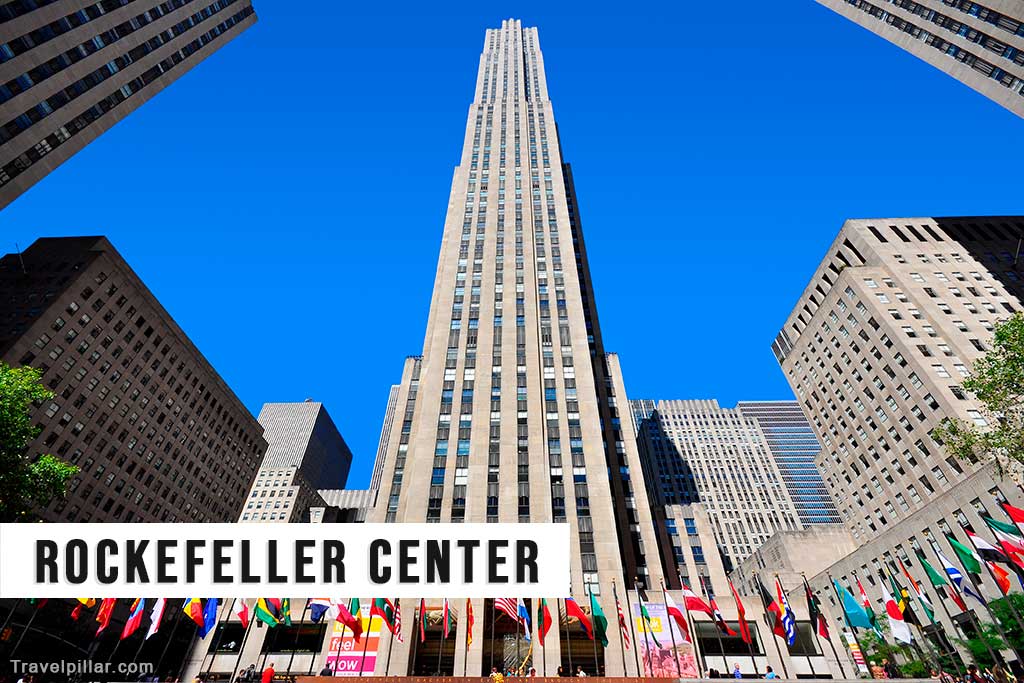
Built during the 1930s, Rockefeller Center is one of the largest and most impressive Art Deco complexes ever constructed. Comprising numerous office buildings, theatres, plazas and public artworks, it showcases the movement’s emphasis on geometric forms, decorative sculpture and integrated urban design. The complex remains one of New York’s most popular attractions.
Art Deco Historic District, Miami Beach, USA
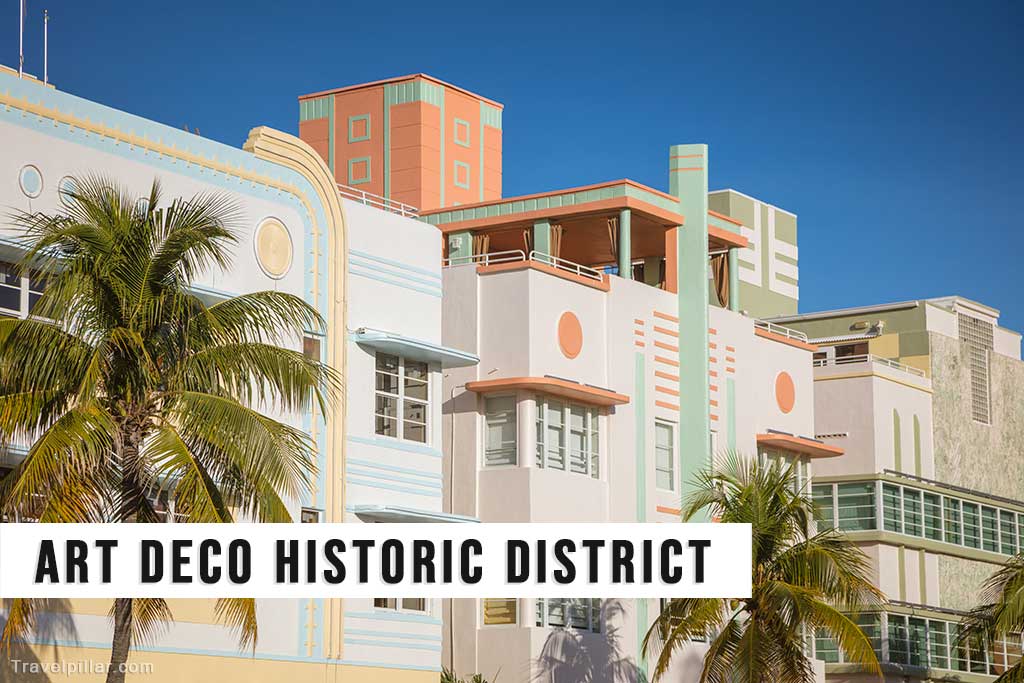
Miami Beach is home to the world’s largest concentration of Art Deco buildings. More than 800 colourful hotels, apartments and commercial buildings line Ocean Drive and the surrounding streets, many featuring pastel colours, curved corners, porthole windows and neon lighting. Together they create one of the world’s most distinctive architectural districts.
Napier, New Zealand
Following a devastating earthquake in 1931, much of Napier was rebuilt in the fashionable Art Deco style. Today it is considered one of the world’s best-preserved Art Deco cities, with elegant commercial buildings, theatres and hotels creating a unique architectural landscape. Each year the city celebrates its heritage with the popular Art Deco Festival.
Eastern Columbia Building, Los Angeles, USA
Completed in 1930, the Eastern Columbia Building is one of California’s finest Art Deco landmarks. Its striking turquoise terracotta façade, gilded details and soaring clock tower make it one of the most photographed buildings in Los Angeles.
Marine Drive, Mumbai, India
Often called the “Queen’s Necklace”, Marine Drive is lined with numerous Art Deco apartment buildings dating from the 1930s and 1940s. Together with the city’s Victorian Gothic architecture, Mumbai’s Art Deco district has been recognised as a UNESCO World Heritage Site and represents one of the largest collections of Art Deco buildings in the world.
Palais de Chaillot, Paris, France
Constructed for the 1937 International Exposition, the Palais de Chaillot combines Art Deco styling with Classical monumentality. Standing opposite the Eiffel Tower across the River Seine, it remains one of Paris’s most impressive public buildings and houses several important museums.
Hoover Building, London, England
One of Britain’s finest Art Deco buildings, the Hoover Building was completed in 1933 as the headquarters and factory for the Hoover Company. Its colourful façade, geometric decoration and streamlined design make it a striking example of the movement in the United Kingdom.
Palacio de Bellas Artes, Mexico City, Mexico

Although construction began before the emergence of Art Deco, the building’s spectacular interior incorporates many Art Deco features alongside its earlier Art Nouveau exterior. Today it is one of Mexico’s most important cultural venues and one of the country’s finest architectural landmarks.
Where to See Art Deco Architecture
Art Deco architecture can be found across every continent, but several cities are particularly renowned for their remarkable collections of buildings from the 1920s and 1930s.
Some of the best destinations include:
- New York City, USA – Home to the Chrysler Building, Empire State Building, Rockefeller Center and numerous Art Deco skyscrapers.
- Miami Beach, USA – The Art Deco Historic District contains the world’s largest concentration of Art Deco buildings.
- Napier, New Zealand – A beautifully preserved Art Deco city rebuilt following the 1931 earthquake.
- Mumbai, India – Marine Drive and surrounding neighbourhoods contain one of the world’s largest collections of Art Deco architecture.
- Los Angeles, USA – The Eastern Columbia Building and numerous theatres, cinemas and commercial buildings reflect the city’s Art Deco heritage.
- Paris, France – Buildings including the Palais de Chaillot demonstrate the elegant French interpretation of Art Deco.
- London, England – The Hoover Building, Eltham Palace and several former cinemas showcase some of Britain’s finest Art Deco architecture.
Why Art Deco Architecture Matters
Art Deco architecture perfectly captures the optimism, glamour and technological progress of the early 20th century. Combining elegant geometric design with modern materials and decorative craftsmanship, it created a distinctive architectural style that reflected the excitement of a rapidly changing world. From soaring skyscrapers and luxurious hotels to cinemas, railway stations and ocean liners, Art Deco became the defining style of the interwar years and helped shape the appearance of cities across the globe.
For travellers, Art Deco architecture offers a fascinating journey into one of history’s most stylish design movements. Whether looking up at the glittering crown of the Chrysler Building, wandering through the colourful streets of Miami Beach or exploring the beautifully preserved city centre of Napier, these buildings showcase an era when architecture celebrated confidence, innovation and luxury. Learning to recognise features such as stepped rooflines, geometric ornamentation and streamlined forms adds another dimension to exploring many of the world’s great cities.
Although Art Deco enjoyed a relatively brief period of popularity, its influence continues to be felt today. Many of its finest buildings have been carefully restored and protected, ensuring that future generations can continue to appreciate one of the most distinctive architectural styles ever created.
See Also
If you enjoyed learning about Art Deco architecture, you may also be interested in:
- Art Nouveau Architecture – Discover the flowing, nature-inspired style that preceded Art Deco.
- Beaux-Arts Architecture – Explore the grand Classical style that influenced many early Art Deco architects.
- Modernist Architecture – Learn how architecture evolved towards greater simplicity and functionality after the Art Deco period.
- The Chrysler Building – Discover the story behind one of the world’s greatest Art Deco skyscrapers.
- Miami Beach Art Deco Historic District – Explore the world’s largest collection of Art Deco buildings.
- Napier – Visit one of the best-preserved Art Deco cities anywhere in the world.