
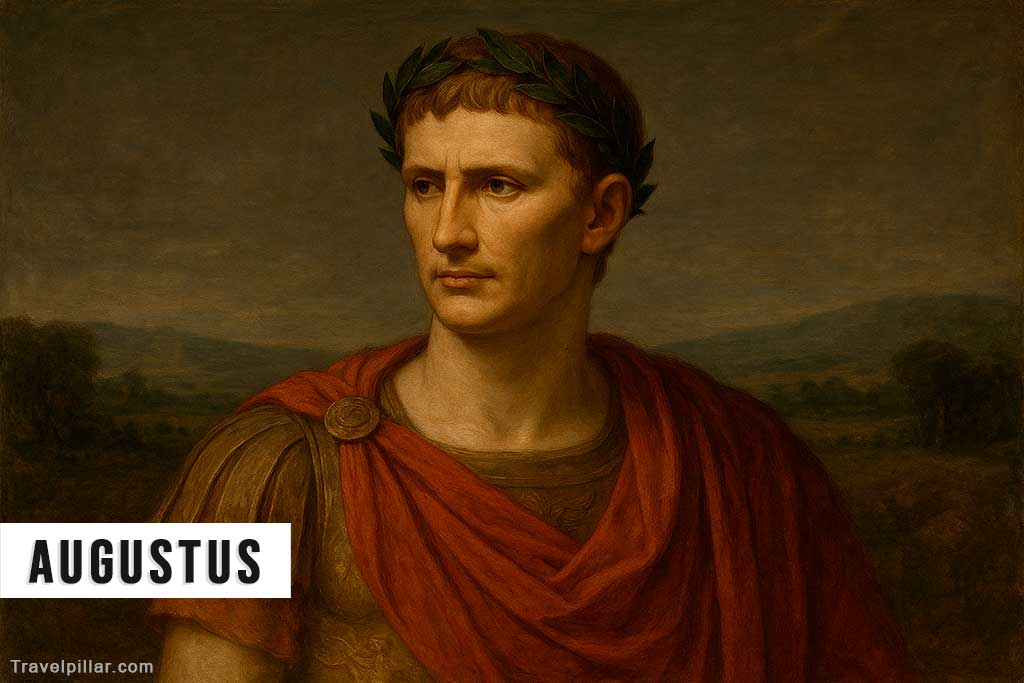
Augustus (63 BC–AD 14) was the founder of the Roman Empire and its first emperor, ruling from 27 BC until his death in AD 14. Born Gaius Octavius, he was the great-nephew and adopted heir of Julius Caesar. Following Caesar’s assassination in 44 BC, Augustus, then known as Octavian, became a central figure in Roman politics, navigating a turbulent period of civil war and power struggles.
In 27 BC, Octavian was granted the title “Augustus” by the Roman Senate, marking the beginning of the Roman Empire. His reign brought about significant changes to Rome’s political system, transitioning it from a republic plagued by internal conflict to a stable autocracy. He established a model of governance that concentrated power in the hands of the emperor while maintaining the appearance of republican traditions. His rule is often credited with ushering in the Pax Romana, a 200-year period of relative peace and stability across the empire.
Augustus was also known for his extensive building programs and urban development. He famously claimed to have “found Rome a city of brick and left it a city of marble.” Under his direction, Rome saw the construction of monumental structures such as the Ara Pacis (Altar of Peace), the Forum of Augustus, and the Mausoleum of Augustus, which served as his final resting place. These architectural projects not only demonstrated his power but also solidified his legacy.
Augustus expanded the empire’s boundaries, annexing regions such as Egypt, parts of the Middle East, and areas in Central Europe. He implemented administrative reforms, including a more organized taxation system, a standing army, and a network of roads that facilitated trade and communication across the empire.
Today, visitors to Rome can explore many sites linked to Augustus, such as the ruins of the Forum of Augustus and the restored Ara Pacis. His influence on the city’s architectural and political landscape marks him as a key figure in Roman history.