
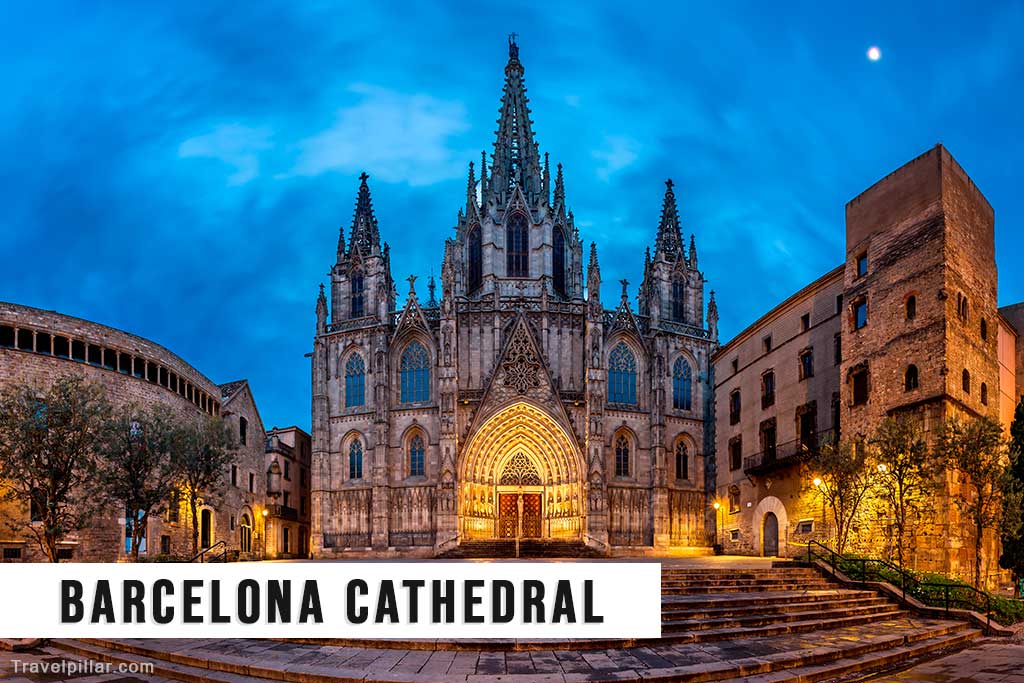
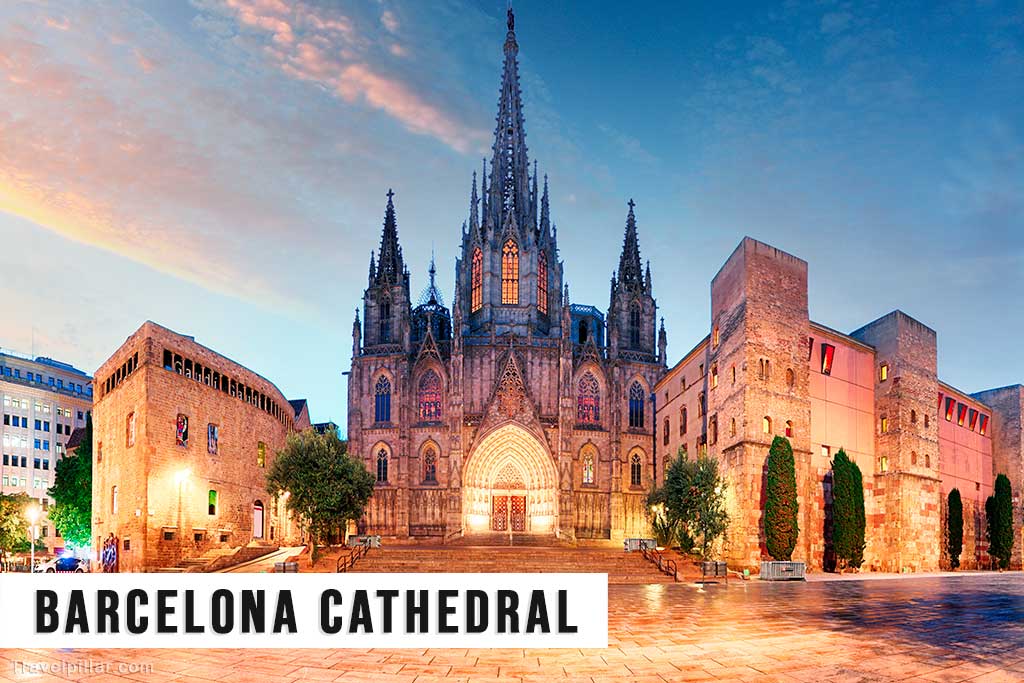
Barcelona Cathedral, formally known as the Cathedral of the Holy Cross and Saint Eulalia, is the city’s principal Gothic cathedral and the seat of the Archbishop of Barcelona. Located in the Gothic Quarter of Barcelona, its construction began in the late 13th century and continued through the 15th century, though the neo-Gothic façade was added in the 19th century. The cathedral is a notable example of Catalan Gothic architecture, characterised by a relatively austere exterior and an emphasis on verticality and structure.
The cathedral is named in honour of Saint Eulalia, one of Barcelona’s patron saints. According to tradition, she was martyred during Roman persecution in the late 3rd or early 4th century. Her crypt lies beneath the high altar, where her remains are preserved in a sculpted sarcophagus. The cathedral also houses the Chapel of the Holy Sacrament and the Chapel of Christ of Lepanto, both of which are of historical and devotional significance.
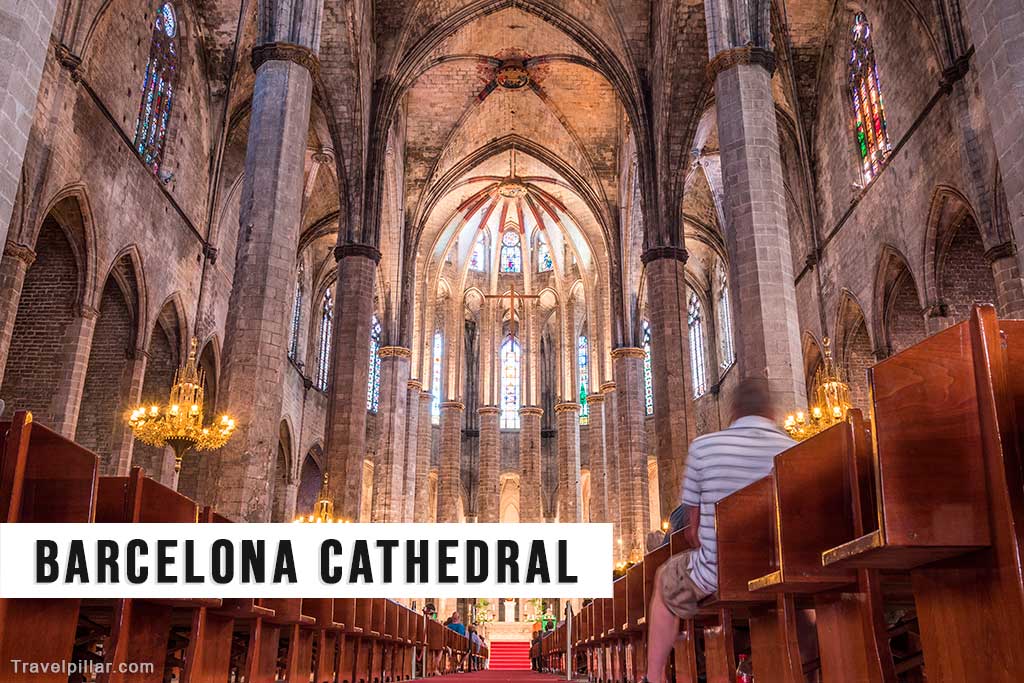
The interior features a traditional Latin cross plan with a central nave and two side aisles, supported by slender columns and ribbed vaults. A series of chapels line the sides, each dedicated to different saints and guilds. The choir stalls, located in the centre of the nave, date from the 14th and 15th centuries and are richly carved with heraldic and religious motifs.
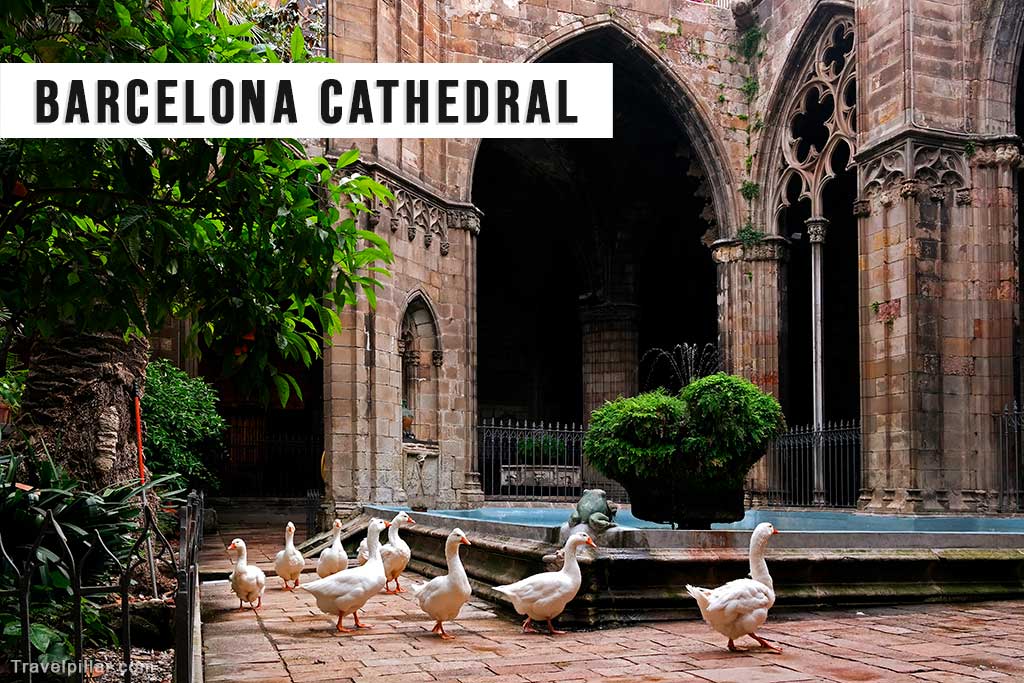
The cloister, completed in the 15th century, is one of the most distinctive features of the cathedral. It surrounds a central courtyard with a garden and a small fountain. Thirteen white geese are kept in the cloister, symbolising the age at which Saint Eulalia was martyred.
Visitors can also access the cathedral’s rooftop via an elevator, offering views over the Gothic Quarter and surrounding areas. The rooftop reveals architectural details not visible from ground level, including pinnacles, flying buttresses, and gargoyles.
Barcelona Cathedral continues to serve as an active place of worship and a site of cultural interest. Its combination of medieval architecture, religious significance, and historical continuity makes it one of the most important ecclesiastical buildings in Catalonia.
Official website: https://catedralbcn.org/en/
Google map 4.6/5
Who was Santa Eulalia?
Santa Eulalia is one of the patron saints of Barcelona and is closely associated with the city’s religious history. According to tradition, she was a young Christian martyr who lived during the Roman Empire, likely in the late 3rd or early 4th century. During the persecution of Christians under Emperor Diocletian, Eulalia, said to be only thirteen years old, publicly denounced the Roman authorities for their treatment of Christians.
As punishment, she was subjected to a series of tortures for refusing to renounce her faith. Legends recount that she endured thirteen distinct forms of torture, corresponding to her age, including being rolled in a barrel filled with glass and having her body burned. She was eventually crucified or beheaded, though historical records are limited and details vary between sources.
Eulalia’s cult grew in popularity during the medieval period, and she was recognised as the co-patron saint of Barcelona alongside the Virgin of Mercy (La Mercè). Her relics were transferred to the Barcelona Cathedral, where they are now kept in a white marble crypt beneath the high altar. The presence of her tomb made the cathedral a site of pilgrimage and reinforced its status within the city.
Her memory is commemorated annually in February during the Festival of Santa Eulalia, which includes processions, cultural events, and religious ceremonies. The thirteen white geese kept in the cathedral cloister are said to symbolise her age at the time of death and serve as a permanent tribute to her martyrdom.