
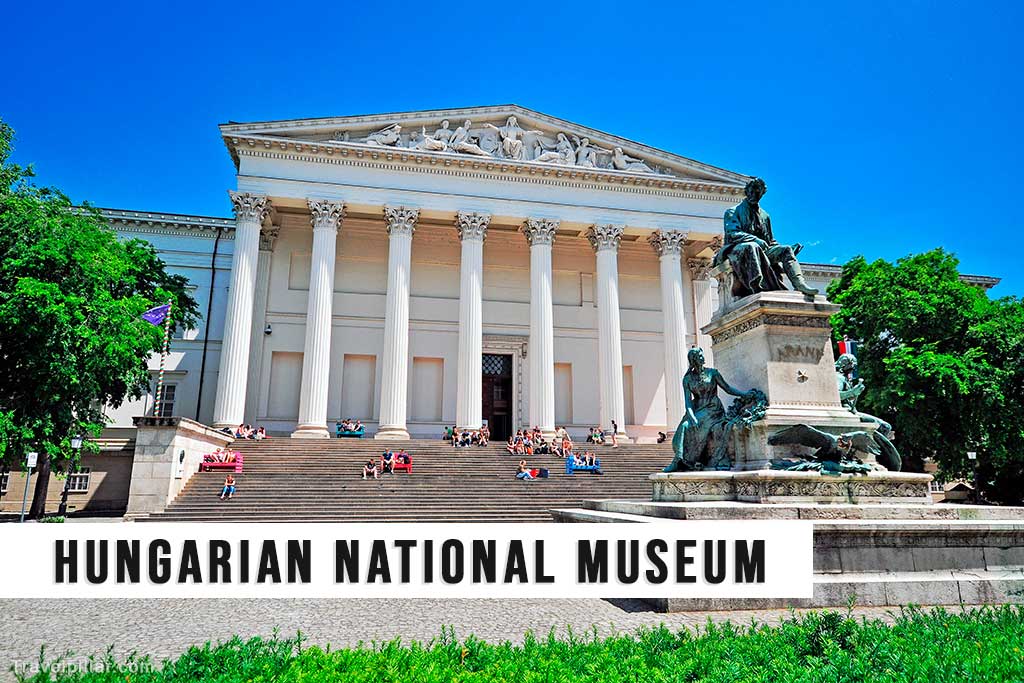
The Hungarian National Museum (Magyar Nemzeti Múzeum) is a cornerstone of Hungary’s cultural and historical heritage, located in Budapest’s District VIII. Founded in 1802 by Count Ferenc Széchényi, the museum is the oldest public institution of its kind in Hungary, dedicated to preserving and showcasing the nation’s historical artifacts, art, and cultural relics.
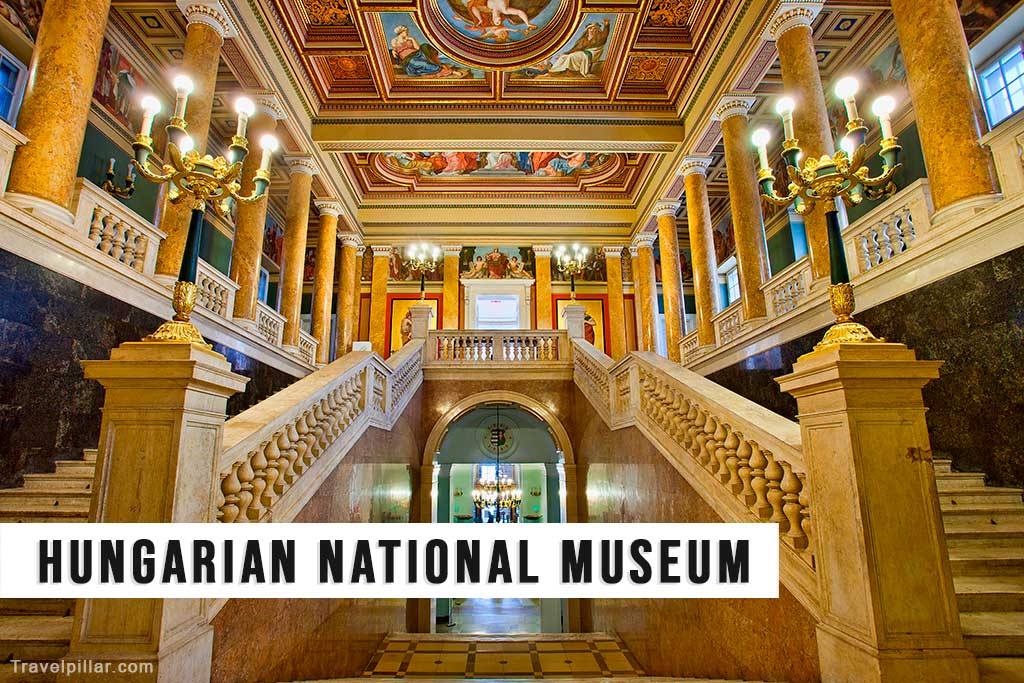
Housed in a grand neoclassical building designed by architect Mihály Pollack and completed in 1847, the museum itself is an architectural landmark. Its imposing facade, featuring a portico supported by Corinthian columns, is a symbol of Hungary’s national pride. The museum is surrounded by landscaped gardens, often used for public gatherings and events.
The museum’s collections span over two millennia of Hungarian history, from prehistoric times to the modern era. Its archaeological exhibits include artifacts from ancient Roman settlements, medieval Hungary, and the Magyar tribes’ early presence in the Carpathian Basin. The medieval collection features items such as weaponry, coins, and religious relics, providing insights into Hungary’s development as a Christian kingdom.
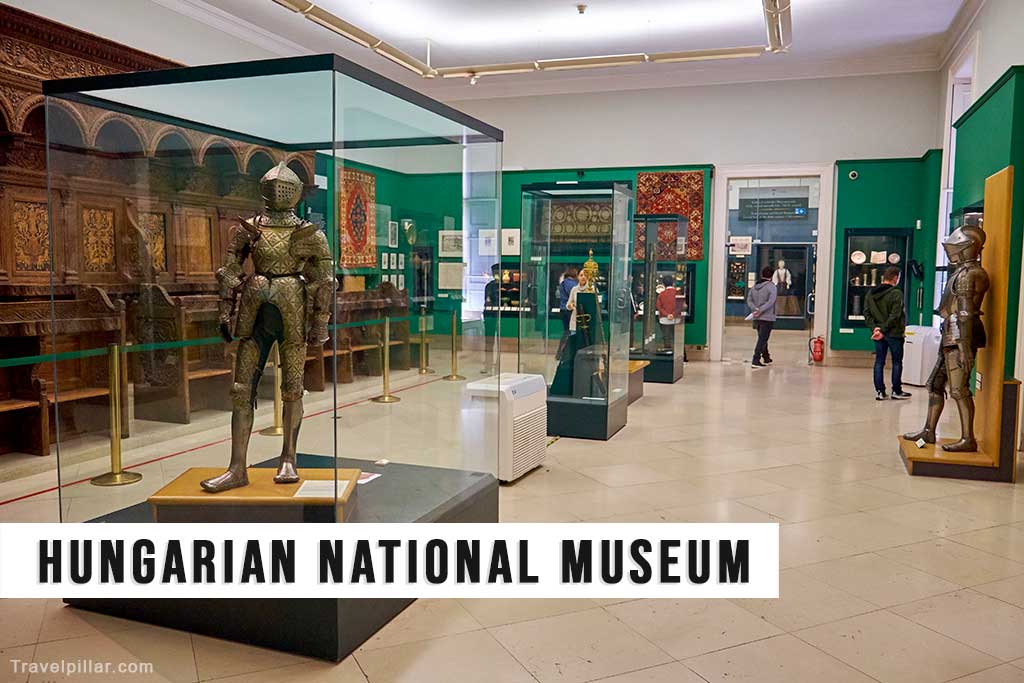
One of the museum’s most significant treasures is the coronation mantle of Hungary’s kings, a richly embroidered garment symbolizing the nation’s royal heritage. Additionally, the museum holds extensive collections of historical documents, photographs, and art, chronicling Hungary’s political, cultural, and social evolution.
The museum played a pivotal role in Hungary’s modern history. Its steps were the site of Lajos Kossuth’s speech during the 1848 Revolution, a moment commemorated by a plaque and sculptures in the museum garden. This connection makes it a key site for understanding Hungary’s struggle for independence and nationhood.
In addition to its permanent exhibitions, the museum hosts temporary exhibits and educational programs that explore broader European and global historical themes. Its library and archives are valuable resources for researchers and historians.
The Hungarian National Museum offers visitors an in-depth understanding of Hungary’s rich and complex past. Its collections and historical significance make it an essential destination for those seeking to delve into the country’s cultural and national identity.
Official website: https://mnm.hu/
Google map 4.5/5