

Canterbury, located in the county of Kent in southeastern England, is a historic cathedral city known for its religious significance, medieval architecture, and literary associations. It has been a centre of Christian pilgrimage since the martyrdom of Archbishop Thomas Becket in 1170, an event that inspired Geoffrey Chaucer’s The Canterbury Tales.
The city’s most prominent landmark is Canterbury Cathedral, one of the oldest and most important Christian structures in England. It is the seat of the Archbishop of Canterbury and a UNESCO World Heritage Site. The cathedral showcases a mix of Romanesque and Gothic styles, with notable features including the 12th-century crypt, the stained-glass windows, and the site of Becket’s shrine.
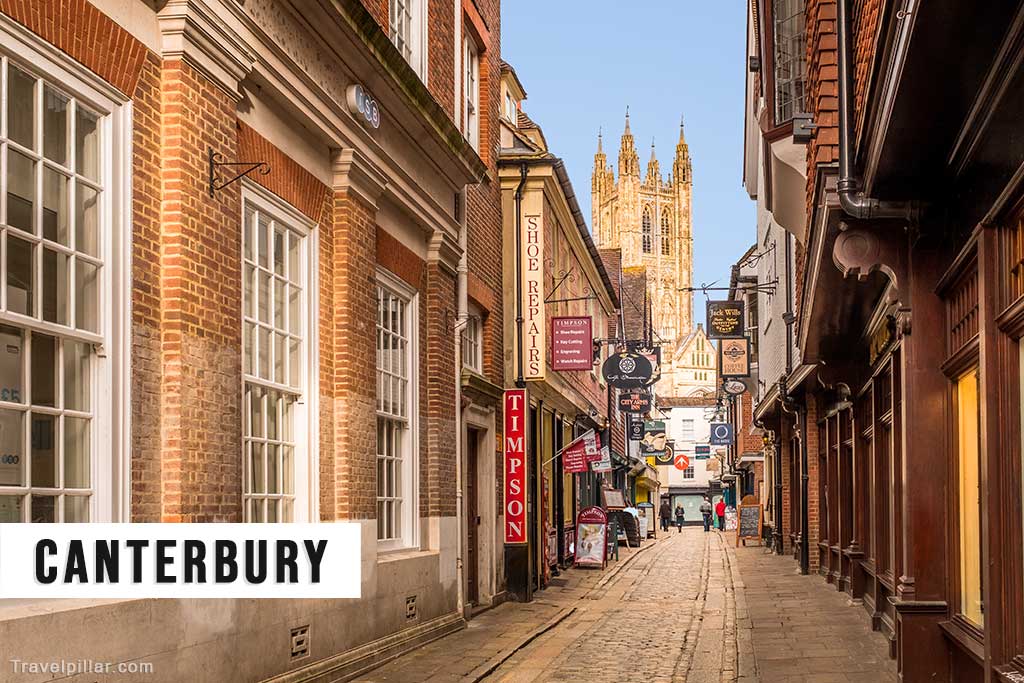
St Augustine’s Abbey and St Martin’s Church, both part of the UNESCO designation, offer further insight into Canterbury’s early Christian heritage. St Martin’s is the oldest church in England still in use, while the remains of the abbey reflect the early Benedictine monastic tradition.
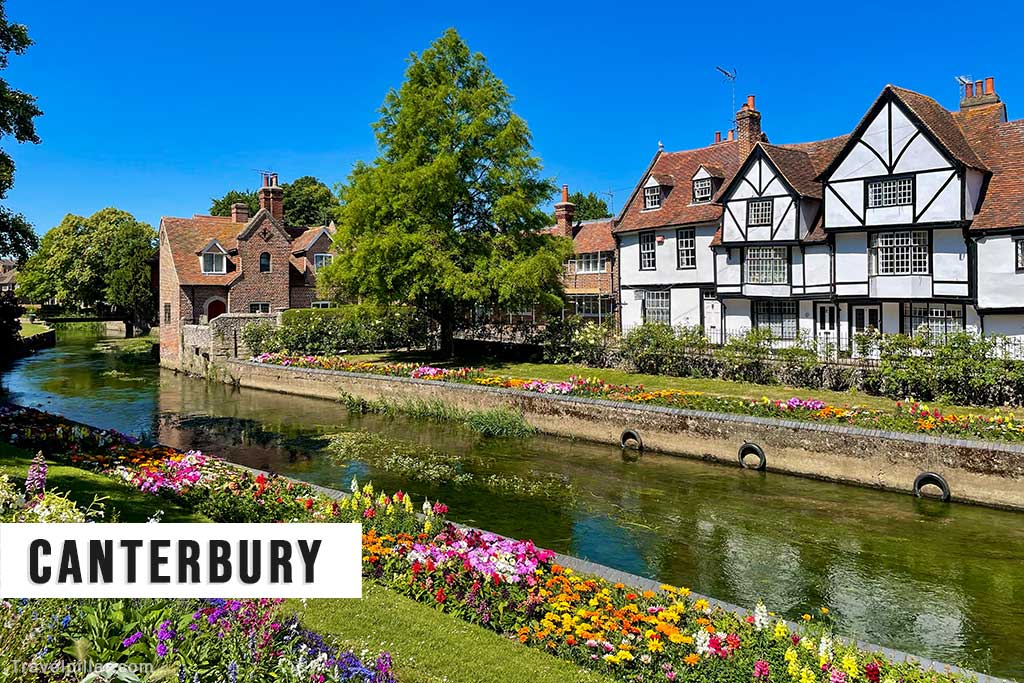
The city centre retains a medieval street layout and timber-framed buildings, such as those along Palace Street and Butchery Lane. The Westgate Towers, part of the old city walls, is the largest surviving city gate in England and houses a small museum. Visitors can also walk along stretches of the city walls, which offer views over the River Stour and surrounding areas.
The Canterbury Roman Museum presents artefacts from the city’s time as the Roman settlement of Durovernum Cantiacorum, including a well-preserved mosaic floor. Meanwhile, the Beaney House of Art and Knowledge combines a museum, library, and art gallery.
The city is compact and easily walkable, with guided walking tours available that cover historical and literary themes. The Marlowe Theatre offers a programme of live performances, while river tours on the Stour provide a different perspective on the city’s architecture.
Canterbury remains an important cultural and educational centre, home to the University of Kent and Canterbury Christ Church University. It continues to attract visitors interested in its religious heritage, literary connections, and preserved urban fabric.
Canterbury Highlights
Canterbury Cathedral

Canterbury Cathedral is a UNESCO World Heritage Site and the seat of the Archbishop of Canterbury. Dating back to 597 AD, it features a mix of Romanesque and Gothic architecture. Notable elements include the 12th-century crypt, medieval stained-glass windows, and the site of Thomas Becket’s martyrdom. The cathedral remains an active place of worship and attracts visitors for its historical, religious, and architectural significance. Guided tours are available.
Official website: https://www.canterbury-cathedral.org
Google map 4.6/5
St Martin’s Church

St Martin’s Church in Canterbury is the oldest church in continuous use in the English-speaking world. It predates Canterbury Cathedral and was used by Queen Bertha in the 6th century. Now part of a UNESCO World Heritage Site, the church retains original Roman and Saxon features. It offers a quiet, historical setting and remains an active parish church. Entry is free, with limited visiting hours depending on services.
Official website: https://www.martinpaul.org/
Google map 4.7/5
Westgate Towers and Gardens
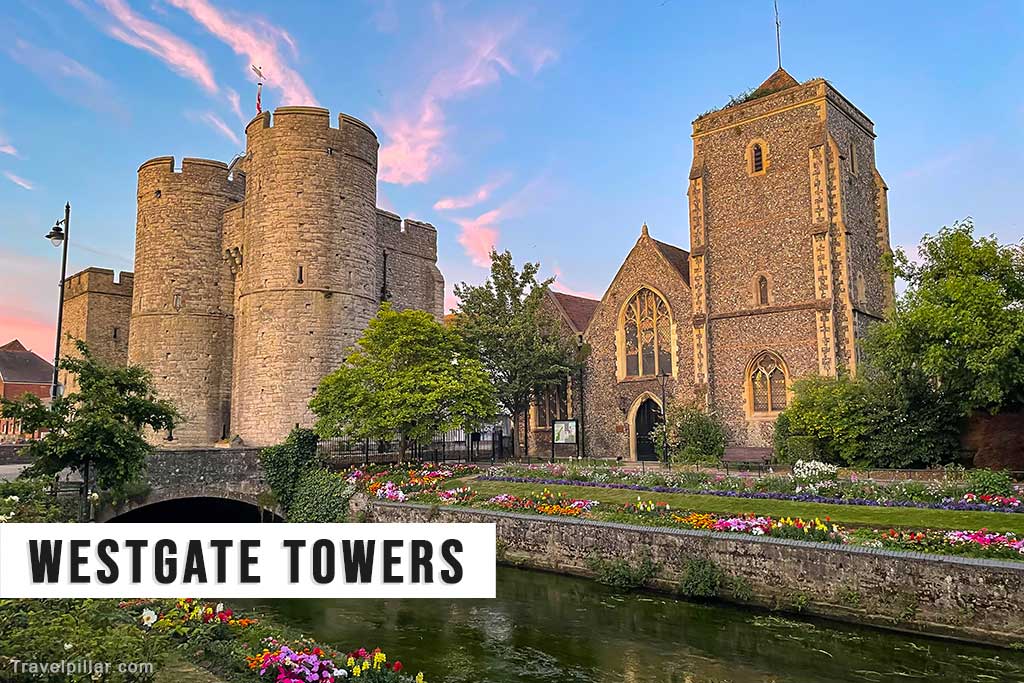
Westgate Towers is the largest surviving medieval city gate in England and now houses a small museum on Canterbury’s history. Built in the 14th century, it once served as a prison and defensive structure. Visitors can access the battlements for views over the city. Adjacent Westgate Gardens provides a landscaped riverside setting with walking paths and historic planting. The area is free to explore, with entry fees for the tower museum.
Official website: https://www.onepoundlane.co.uk/museum
Google map Westgate Towers Museum 4.5/5
Google map Westgate Gardens 4.7/5
Canterbury Historic River Tours
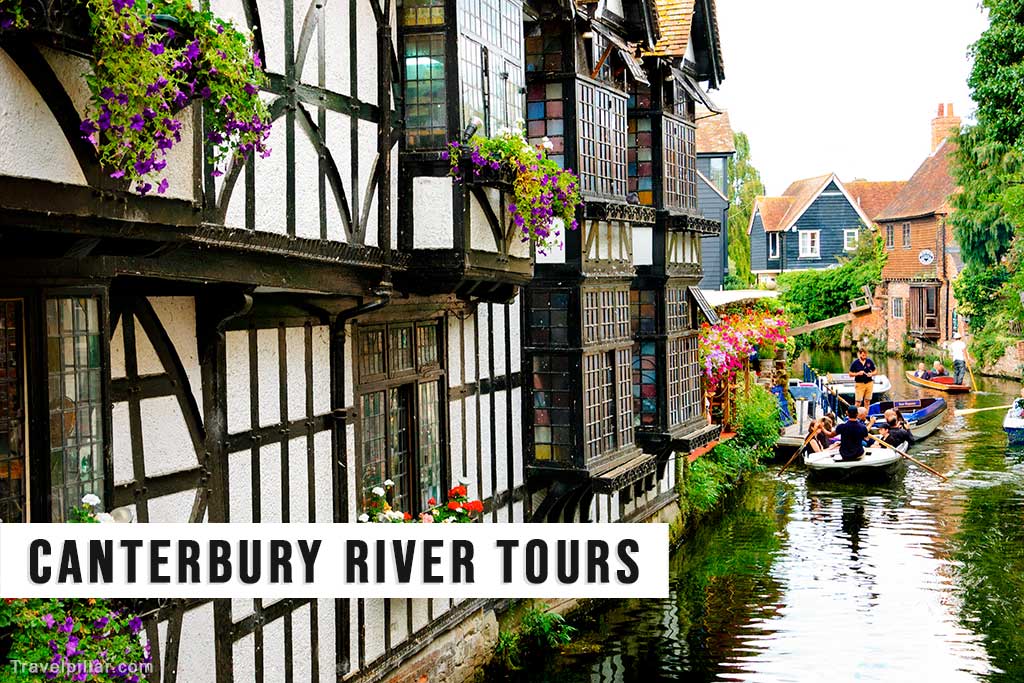
Canterbury Historic River Tours offers guided boat trips along the River Stour, providing views of medieval architecture and hidden parts of the city. The tours cover local history, architecture, and notable landmarks with commentary from trained guides. Operated in small rowing boats, the tours are seasonal and weather-dependent. Departures are from the city centre, and tickets can be purchased on-site or online. Suitable for most visitors, with no prior booking required.
Official website: https://www.canterburyrivertours.co.uk
Google map 4.6/5
St Augustine’s Abbey
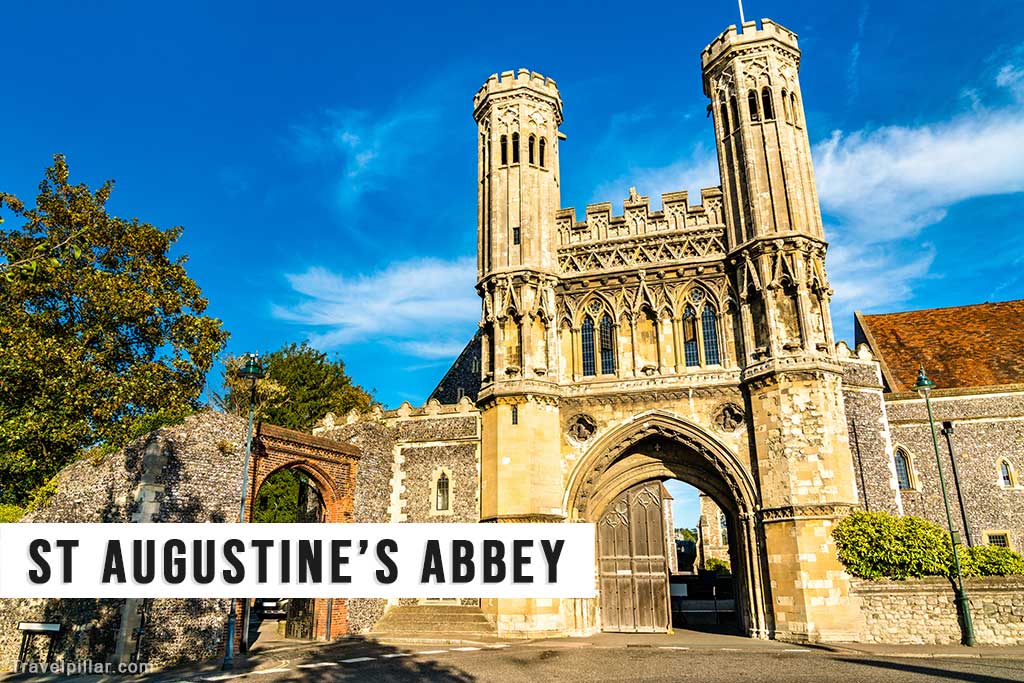
St Augustine’s Abbey, located just outside Canterbury’s city walls, was founded in 598 AD by St Augustine. Once a major Benedictine monastery, it played a central role in the early Christianisation of England. Now in ruins, the site includes a museum, interpreted remains, and the graves of early archbishops. It forms part of Canterbury’s UNESCO World Heritage Site and is managed by English Heritage. Audio guides are available for visitors.
Official website: https://www.english-heritage.org.uk/
Google map 4.4/5
The Beaney House of Art and Knowledge
The Beaney House of Art and Knowledge is a cultural centre in Canterbury combining a museum, art gallery, and public library. Housed in a Victorian Gothic building, it contains collections ranging from fine art and decorative objects to natural history exhibits. Temporary exhibitions and educational events are regularly held. Located on the High Street, it is free to enter and offers facilities for both tourists and local visitors seeking cultural engagement.
Official website: https://canterburymuseums.co.uk/the-beaney/
Google map 4.6/5
Malthouse Theatre
The Malthouse Theatre is a modern performance venue located in a converted Victorian malthouse near Canterbury’s city centre. It hosts a varied programme of theatre, dance, music, and student productions, with a focus on community and educational engagement. Operated by The King’s School, it features contemporary facilities within a preserved historic structure. The venue offers a year-round schedule and is accessible to the public, with tickets available online and at the box office.
Official website: https://malthousetheatre.co.uk
Google map 4.8/5
The Marlowe Theatre
The Marlowe Theatre is Canterbury’s principal performing arts venue, offering a year-round programme of drama, musicals, comedy, opera, and live music. The modern building, opened in 2011, features a 1,200-seat main auditorium and a smaller studio space. It hosts national touring productions and local events. Centrally located near the River Stour, the theatre includes a café and bar. Tickets can be booked online or at the theatre’s box office.
Official website: https://marlowetheatre.com
Google map 4.7/5
Canterbury City Walls
Canterbury City Walls are a mix of Roman and medieval fortifications that once enclosed the historic city. Sections of the original structure remain, particularly on the western and southern sides. Visitors can walk along parts of the wall and view preserved towers and gates, including the prominent Westgate Towers. The walls offer views of the city and provide historical context to Canterbury’s development. Access is generally free and self-guided.
Google map 4.6/5
Canterbury Roman Museum
The Canterbury Roman Museum is an underground site preserving remains from the Roman town of Durovernum Cantiacorum. It features a well-preserved Roman mosaic floor, hypocaust heating system, and a collection of artefacts including pottery, jewellery, and coins. Exhibits detail daily life in Roman Britain, with interactive displays for educational purposes. The museum is centrally located and suitable for visitors interested in archaeology and local history. Entry fees apply.
Official website: https://canterburymuseums.co.uk/
Google map 4.3/5