
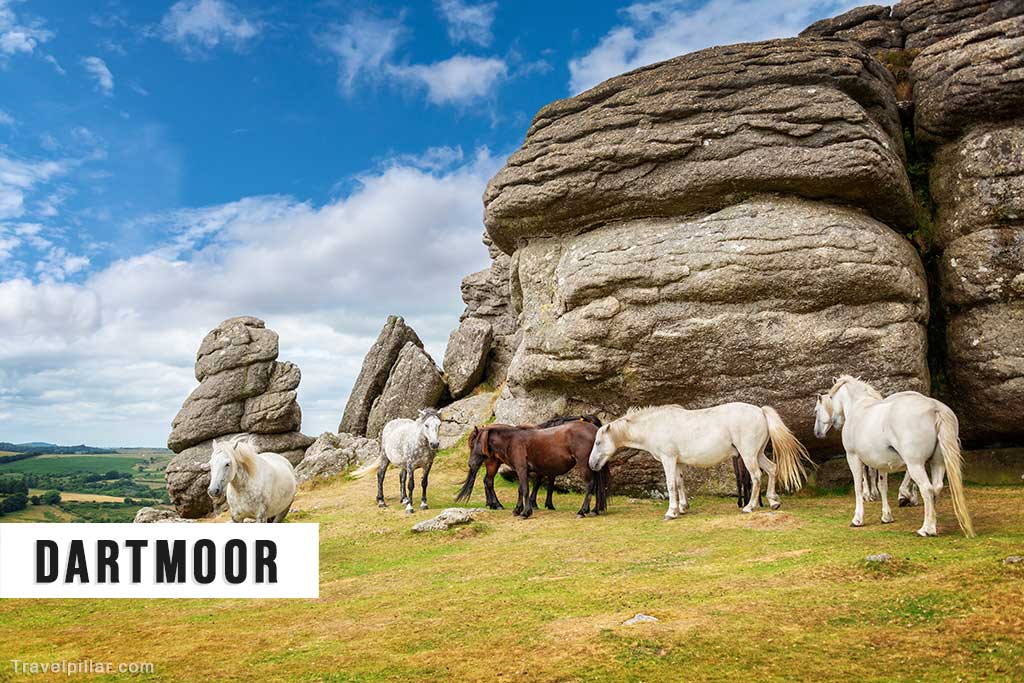
Dartmoor National Park is an extensive protected landscape in southern Devon, covering approximately 954 square kilometres of open moorland, granite hills, wooded valleys and historic settlements. Designated a national park in 1951, Dartmoor is renowned for its dramatic granite tors, prehistoric monuments and distinctive Dartmoor ponies. Its highest point, High Willhays, reaches 621 metres above sea level, making it the highest point in southern England.

The national park offers some of Devon’s most impressive natural scenery, with numerous opportunities for walking, cycling, wildlife watching and exploring historic landmarks. Visitors can discover the famous Haytor Rocks, explore the ancient settlement of Grimspound or visit picturesque villages including Widecombe-in-the-Moor and Postbridge. The landscape also contains waterfalls, reservoirs and extensive archaeological remains reflecting thousands of years of human activity.
Official website: https://www.dartmoor.gov.uk
Google map 4.8/5
The Granite Tors of Dartmoor
Dartmoor’s distinctive granite tors were formed through millions of years of geological processes. The granite originated from molten rock that cooled deep beneath the Earth’s surface approximately 280 million years ago. Over time, erosion removed the overlying rocks, exposing the granite to weathering. Water penetrated natural cracks and joints, gradually breaking down the surrounding rock and leaving more resistant blocks behind. Subsequent erosion exposed these formations, creating the dramatic rocky outcrops seen across Dartmoor today, including Haytor and Hound Tor.
The Best Places to Visit in Dartmoor National Park
Haytor Rocks
Haytor Rocks is one of Dartmoor’s most recognisable landmarks, situated on the eastern edge of the national park. The prominent granite outcrop rises above the surrounding moorland, providing spectacular views across the Devon countryside and towards the coast on clear days. A relatively short walk from the nearby car park leads to the rocks, making Haytor a popular destination for visitors exploring Dartmoor’s distinctive landscape.
Dartmoor Ponies
Dartmoor ponies are one of the national park’s most distinctive features, roaming freely across its open moorland throughout the year. Ponies have grazed Dartmoor for centuries and play an important role in maintaining its traditional landscape. Visitors can frequently encounter them around Haytor, Postbridge, Princetown and other moorland areas. Although they appear wild, the ponies are owned by local farmers and commoners. Visitors should observe them from a safe distance and avoid feeding or approaching them, particularly when foals are present.
Hound Tor
Hound Tor is a dramatic granite outcrop situated near Haytor, renowned for its distinctive rock formations and surrounding moorland scenery. The area contains the remains of a medieval village, providing an insight into historic settlement on Dartmoor. Walking routes cross open grassland and rocky terrain, with panoramic views across the surrounding countryside. Hound Tor is particularly popular with walkers and photographers.
Widecombe-in-the-Moor
Widecombe-in-the-Moor is a picturesque village situated in a sheltered valley surrounded by Dartmoor’s granite hills. The village is renowned for its impressive medieval church, St Pancras, often referred to as the Cathedral of the Moor. Traditional stone cottages, tearooms and a village green contribute to its historic character. Widecombe is also associated with the famous folk song Widecombe Fair.
Postbridge and the Clapper Bridge
Postbridge is a small settlement in central Dartmoor, best known for its remarkable medieval clapper bridge spanning the East Dart River. Constructed using large granite slabs supported by stone piers, the bridge is one of Dartmoor’s most distinctive historic structures. The surrounding landscape offers attractive riverside walks, while the nearby visitor centre provides information about the national park’s natural and cultural heritage.
Wistman’s Wood
Wistman’s Wood is an ancient upland oak woodland situated near Two Bridges in central Dartmoor. The woodland is renowned for its twisted, stunted oak trees, moss-covered boulders and distinctive natural environment. Its unusual appearance reflects the exposed moorland conditions and long ecological history. Visitors can appreciate the woodland from surrounding paths, although access into the protected woodland itself is restricted to conserve its fragile habitat.
Becky Falls
Becky Falls is a popular natural attraction situated in a wooded valley near Manaton. The waterfall descends over large granite boulders, surrounded by attractive woodland and rocky scenery. The privately managed attraction contains several marked walking trails of varying difficulty, providing opportunities to explore the surrounding landscape. Its combination of waterfalls, woodland and wildlife makes it particularly popular with families.
Official website: https://www.beckyfalls.com/
Grimspound
Grimspound is one of Dartmoor’s most important prehistoric archaeological sites, situated on open moorland near Widecombe-in-the-Moor. The remains of a Bronze Age settlement include numerous circular stone hut foundations enclosed within a substantial granite wall. Dating from approximately 3,000 years ago, the site provides valuable evidence of prehistoric life on Dartmoor. Visitors can explore the remains and enjoy views across the surrounding moorland.
Burrator Reservoir
Burrator Reservoir is a large reservoir situated on the southwestern edge of Dartmoor, surrounded by woodland, hills and attractive countryside. Constructed to supply drinking water to Plymouth, the reservoir has become a popular destination for walking, cycling and photography. A scenic road and walking routes provide access to viewpoints around the water, while nearby woodland trails offer opportunities to explore the surrounding landscape.
Lydford Gorge
Lydford Gorge is a spectacular wooded river gorge situated on the western edge of Dartmoor National Park. Managed by the National Trust, the gorge contains dramatic rock formations, rushing streams and the impressive 30-metre-high Whitelady Waterfall. Walking trails provide access to different sections of the gorge, including the narrow Devil’s Cauldron. Paths can be steep and slippery, and seasonal access arrangements apply.
Official website: https://www.nationaltrust.org.uk/
Princetown
Princetown is one of Dartmoor’s principal settlements, situated high on the open moorland. The village is best known for Dartmoor Prison, established during the Napoleonic Wars, and its association with Arthur Conan Doyle’s novel The Hound of the Baskervilles. Princetown provides a convenient starting point for exploring central Dartmoor, with walking routes, cafés and visitor facilities.
Some More Things You Can Do
Walking and Hiking: Dartmoor offers extensive walking opportunities, from short routes around granite tors to challenging hikes across open moorland.
Wildlife Watching: The national park supports Dartmoor ponies, red deer, birds of prey and numerous species associated with its moorland habitats.
Cycling: Quiet country roads, designated trails and the Granite Way provide opportunities to explore Dartmoor by bicycle.
Historic Sites: Dartmoor contains numerous stone circles, standing stones, ancient settlements and medieval remains.
Food and Drink: Traditional village pubs, tearooms and cafés serve Devon specialities and locally produced food.