
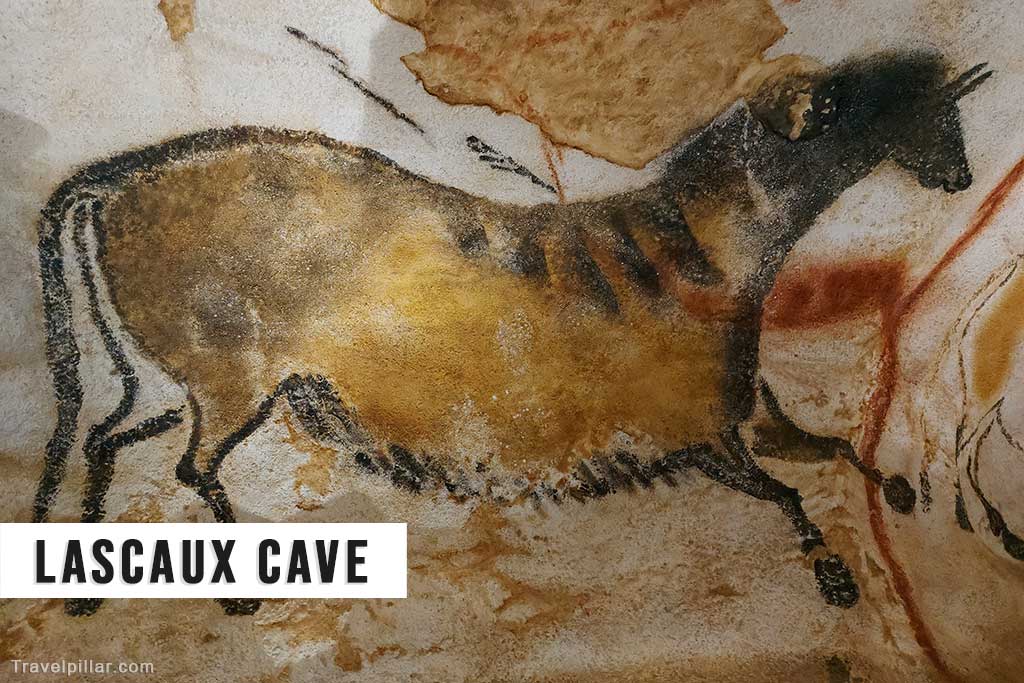
Lascaux Cave, located in the Vézère Valley of the Dordogne region, is one of the most significant prehistoric archaeological sites in the world. Discovered in 1940 by a group of teenagers, the cave contains an extraordinary collection of Paleolithic art, dating back approximately 17,000 years. These artworks, attributed to the Magdalenian culture, provide invaluable insights into the lives, beliefs, and artistic abilities of early humans.
The cave’s walls and ceilings are adorned with over 600 painted and engraved figures, primarily depicting animals such as horses, bison, deer, and ibex. The detailed and dynamic representations suggest a sophisticated understanding of anatomy and movement. Abstract symbols and geometric shapes are also present, the meanings of which remain subjects of scholarly debate. The choice of ochres, charcoal, and other natural pigments highlights the resourcefulness and skill of the artists in utilizing available materials.
Due to concerns over the preservation of the original paintings, Lascaux Cave was closed to the public in 1963. The introduction of artificial lighting and the carbon dioxide emitted by visitors had caused significant deterioration. To ensure the site’s survival while allowing public access to its cultural significance, replicas have been created. Lascaux II, a meticulously crafted reproduction of key sections of the cave, opened in 1983. More recently, Lascaux IV, part of the International Centre for Cave Art, offers a comprehensive visitor experience with digital displays and detailed reproductions.
The site is an essential destination for those interested in prehistoric art and anthropology. Guided tours at Lascaux IV provide context to the paintings, explaining their artistic techniques, potential symbolic meanings, and the environment in which they were created. Exhibits also highlight the challenges of preserving such ancient artwork and the role of technology in heritage conservation.
Lascaux Cave represents a unique intersection of art, history, and science. Its discovery and subsequent study have significantly advanced our understanding of early human creativity and cultural development. Though visitors cannot enter the original cave, the detailed replicas and supporting exhibits ensure that the significance of this UNESCO World Heritage Site is accessible to modern audiences. It remains a cornerstone of the Dordogne’s rich archaeological heritage.
Google map 4.3/5