
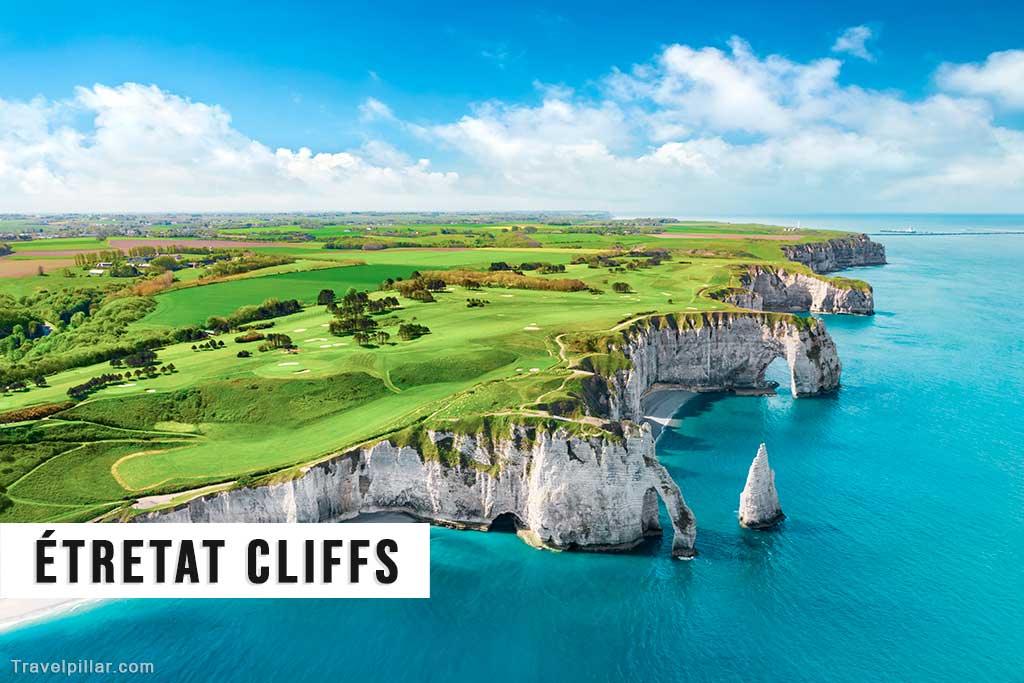
The Étretat Cliffs, located along the Alabaster Coast in the Normandy region of France, are among the country’s most famous natural landmarks. Known for their dramatic limestone formations and striking arches, the cliffs attract visitors for their scenic beauty and unique geological features. Situated on the English Channel, the cliffs have inspired numerous artists and writers, including Claude Monet and Guy de Maupassant.
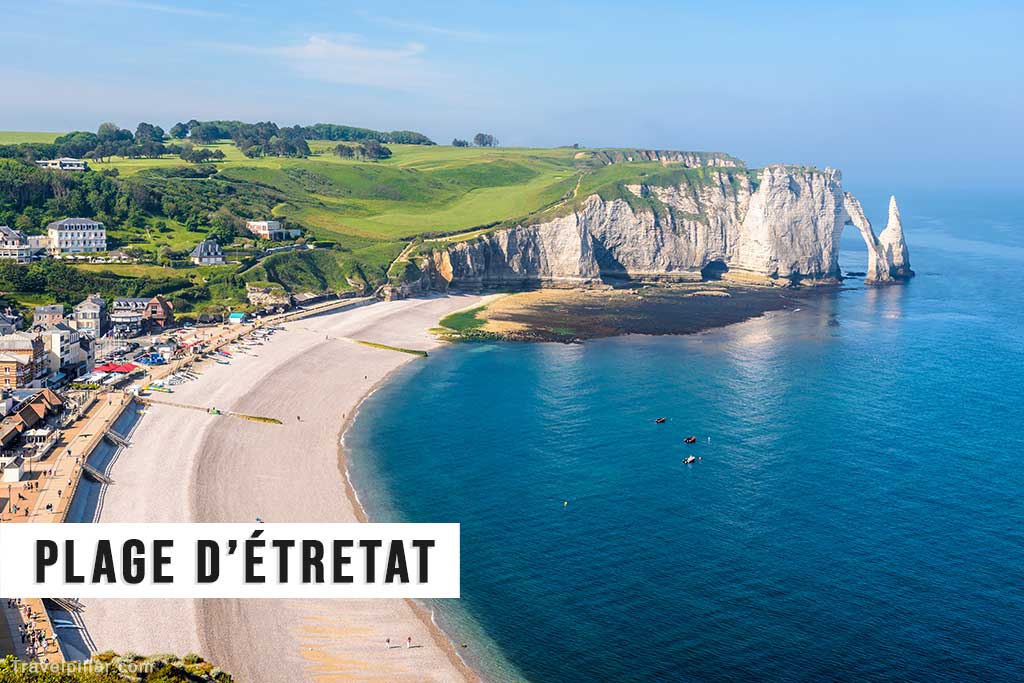
The cliffs are part of a larger coastal landscape characterized by steep, white limestone walls that rise sharply from the sea. The most iconic formations are the Falaise d’Aval and Falaise d’Amont, which are easily recognizable by their natural arches. The most famous of these arches is the Porte d’Aval, a large, naturally formed arch that extends out into the sea, along with a needle-shaped rock formation known as the Aiguille, standing 70 meters high.
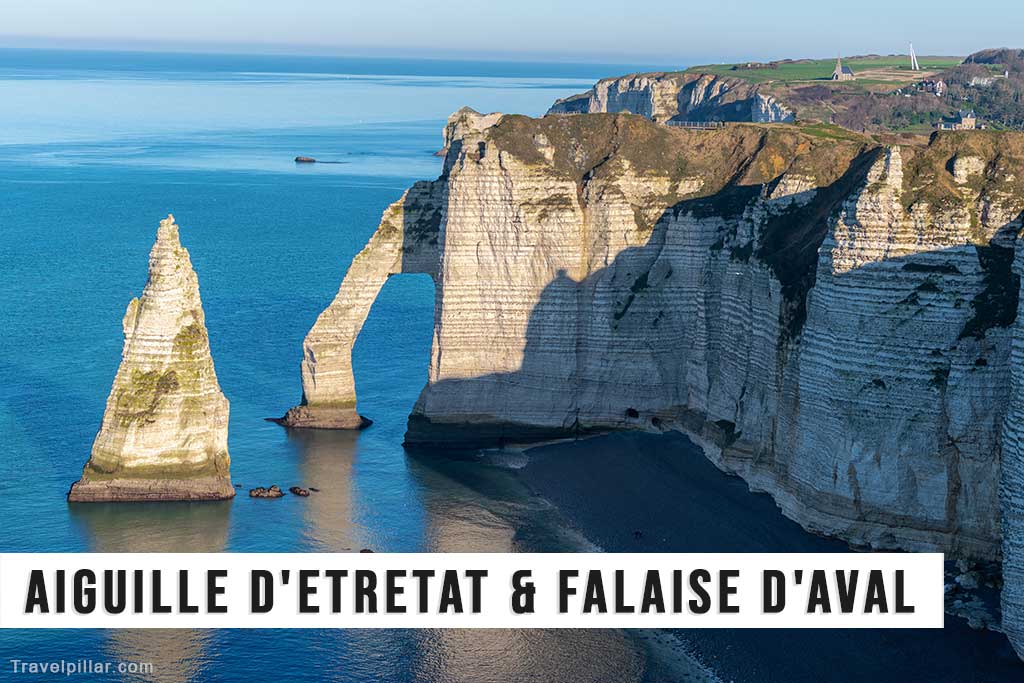
The area is popular for walking and hiking, with several well-marked trails offering stunning views of the cliffs and the surrounding coastline. The paths lead up to various vantage points, including the Chapelle Notre-Dame de la Garde, perched atop the cliffs, providing panoramic views of the sea and the town below. Visitors can also descend to the pebble beaches at the foot of the cliffs during low tide.
In addition to its natural beauty, Étretat has a historical dimension. The cliffs played a role in military operations during World War II, and remnants of bunkers and fortifications can still be seen in the area.
Étretat’s proximity to major cities like Le Havre and Rouen makes it a popular day-trip destination for both French residents and international tourists. Its combination of natural and cultural significance ensures that the Étretat Cliffs remain a key attraction on France’s northern coast.
Google map Étretat Town
Google map Panoramic viewpoint
Google map Plage d’Étretat 4.7/5
Google map Falaise d’Aval 4.8/5
Google map Aiguille d’Etretat 4.8/5