

Exeter is the historic county town of Devon, situated on the River Exe in southwest England. Founded as a Roman settlement nearly 2,000 years ago, the city developed into an important medieval trading centre and remains one of the region’s principal cultural and commercial destinations. Its historic streets, impressive cathedral and surviving Roman walls reflect centuries of history, while the surrounding countryside provides easy access to Dartmoor and the East Devon coastline.
Today, Exeter combines historic architecture with modern shopping areas, museums, galleries and a lively university community. Visitors can explore Exeter Cathedral, discover the medieval Underground Passages, visit the Royal Albert Memorial Museum or enjoy the attractive Exeter Quayside. The compact city centre makes many of the principal attractions accessible on foot.
Official website: https://www.visitexeter.com
The Best Places to Visit in Exeter Devon
Exeter Cathedral
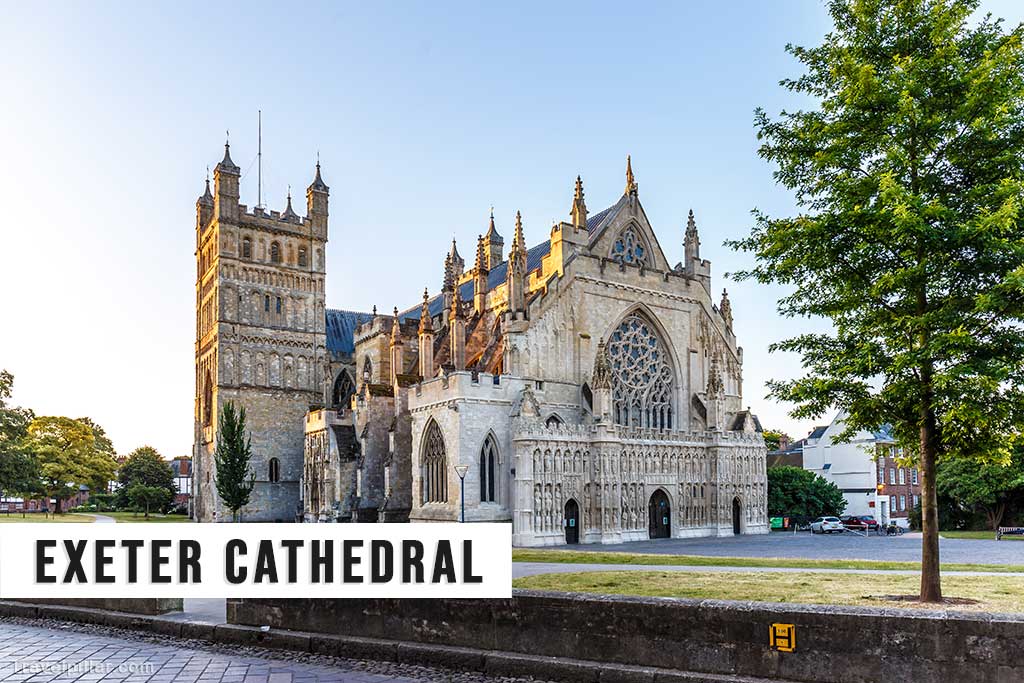
Exeter Cathedral is one of England’s finest medieval cathedrals, renowned for its impressive Gothic architecture and remarkable vaulted ceiling. Construction of the present building began during the 12th century, with much of its distinctive appearance dating from the 13th and 14th centuries. Visitors can explore the ornate interior, historic chapels and cathedral precinct, while guided tours provide an insight into its architecture and religious heritage.
Official website: https://www.exeter-cathedral.org.uk/
Google map 4.6/5
Exeter Shopping
Exeter is one of Devon’s main shopping destinations, offering a combination of modern shopping centres, major retailers and independent boutiques. Princesshay is the city’s principal shopping development, featuring numerous fashion, lifestyle and specialist stores. The nearby High Street contains well-known national retailers, while Gandy Street is particularly popular for its independent shops and distinctive historic character. The Cathedral Quarter and surrounding streets also offer galleries, gift shops and independent businesses, making the compact city centre an attractive shopping destination.
Google map Princesshay
Google map High Street
Google map Gandy Street
Exeter Quayside
Exeter Quayside is a picturesque historic waterfront area situated beside the River Exe and Exeter Ship Canal. Once an important centre for maritime trade, the quayside now contains independent shops, cafés, restaurants and outdoor activity centres housed within converted warehouses. Visitors can enjoy riverside walks, hire bicycles or explore the canal by kayak. The area is particularly popular during weekends and warmer months.
Google map 4.6/5
Royal Albert Memorial Museum and Art Gallery
The Royal Albert Memorial Museum, commonly known as RAMM, is Exeter’s principal museum and art gallery. Its extensive collections cover natural history, archaeology, fine art and world cultures, with particular emphasis on Devon’s history and heritage. The museum occupies an impressive Victorian building near the city centre and offers permanent exhibitions alongside temporary displays.
Official website: https://rammuseum.org.uk/
Google map 4.6/5
Exeter Underground Passages
Exeter Underground Passages are a unique network of medieval tunnels constructed beneath the city centre to provide access to underground water pipes. Dating from the 14th century, the passages were originally designed to maintain the city’s water supply. Guided tours allow visitors to explore sections of the tunnels and learn about Exeter’s medieval engineering and urban development.
Official website: https://www.exetercornexchange.co.uk/
Google map 4.5/5
St Nicholas Priory
St Nicholas Priory is a remarkable medieval building situated in Exeter’s historic West Quarter. Originally founded as a Benedictine priory during the 11th century, the surviving buildings were later converted into a Tudor townhouse. Visitors can explore restored rooms and displays illustrating domestic life during the Tudor period, providing an insight into Exeter’s medieval and early modern history.
Google map 4.8/5
Exeter’s Historic City Walls
Exeter’s historic city walls are among the most substantial surviving Roman and medieval defensive structures in England. Originally constructed during the Roman period, the walls were strengthened and modified throughout the Middle Ages. Visitors can follow sections of the surviving fortifications around the city centre, discovering historic gateways, towers and archaeological remains that illustrate Exeter’s long history.
Exeter Guildhall
Exeter Guildhall is one of England’s oldest surviving municipal buildings, situated on the city’s historic High Street. The building has served as a centre of civic administration for centuries and contains an impressive medieval hall and distinctive Renaissance-style frontage. Visitors can admire its architecture and explore the interior when public access is available.
Google map 4.5/5
Northernhay Gardens
Northernhay Gardens are historic public gardens situated beside Exeter Castle and the city’s Roman walls. Established during the 17th century, they are considered among England’s oldest public open spaces. The landscaped gardens contain mature trees, monuments, flowerbeds and attractive walking paths, providing a peaceful retreat within the city centre.
Google map 4.5/5
Exeter Castle
Exeter Castle, also known as Rougemont Castle, is a historic Norman fortress constructed shortly after the Norman Conquest. Situated on a prominent site overlooking the city, the castle incorporates sections of earlier Roman defences and contains surviving medieval structures, including its impressive gatehouse. Although access to parts of the site is restricted, the exterior remains an important historic landmark.
Google map 4.5/5
Powderham Castle
Powderham Castle is a historic country house situated approximately eight miles south of Exeter, overlooking the Exe Estuary. Home to the Courtenay family for centuries, the castle combines medieval origins with later architectural additions. Visitors can explore the historic interiors, landscaped grounds and surrounding parkland, while seasonal events and family activities are also available.
Official website: https://www.powderham.co.uk/
Google map 4.5/5
Some More Things You Can Do
Walking and Cycling: Exeter’s riverside paths and canal towpaths provide attractive routes towards Topsham and the Exe Estuary.
Food and Drink: Exeter has numerous restaurants, traditional pubs and independent cafés, particularly around the Cathedral Quarter and Quayside.
Arts and Culture: The city offers theatres, live music venues, galleries and cultural events throughout the year.