
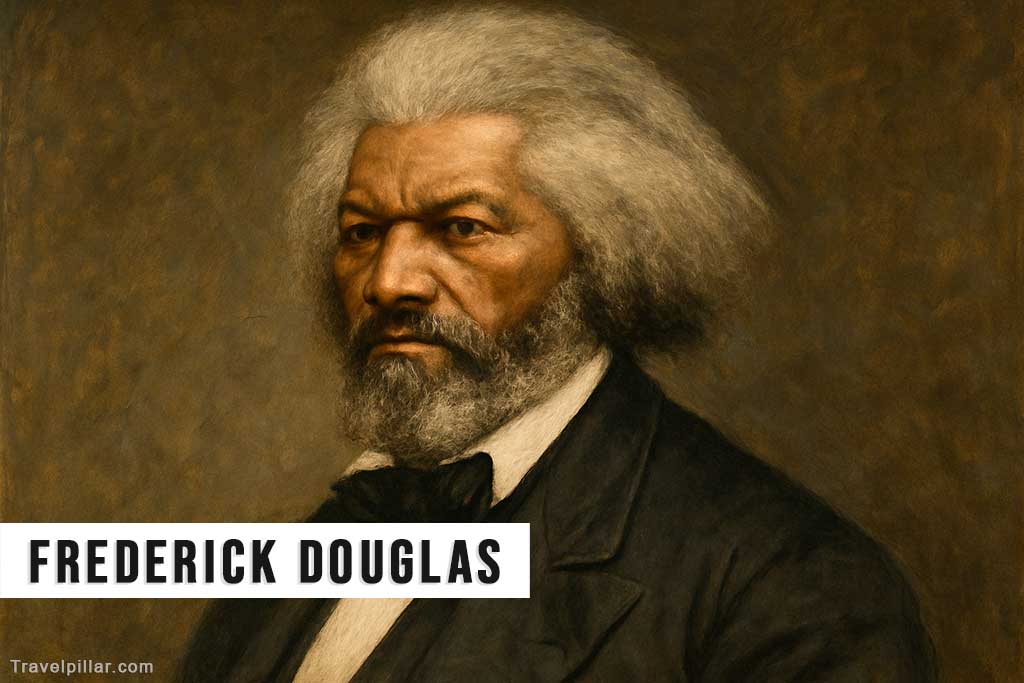
Frederick Douglass (1818–1895) was an American social reformer, abolitionist, orator, writer, and statesman. His formidable influence was born of his own experience of slavery, having been born into bondage in Maryland. Douglass managed to escape his shackles at the age of twenty and flee to the North.
Douglass’s oratory and writing skills were significant factors in the anti-slavery movement. His first-hand accounts of the dehumanizing effects of slavery were impactful and poignant. His 1845 autobiography, “Narrative of the Life of Frederick Douglass, an American Slave,” sold thousands of copies and was influential in strengthening the abolitionist cause.
His belief in equality extended beyond the abolition of slavery. Douglass was a staunch advocate for women’s rights, and his support for the suffrage movement was well known. His friendship with leading women’s rights advocate Elizabeth Cady Stanton attests to this aspect of his activism.
Douglass was also involved in politics. He was the first African American nominated for Vice President of the United States, running on the Equal Rights Party ticket in 1872, though he was not informed about his nomination and did not campaign. Later, he held multiple public offices, including Marshal and Minister to Haiti.
Moreover, Douglass was not just a figurehead of the movement; he was also involved in the practical aspects of aiding escaped slaves. He was a conductor on the Underground Railroad, the network that helped fugitive slaves reach freedom in the North or Canada.
Douglass’s life and work have left an enduring legacy. His tireless struggle against slavery and for equal rights, as well as his powerful speeches and writings, are still celebrated today. His narrative remains one of the most important works in the genre of slave narratives, shedding light on the physical, emotional, and psychological abuse endured by slaves, and the inherent brutality of the institution of slavery.