
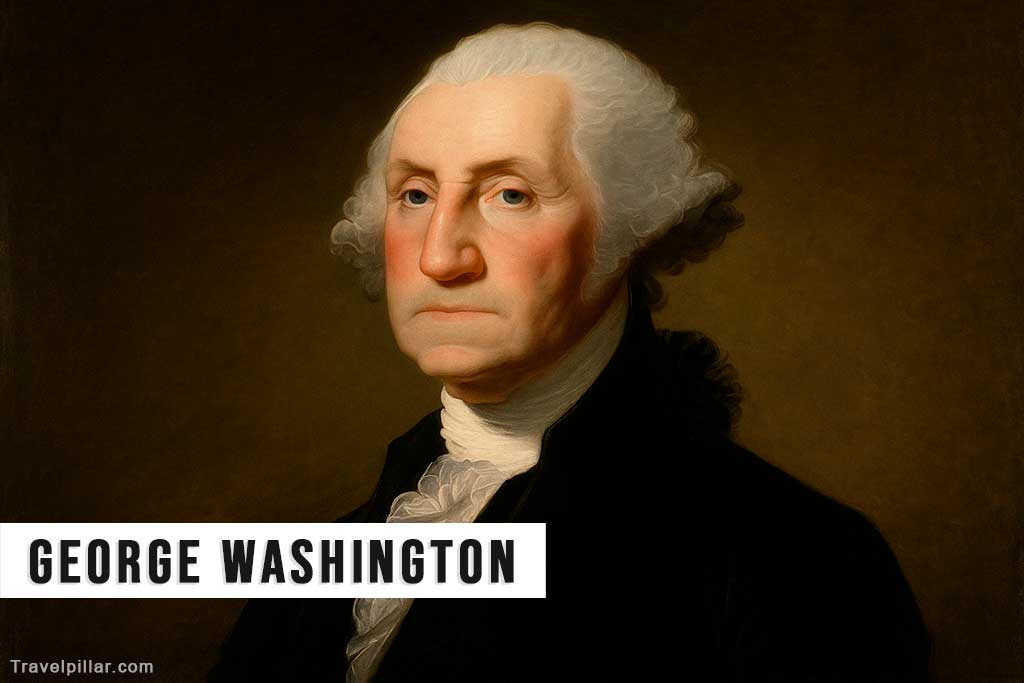
George Washington, born on February 22, 1732, in Westmoreland County, Virginia, was a significant figure in American history known as one of the Founding Fathers and the first President of the United States, serving from 1789 to 1797.
Before his presidency, Washington gained military experience during the French and Indian War and earned nationwide respect as the commander-in-chief of the Continental Army during the American Revolutionary War. His leadership was instrumental in the army’s ultimate victory and the country’s successful rebellion against British rule.
In 1787, Washington played a pivotal role in drafting the U.S. Constitution during the Constitutional Convention held in Philadelphia. His remarkable reputation and unwavering support for a robust yet balanced central government helped in convincing the states to accept the new Constitution.
In 1789, he was unanimously elected as the first President of the United States. His two-term presidency was marked by the establishment of many customs and protocols, including the creation of a cabinet system and the tradition of delivering an inaugural address. Washington’s Farewell Address, warning against long-term alliances with foreign nations and the dangers of political factions, had a profound impact on subsequent U.S. policy.
Washington’s time in office set the standard for future presidents. His prudent decision to step down after two terms established a tradition of peaceful transition of power and limited terms, which was later codified in the 22nd Amendment to the Constitution.
Post-presidency, Washington retired to his plantation, Mount Vernon, in Virginia, where he died on December 14, 1799. His death was widely mourned, and his legacy has been honored with numerous national memorials, including the nation’s capital being named after him.
Despite controversies surrounding his ownership of slaves, Washington remains a seminal figure in American history. His leadership, character, and promotion of republicanism set important precedents for future presidents, earning him the enduring epithet, “Father of His Country.”