
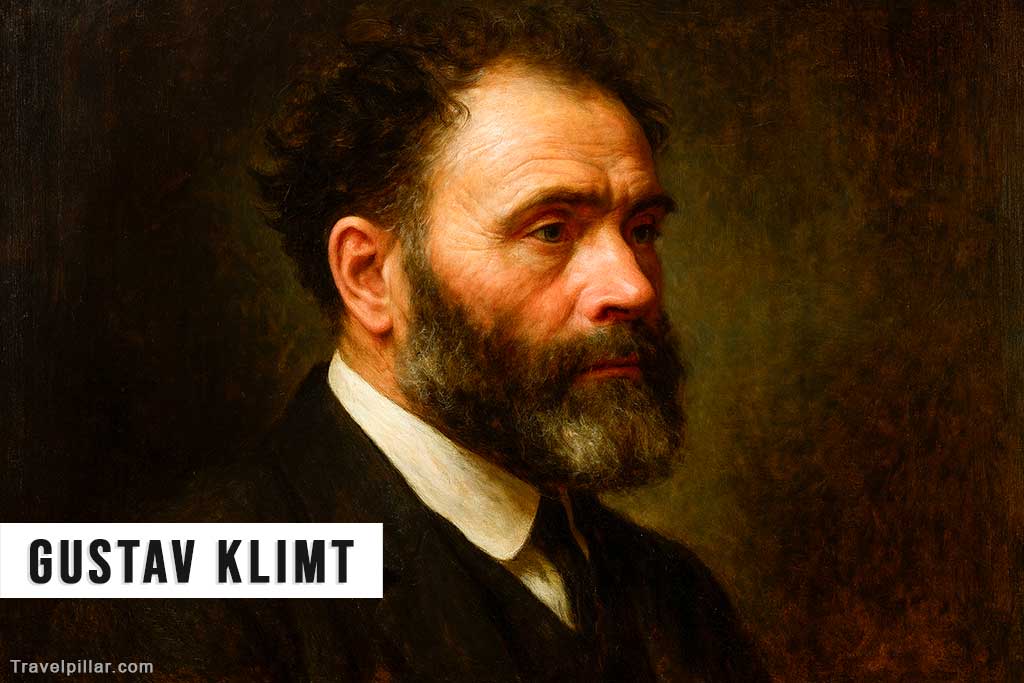
Gustav Klimt (1862–1918) was a prominent Austrian painter and a leading figure in the Vienna Secession movement, which sought to break away from traditional academic art in favor of more modern and expressive forms. Known for his unique style that combined symbolism, ornamental detail, and psychological depth, Klimt remains one of the most celebrated artists of the late 19th and early 20th centuries.
Born in Baumgarten, near Vienna, Klimt displayed artistic talent early and trained at the Vienna School of Arts and Crafts. He began his career painting murals and ceilings in public buildings, often in a conventional historicist style. In 1897, Klimt co-founded the Vienna Secession, a collective of artists committed to exploring new artistic ideas and showcasing international art.
Klimt’s work underwent a transformative period marked by his “Golden Phase,” during which he incorporated gold leaf into his paintings. This phase produced some of his most iconic works, including The Kiss (1907–1908) and Portrait of Adele Bloch-Bauer I (1907). These pieces are characterized by intricate patterns, rich textures, and an emphasis on sensuality and intimacy. His style often blends elements of Byzantine art, Japanese influences, and Art Nouveau aesthetics.
Beyond decorative appeal, Klimt’s works frequently explore themes of love, death, and the human condition. His Beethoven Frieze (1902), created for the Vienna Secession building, exemplifies his ability to fuse narrative and symbolic elements in a large-scale format.
Klimt’s portraits of women, such as Judith and the Head of Holofernes (1901), highlight his interest in the feminine form and psychological complexity. These works often depict his subjects as both powerful and enigmatic, reflecting societal changes and shifting attitudes toward gender.
Klimt’s influence extended beyond painting; his ideas about art, modernism, and individuality resonated with contemporaries and influenced later artists. Today, his works are held in high regard and displayed in major institutions, including the Belvedere in Vienna, where The Kiss is housed.
Klimt’s legacy endures as a testament to his innovative approach and his ability to bridge decorative beauty with profound existential themes.