
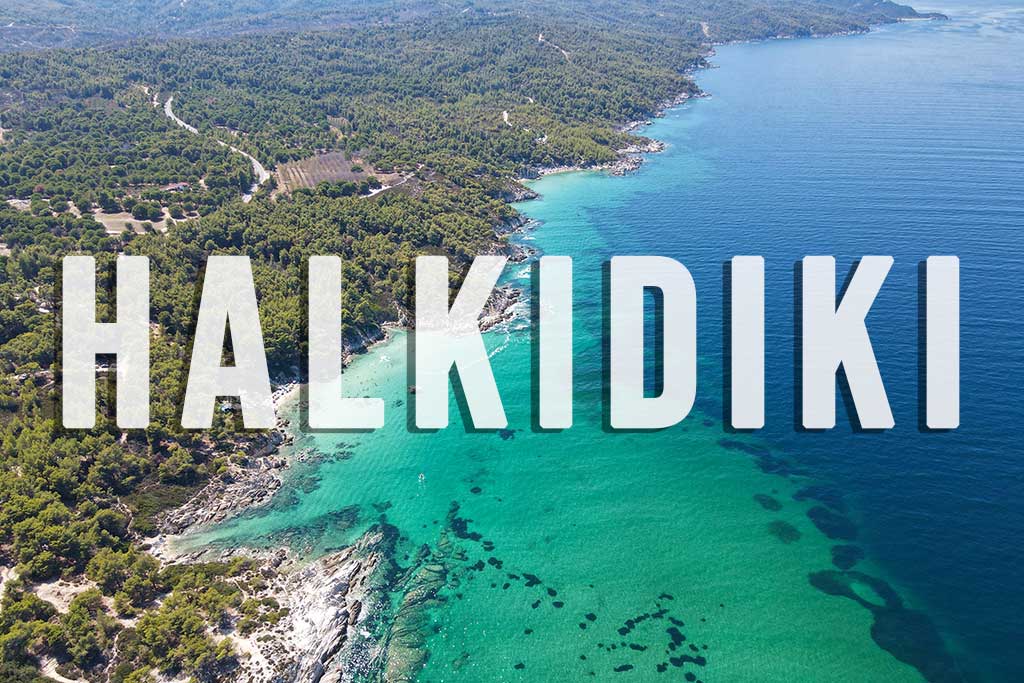
Halkidiki is a large peninsula in northern Greece extending into the Aegean Sea, southeast of Thessaloniki. It is characterised by its distinctive three-pronged shape, formed by the Kassandra, Sithonia, and Mount Athos peninsulas. This geography has influenced settlement patterns, economic activity, and cultural development over many centuries.
The westernmost peninsula, Kassandra, is the most developed and accessible. It has a long history of habitation dating back to antiquity and is known today for its coastal settlements, beaches, and tourism infrastructure. Archaeological evidence indicates ancient cities, sanctuaries, and trade links connected to wider Greek and Macedonian networks. Modern development has largely focused on seasonal tourism alongside agriculture.
Sithonia, the central peninsula, is more sparsely populated and retains a stronger natural character. Its interior includes forested hills, while the coastline features smaller settlements and less intensive development. Historically, Sithonia supported fishing, small-scale farming, and timber production. The region is valued for its balance between human settlement and preserved landscape.
The easternmost peninsula, Mount Athos, is an autonomous monastic state governed by Eastern Orthodox monks. It has been a centre of monastic life since the early Byzantine period and remains closed to general tourism, with access restricted to a limited number of visitors. The monasteries of Mount Athos preserve religious traditions, manuscripts, and architectural forms that have remained largely unchanged for centuries.
Beyond its coastline, Halkidiki has a varied interior that includes mineral resources, agricultural land, and traditional villages. Olive cultivation, viticulture, and mining have historically contributed to the local economy. The region’s ports and proximity to Thessaloniki have supported trade and movement between northern Greece and the wider Aegean.
Halkidiki’s significance lies in its diversity rather than a single defining site. It combines ancient history, religious continuity, natural variation, and modern economic activity within a compact geographical area. This range of landscapes and functions illustrates the long-term interaction between environment, settlement, and cultural practice in northern Greece.
Official tourism website: https://www.visitgreece.gr