
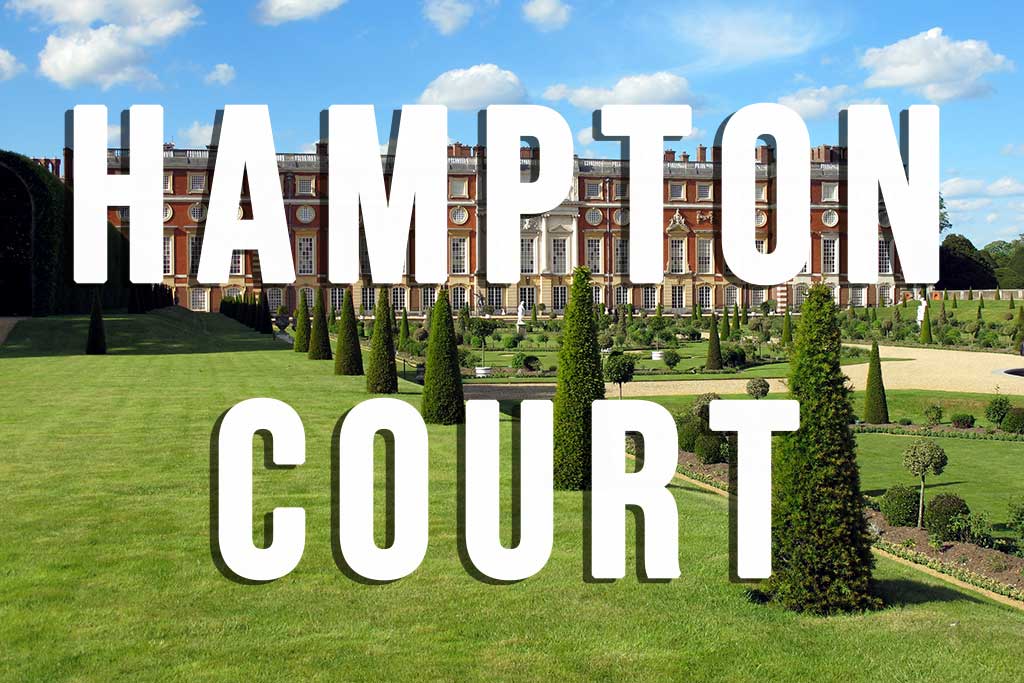
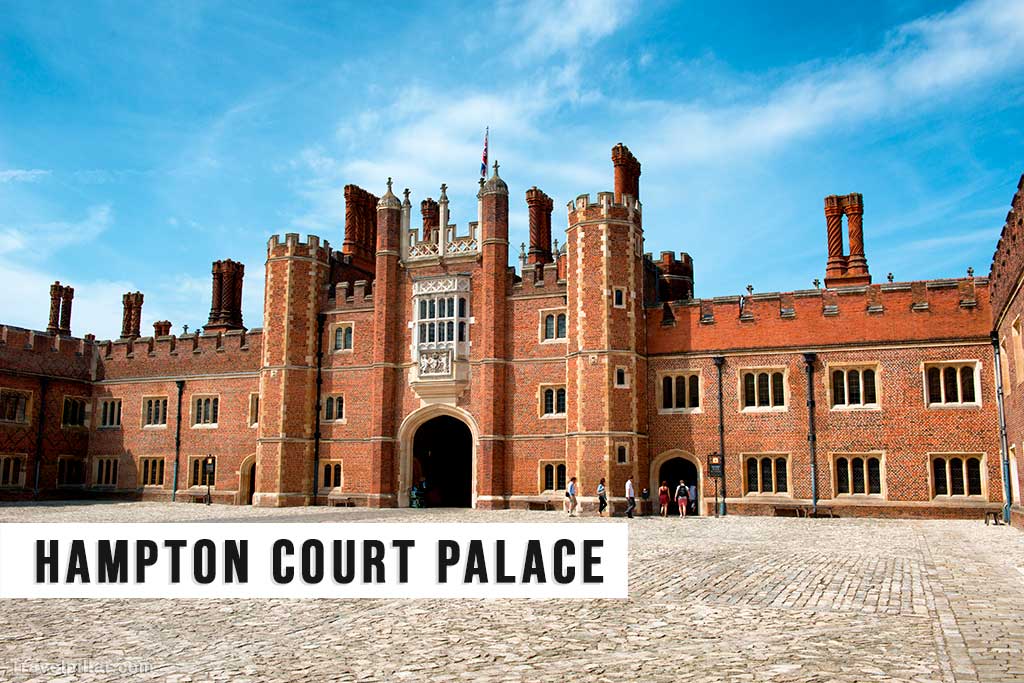
Situated in the London Borough of Richmond upon Thames, Hampton Court Palace has stood as an enduring symbol of English history since its construction in 1515. Originally built for Cardinal Thomas Wolsey, a close confidant of King Henry VIII, the palace was later seized by the king and expanded upon to suit his lavish tastes.

Spanning 60 acres, the estate encompasses multiple architectural styles, including Tudor and Baroque, which harmoniously blend to create a stunning facade. Visitors can explore the Great Hall, with its ornate hammerbeam ceiling, the exquisitely decorated Chapel Royal, and the hauntingly beautiful Haunted Gallery, amongst other stately rooms.
The palace grounds offer meticulously curated gardens, such as the Privy Garden and the Great Vine, the latter hosting the oldest and largest grapevine in the world. The world-famous Hampton Court Maze, planted in the late 17th century, presents an exciting challenge for guests.
Official website: https://www.hrp.org.uk/hampton-court-palace/
Google map 4.7/5
The Main Hampton Court Palace Highlights
Great Hall
The Great Hall served as the central dining room for Henry VIII and his court. Its impressive hammerbeam ceiling, crafted from oak, is considered one of the finest examples of English Gothic architecture. The hall is adorned with exquisite tapestries, including the famed Abraham Tapestries, which portray scenes from the life of the biblical patriarch.
Chapel Royal
The ornately decorated Chapel Royal has been a place of worship for English monarchs for over 450 years. The stunning blue and gold ceiling, crafted by Sir Christopher Wren, and the beautiful stained glass windows create a reverent atmosphere. The chapel has witnessed significant events, including the christening of Edward VI and the wedding of Queen Anne.
Haunted Gallery
The Haunted Gallery, so named for the reported sightings of Catherine Howard’s ghost, showcases portraits of important Tudor-era figures. The gallery connects the State Apartments with the Chapel Royal and features a finely crafted wooden ceiling, studded with gilded rosettes.
State Apartments
The State Apartments served as private living quarters and spaces for entertaining guests during the reigns of William III and Mary II. These rooms display opulent furnishings, artwork, and decorative elements that reflect the Baroque style. Highlights include the King’s Staircase, adorned with vibrant murals by Antonio Verrio, and the Queen’s Gallery, which houses a collection of Dutch masterpieces.
Kitchens
The Tudor kitchens at Hampton Court Palace are an immersive experience that transports visitors back to the 16th century. Covering 3,000 square feet, these kitchens fed up to 600 people daily, showcasing the immense scale of the royal household’s culinary operations. Visitors can observe live cooking demonstrations and learn about the techniques and ingredients used during the Tudor era.
Privy Garden

The Privy Garden, located on the south side of the palace, has been meticulously restored to its original 1702 design. This formal garden, with its geometrically aligned flower beds and elegant sculptures, reflects the Baroque style favored by William III. The garden offers a serene setting for leisurely strolls and relaxation.
Great Vine
Planted in 1768 by renowned landscape architect Lancelot ‘Capability’ Brown, the Great Vine is the world’s oldest and largest grapevine. This remarkable vine, which produces an annual harvest of sweet black grapes, can be found within the palace’s extensive gardens, contributing to the estate’s horticultural legacy.
Hampton Court Maze
The famous Hampton Court Maze, designed by George London and Henry Wise in the late 17th century, covers a third of an acre and consists of more than half a mile of paths. This iconic hedge maze, created from yew trees, challenges visitors to navigate its twists and turns, providing an entertaining and memorable experience.
Fountain Court
Sir Christopher Wren designed the Fountain Court during the reign of William III and Mary II. This elegant courtyard features a striking baroque facade, with red brickwork and ornamental details. The central fountain, adorned with statues and intricate carvings, serves as the focal point of the space, offering a peaceful retreat for visitors.
The Triumphs of Caesar
The Lower Orangery houses Andrea Mantegna’s renowned series of paintings, The Triumphs of Caesar. These nine large canvases, created between 1484 and 1492, depict the triumphal procession of Julius Caesar and are considered among the most significant works of the Italian Renaissance. The paintings were acquired by Charles I in 1629 and have been displayed at Hampton Court Palace since the 18th century.