
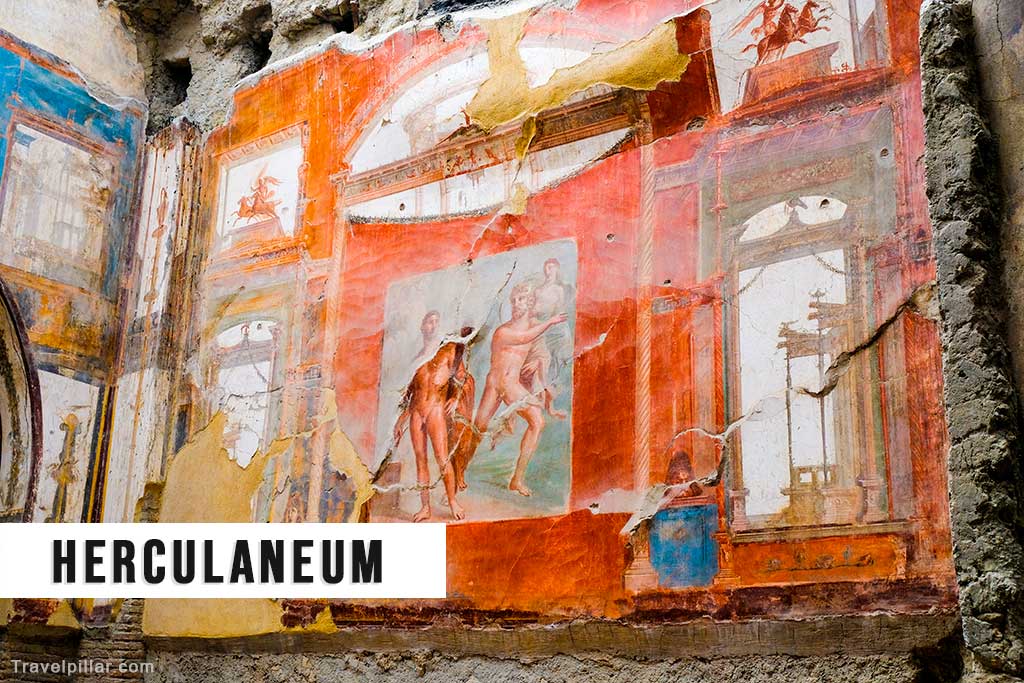
Herculaneum was an ancient Roman town located in the shadow of Mount Vesuvius, near modern-day Ercolano in the Campania region. It was destroyed and buried by the volcanic eruption of 79 AD, the same event that buried Pompeii. Unlike Pompeii, Herculaneum was covered by a deeper and denser layer of volcanic material, including mud and ash, which preserved organic materials such as wooden furniture, textiles, and food remains.
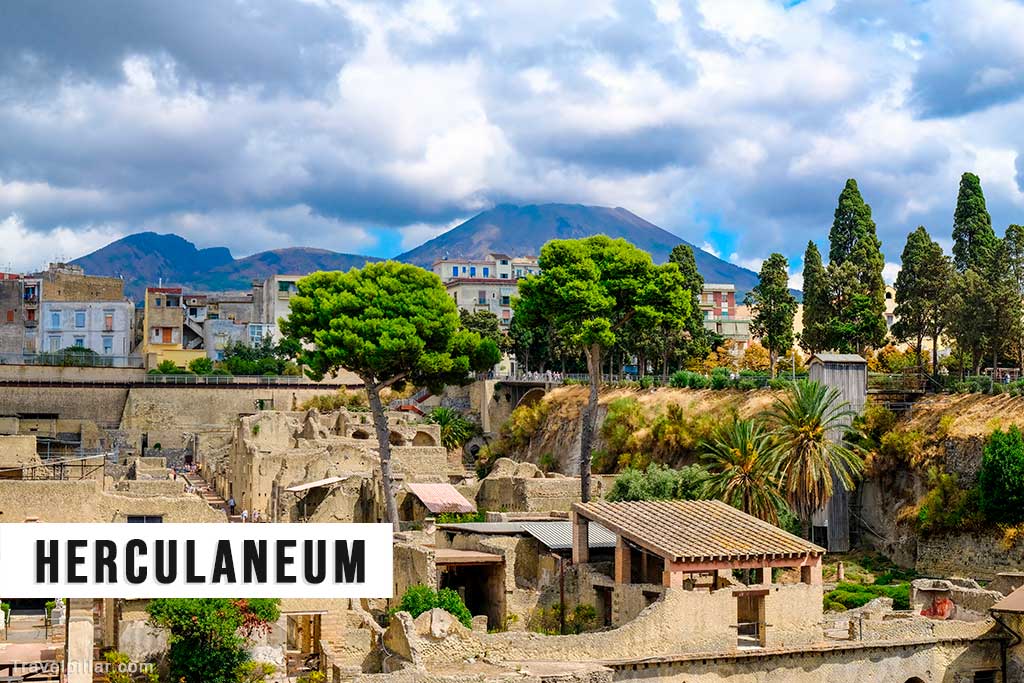
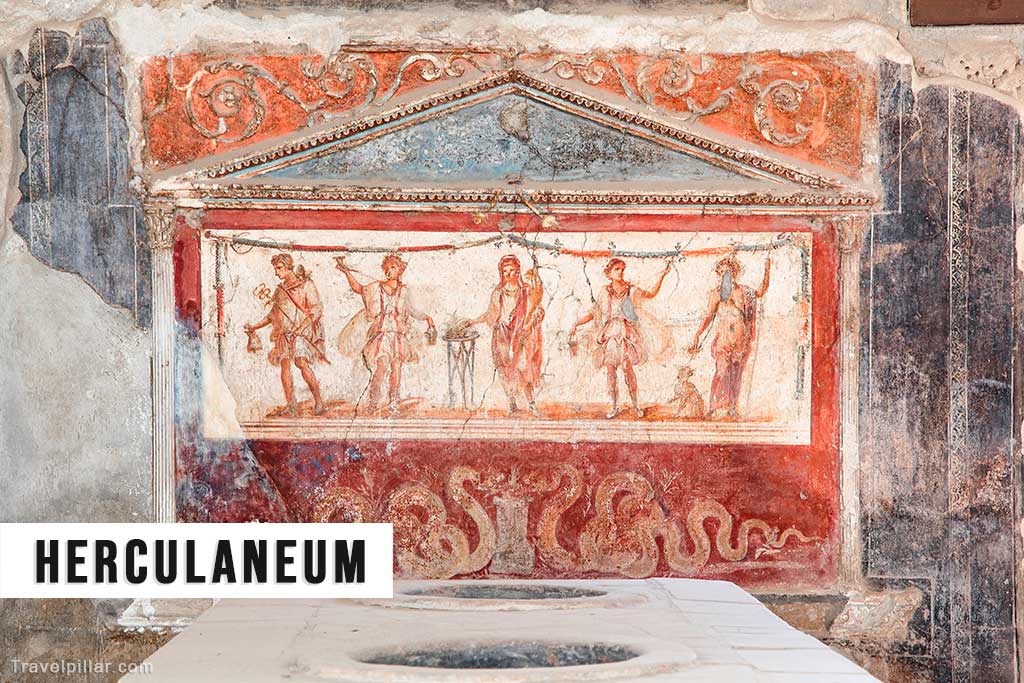
The town was smaller and wealthier than Pompeii, serving as a residential and resort area for Roman elites. Excavations have revealed well-preserved private houses, public baths, and streets, offering detailed insight into Roman domestic architecture and urban planning. The most notable buildings include the House of the Deer, the House of the Mosaic Atrium, and the College of the Augustales. These structures display intricate floor mosaics, frescoed walls, and in some cases, upper stories and wooden furnishings that survived due to the unique preservation conditions.
One of the most significant finds at Herculaneum is the Villa of the Papyri, an extensive residence believed to have belonged to the family of Julius Caesar’s father-in-law. It contained a library with over 1,800 carbonized papyrus scrolls, many of which are still being studied using advanced imaging techniques. The villa’s layout and decoration provided the model for the Getty Villa in California.
Excavations at Herculaneum began in the 18th century and have continued sporadically. Modern efforts focus on preservation and conservation, as well as on expanding understanding through non-invasive archaeological methods. The Herculaneum Conservation Project has been instrumental in stabilizing structures and developing long-term site management strategies.
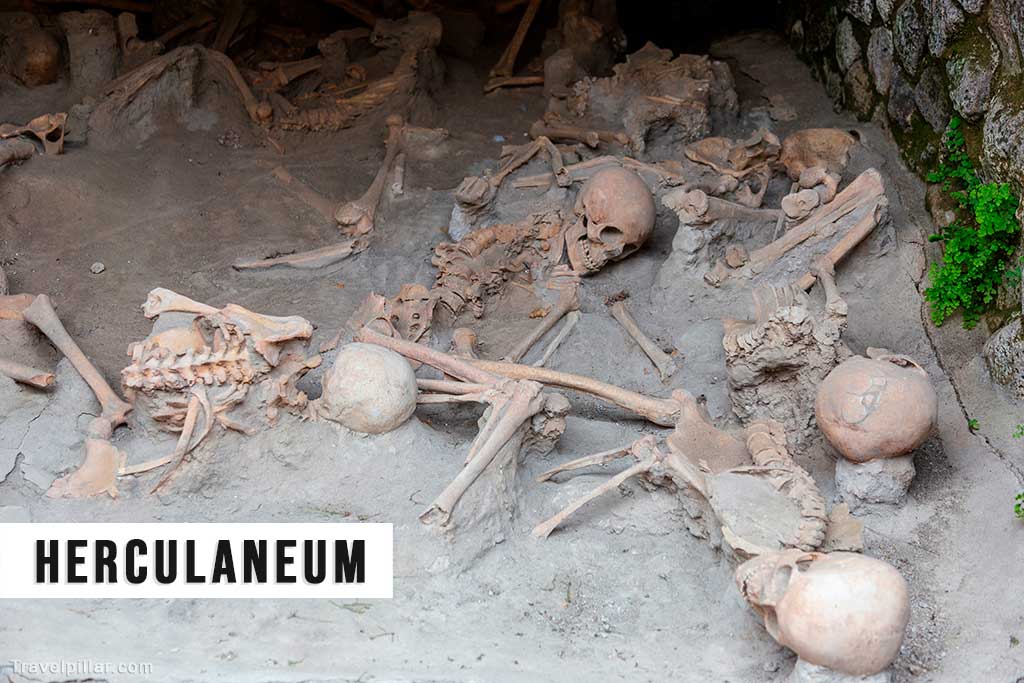
Today, Herculaneum is a UNESCO World Heritage Site and open to the public. It offers a more compact and less crowded alternative to Pompeii, with many original structures intact and fewer reconstructions. Visitors can walk through paved streets, enter homes, and observe artifacts in situ, gaining a close view of Roman life frozen at the moment of catastrophe.
Official website: https://ercolano.cultura.gov.it/
Google map 4.8/5