

Johannes Vermeer (1632-1675), also known as Jan Vermeer, was a Dutch painter of the Golden Age who achieved notable acclaim for his domestic interior scenes of middle-class life. Born in Delft, Netherlands, Vermeer spent his entire career in his hometown, producing a relatively small but impactful oeuvre.
Vermeer’s paintings, typically compact in size, exhibit a mastery of light, color, and composition. He is most known for his ability to render light in a way that brings an almost photographic quality to his scenes. His work reflects his innovative use of pigments, his preference for ultramarine and lapis lazuli resulting in distinctively luminous blues.
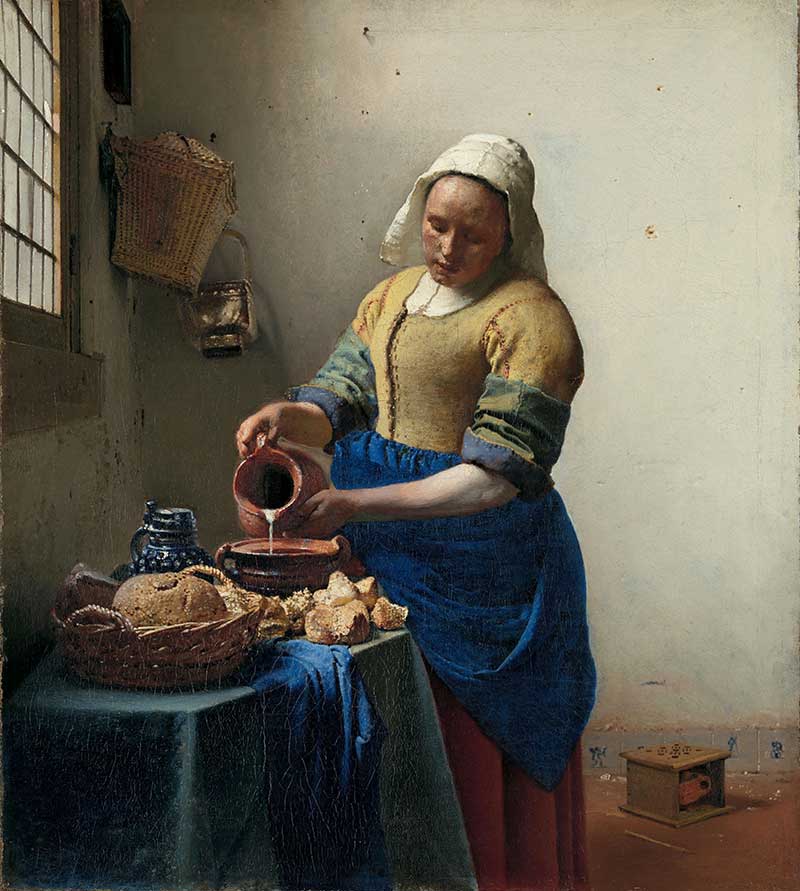
Despite his limited output — only about 36 paintings are attributed to him — Vermeer’s work includes some of the most celebrated pieces of the Dutch Golden Age. His best-known works, including “Girl with a Pearl Earring,” “The Milkmaid,” and “View of Delft,” demonstrate his profound understanding of how light can define form and create a sense of calm and serenity.
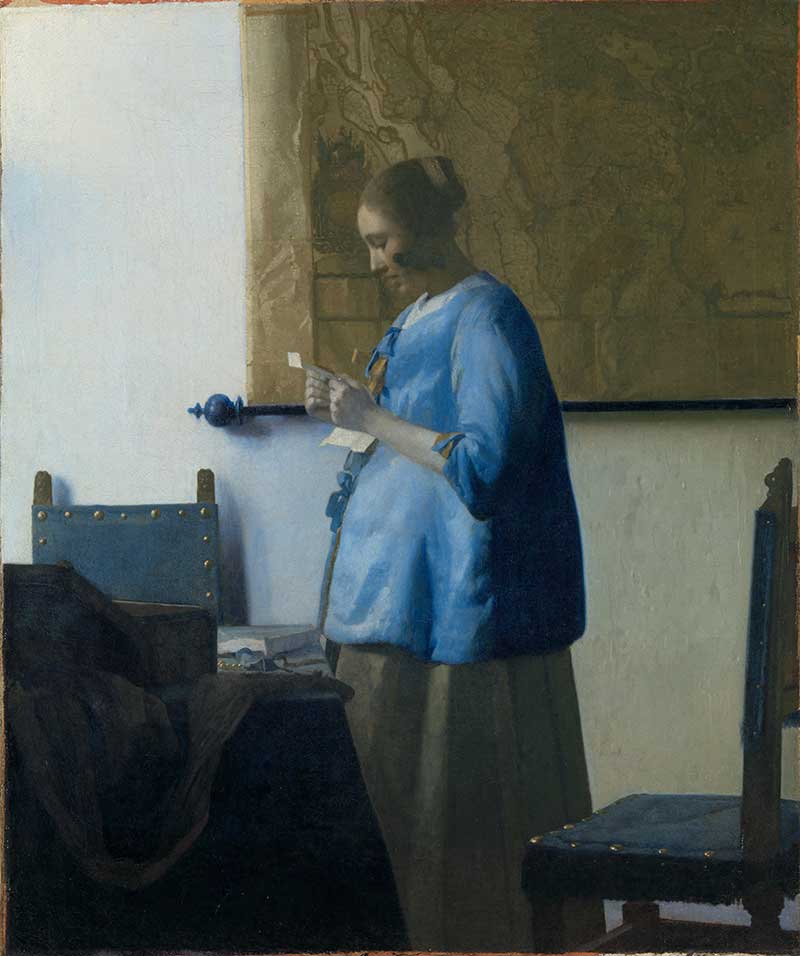
Unlike many of his contemporaries, Vermeer did not enjoy substantial fame or financial success during his lifetime, and his work fell into relative obscurity after his death. However, his artistic prowess was rediscovered in the 19th century, and he is now considered one of the greatest painters of the Dutch Golden Age.
Despite his posthumous fame, much about Vermeer’s life remains a mystery, including the details of his artistic training. This, along with the rarity of his work, has added to the allure of his legacy. Today, Vermeer’s profound influence on the art world is recognized, and his paintings continue to captivate audiences with their quiet dignity, timeless beauty, and the enigmatic tranquility they exude.