

Corfe Castle is a historic ruin located in the village of the same name in Dorset, within the Isle of Purbeck. Managed by the National Trust, it is one of the most prominent medieval fortifications in southern England. The castle sits on a natural hilltop between two gaps in the Purbeck Hills, providing a commanding view of the surrounding landscape and controlling a historically significant route through the area.
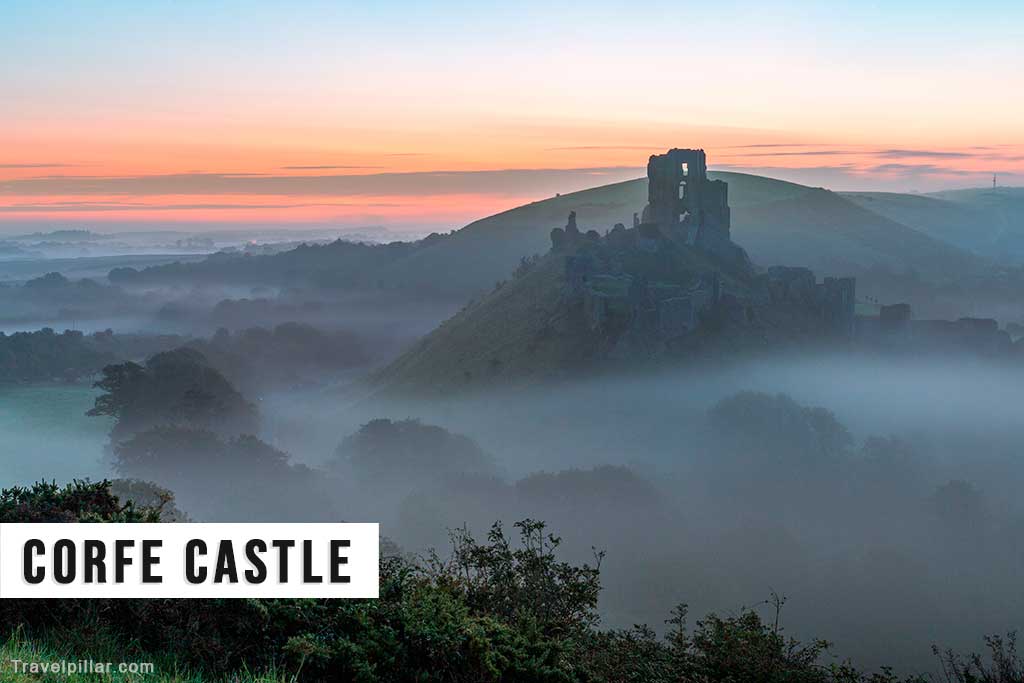
The earliest fortification on the site dates back to the 11th century, constructed by William the Conqueror shortly after the Norman Conquest. Built from local Purbeck limestone, the castle was developed further during the 12th and 13th centuries, serving both as a royal fortress and a royal residence. It was used by several monarchs, including King John and Henry III, and became an important stronghold in the region.
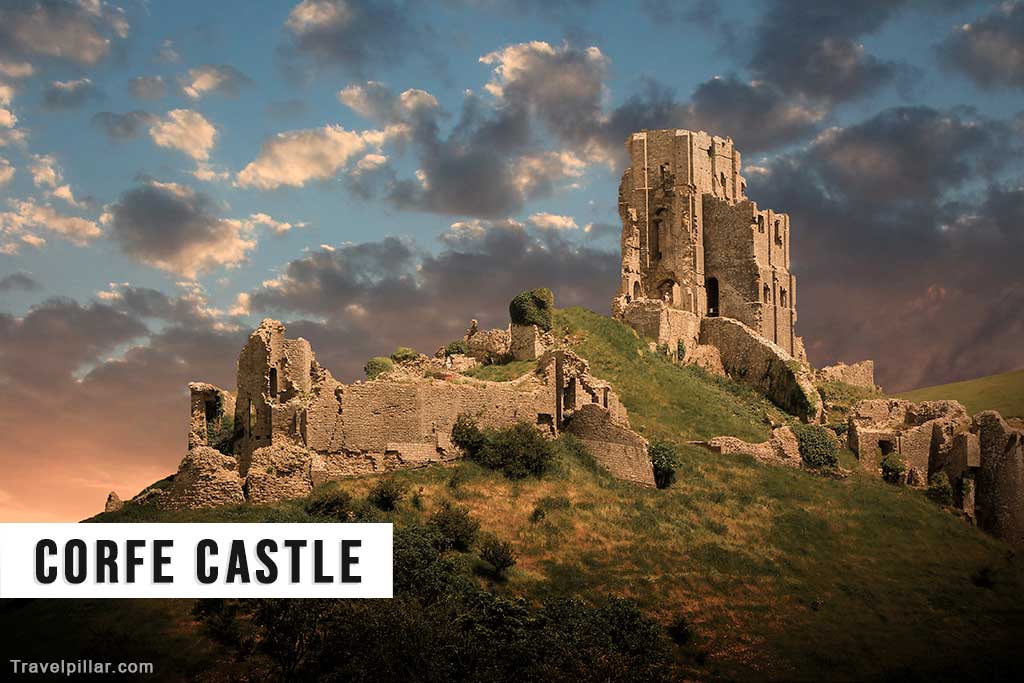
Corfe Castle was partially demolished in 1646 during the English Civil War. It had been held for the Royalists by Lady Mary Bankes and endured two sieges before being captured by Parliamentarian forces. After its capture, it was deliberately slighted to prevent future military use. The ruins that remain today consist of fragments of towers, curtain walls, and gatehouses, offering a clear sense of the original defensive layout.

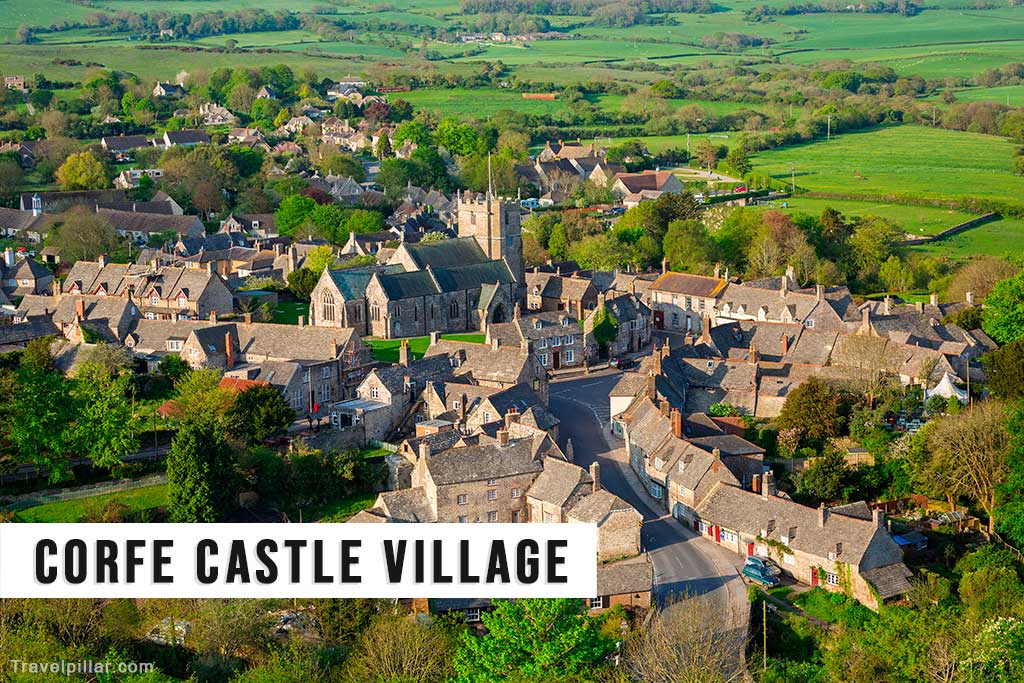
The site includes a visitor centre, shop, and tearoom located at the base of the hill. Information boards and guided tours provide historical context. The National Trust maintains walking trails around the castle grounds and into the nearby countryside. The village of Corfe Castle also retains its historical character, with stone cottages, a parish church, and a small museum.
Access is available by road or via the Swanage Railway, a heritage steam railway that connects Corfe Castle with Swanage and Norden. Parking is located near the visitor centre. The site includes uneven terrain and steep paths, so accessibility is limited in some areas.
Corfe Castle remains a key attraction for those interested in medieval history, military architecture, and the historical conflicts of England. Its location within the Dorset landscape also makes it a focal point for walking and heritage tourism in the region.
Official website: https://www.nationaltrust.org.uk/
Google map 4.7/5