

Studland Bay is situated on the Isle of Purbeck in Dorset, stretching along the coast from South Haven Point to Old Harry Rocks. Managed in part by the National Trust, the bay is notable for its long sandy beaches, heathland, and dune systems. It combines natural habitats with recreational use, making it a significant location on the Dorset coastline.

The bay consists of four main beaches: Shell Bay, Knoll Beach, Middle Beach, and South Beach. Together, they extend for several miles, providing one of the most extensive sandy coastlines in southern England. The waters are relatively shallow and sheltered, contributing to their popularity for swimming and water-based activities. Knoll Beach is the largest and most developed, with facilities including a visitor centre, café, and parking areas, while the smaller beaches retain a more natural and quieter character.
Studland is also important for its conservation value. The heathland behind the bay supports rare species, including reptiles and birds, and forms part of the Studland and Godlingston Heath National Nature Reserve. The dunes and wetlands contribute to the ecological diversity of the area. Ongoing management by the National Trust aims to balance visitor use with the preservation of sensitive habitats.
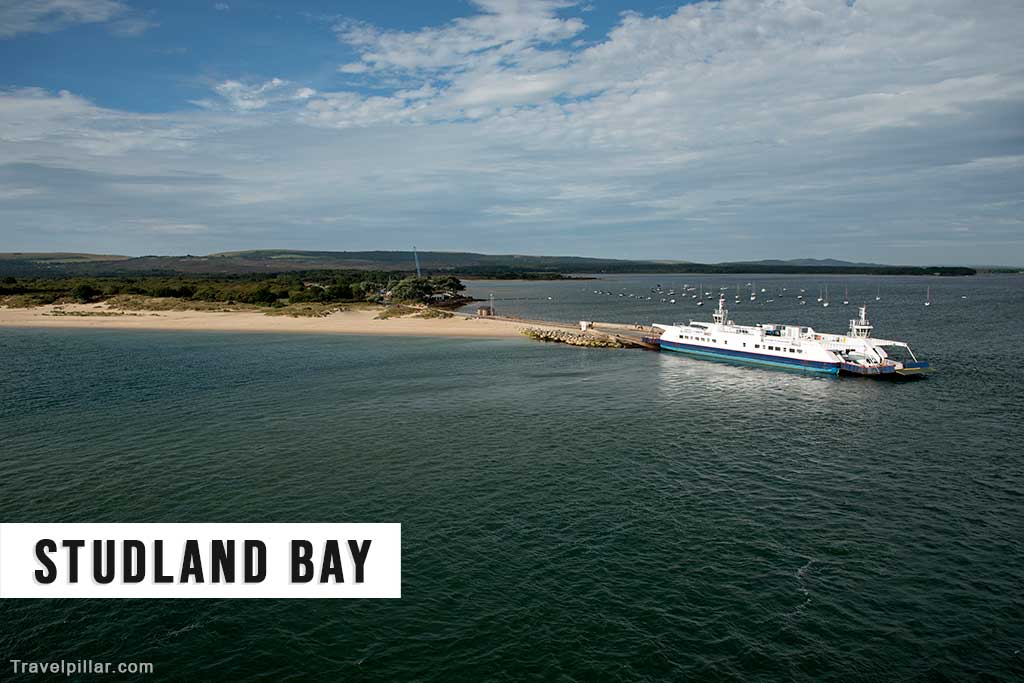
Access to Studland Bay is facilitated by the Sandbanks Ferry, which provides a short car and passenger crossing across the mouth of Poole Harbour between Sandbanks and Shell Bay. This link avoids a longer road journey and offers views of Old Harry Rocks and the wider coastline. It remains both a practical and distinctive feature of the area.
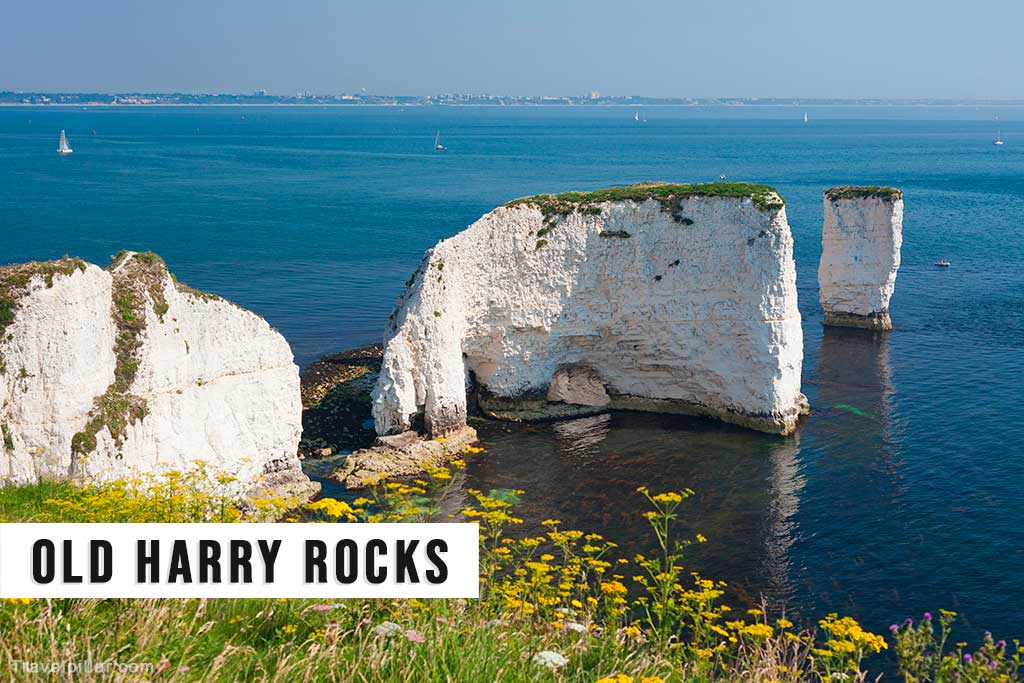
The southern end of Studland Bay is marked by Old Harry Rocks, chalk sea stacks that are a well-known landmark of the Jurassic Coast, a UNESCO World Heritage Site. From the beaches and surrounding cliffs, there are views across Poole Bay to Bournemouth and, on clear days, the Isle of Wight. Walking routes, including sections of the South West Coast Path, connect Studland with Swanage and other parts of the Purbeck landscape.
The bay has a long history of human use. During the Second World War, Studland was used as a training ground for amphibious landings, and the area still contains remains of wartime structures. More recently, it has been recognised as one of the most popular naturist beaches in the United Kingdom, located at the northern end of Knoll Beach.
Today, Studland Bay attracts a wide range of visitors, from those seeking traditional seaside recreation to walkers, wildlife enthusiasts, and historians. Its blend of natural features, historical significance, and recreational opportunities ensures its continuing role as one of Dorset’s most visited coastal areas.
Google map 5/5 Studland Bay
Google map 4.7/5 Shell Bay Beach
Google map 4.7/5 Knoll Beach
Google map 4.7/5 South Beach
Google map Studland Village