
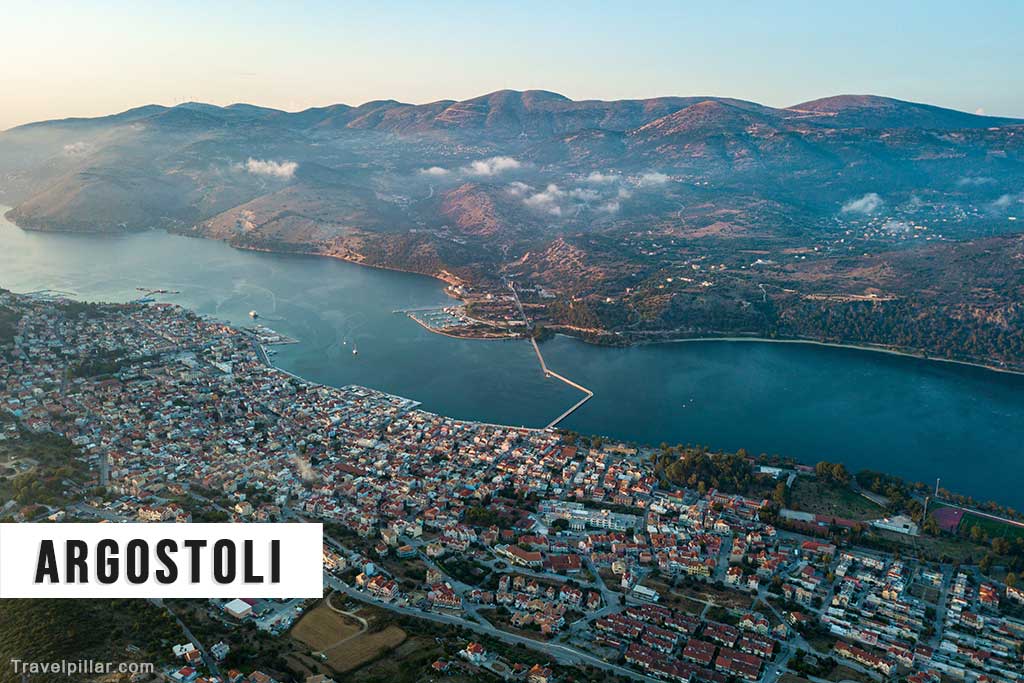
Argostoli is the capital and largest city of Kefalonia, an island in the Ionian Sea in Greece. Founded in the late 18th century, Argostoli sits on a peninsula and is characterized by its horseshoe-shaped harbor. The city is known for its vibrant atmosphere, historical buildings, and museums. Visitors can explore the Korgialenio History and Folklore Museum, which displays artifacts and information about Kefalonia’s history and culture. Another point of interest is the Archaeological Museum of Argostoli, which showcases ancient objects from the region.
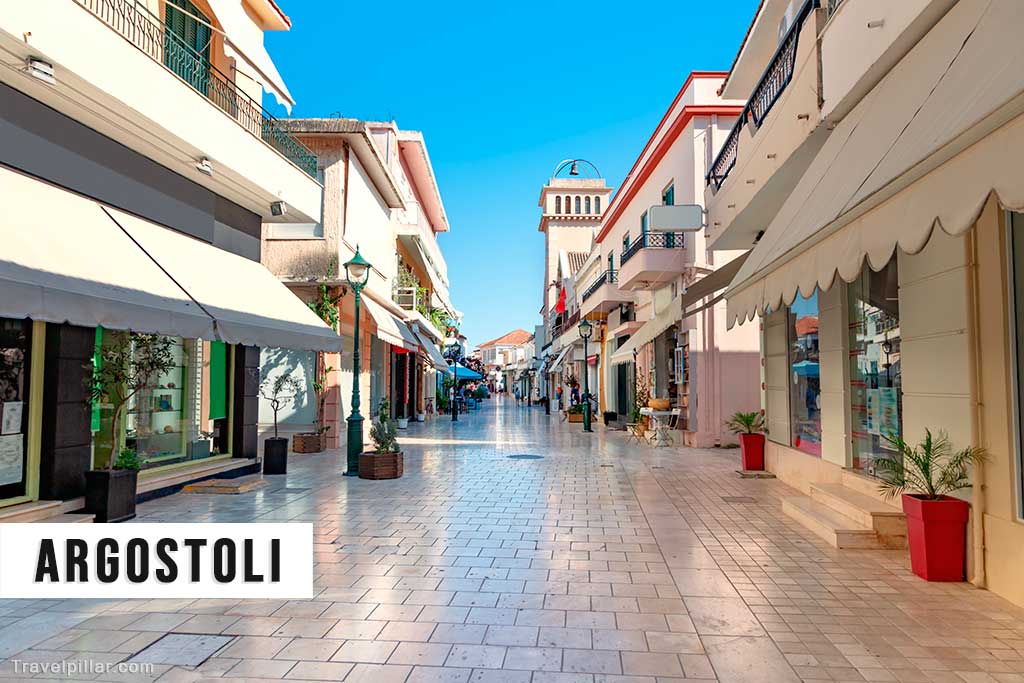
The Drapano Bridge, a 19th-century stone bridge, is a prominent local landmark that spans the Koutavos Lagoon. Argostoli’s bustling Lithostroto Street offers a variety of shops, cafes, and restaurants for tourists to enjoy. The city also serves as the main port and transportation hub for Kefalonia, connecting travelers to other destinations within the island and to mainland Greece. The nearby beaches of Makris Gialos and Platis Gialos provide opportunities for relaxation and water-based activities.
Google map (Argostoli City)
Google map (Lighthouse of Saint Theodori) 4.3/5
Google map (De Brosset Bridge) 4.7/5
The Best Things to Do in Argostoli
Argostoli Harbour
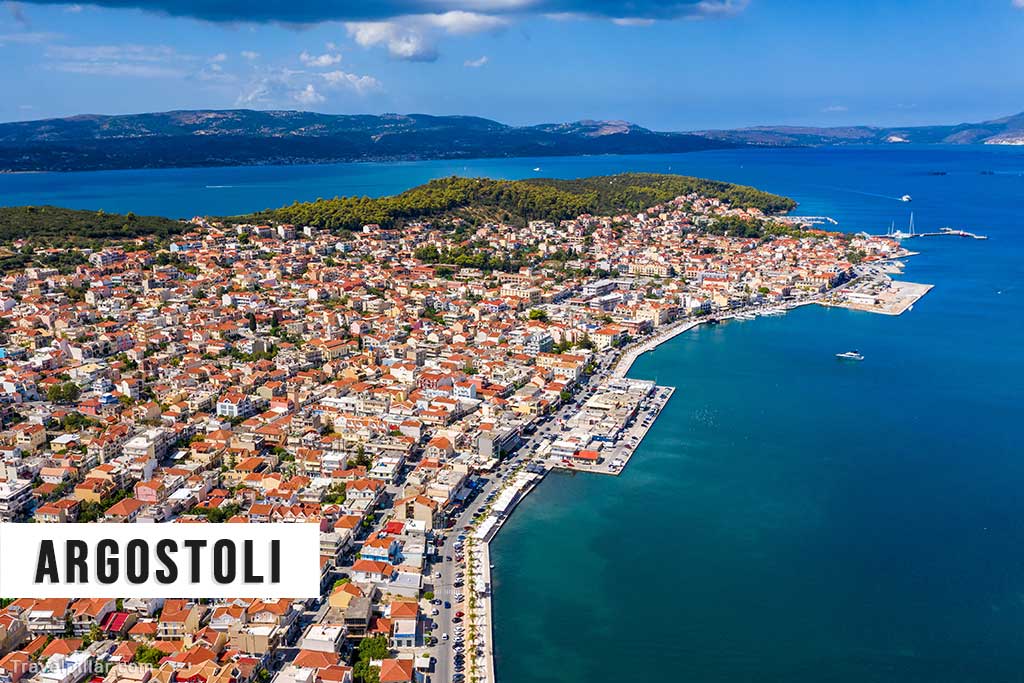
Argostoli Harbour waterfront serves as the town’s main promenade, stretching along the bay with fishing boats, ferries, and yachts moored at its edge. The area is lined with cafés, tavernas, and shops, making it a central hub for both residents and visitors. It offers views across the water and provides easy access to landmarks such as the De Bosset Bridge, while also being a notable spot for early morning turtle sightings.
Google map Sea Turtle viewing point 4.9/5
Google map I Love Kefalonia
De Bosset Bridge
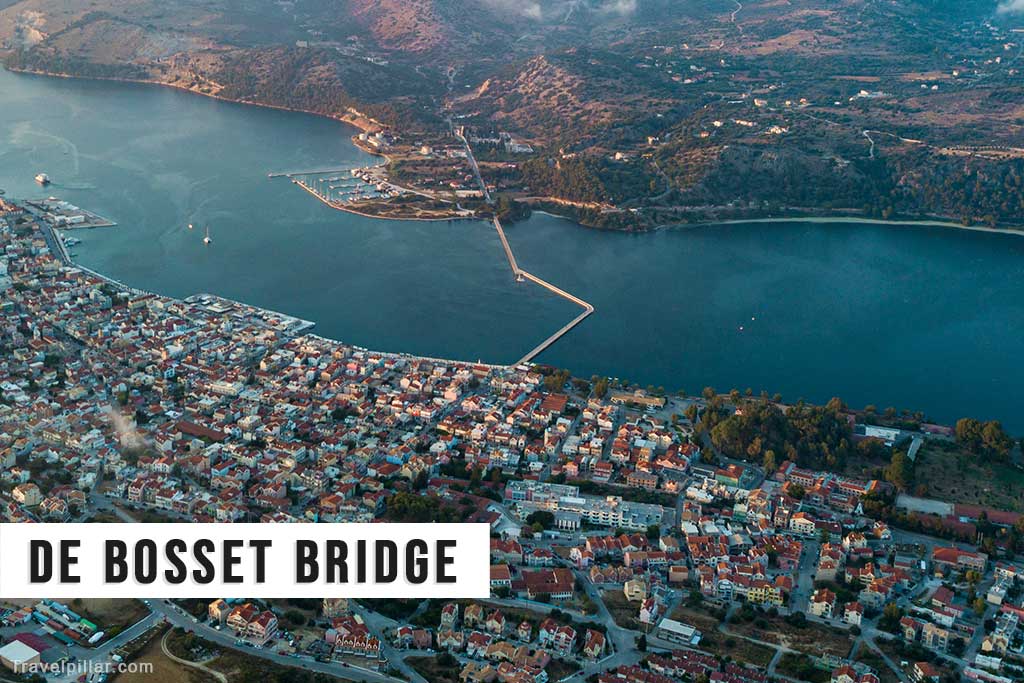
De Bosset Bridge, built in 1813 during British rule, is the world’s longest stone bridge over the sea. Spanning nearly 700 metres, it connects Argostoli to the opposite shore of the bay. Originally constructed of wood and later rebuilt in stone, it remains an important landmark. Today, the bridge is pedestrianised, offering views across the harbour and serving as a link between the town and surrounding areas.
Google map 4.7/5
Ferry to Lixouri
The ferry to Lixouri operates regularly from Argostoli Harbour, providing a short and practical connection across the bay. The journey takes approximately 20 minutes and is a common route for both residents and visitors. It offers views of the surrounding coastline and is an alternative to the longer road journey. The service links Argostoli with Kefalonia’s second-largest town, making it an important element of the island’s transport network.
Google map 4.6/5
Lithostroto Street
Lithostroto Street is the main pedestrian thoroughfare in Argostoli, running through the centre of the town. Lined with shops, cafés, and bakeries, it serves as a focal point for daily life and commerce. The street also features landmarks such as the Catholic Church of St. Nicholas and small squares. Paved with stone, it provides a compact area for both residents and visitors to explore, reflecting Argostoli’s role as Kefalonia’s administrative and commercial hub.
Vallianos Square
Vallianos Square is the central square of Argostoli, named after Panayis Vallianos, a benefactor of Kefalonia. Surrounded by cafés, shops, and administrative buildings, it functions as a meeting point for residents and visitors. The square hosts events and provides open space within the town’s otherwise compact urban environment.
Google map 4.7/5
Bell Square (Platia Kampanas)
Bell Square is a small central square named after its historic bell tower. Once a focal point of public gatherings, it remains a notable urban landmark. Surrounded by shops and cafés, the square reflects the town’s historical character within its modern setting.
Google map 4.5/5
Korgialenio Historic and Folklore Museum
The Korgialenio Historic and Folklore Museum presents exhibits on Kefalonia’s cultural heritage. Displays include traditional costumes, household items, and photographs illustrating island life from the 16th to 20th centuries. Located in the town centre, it provides insight into Kefalonia’s social history and everyday traditions.
Google map 4.6/5
Koutavos Lagoon
Koutavos Lagoon, situated at the head of Argostoli Bay, is a protected wetland area surrounded by a walking path. Once a malarial swamp, it has been restored as a natural habitat supporting birdlife and aquatic species. The lagoon provides a quiet setting for walking and observing local wildlife.
Google map 4.5/5
Botanical Garden of Kefalonia
The Botanical Garden of Kefalonia, located near Argostoli, focuses on the preservation of native and Mediterranean plant species. It provides educational displays on local flora, including aromatic herbs, shrubs, and trees. Paths and shaded areas create a compact but informative space, highlighting the island’s natural environment within an accessible urban location.
Google map 4.3/5
Saint Theodore Lighthouse
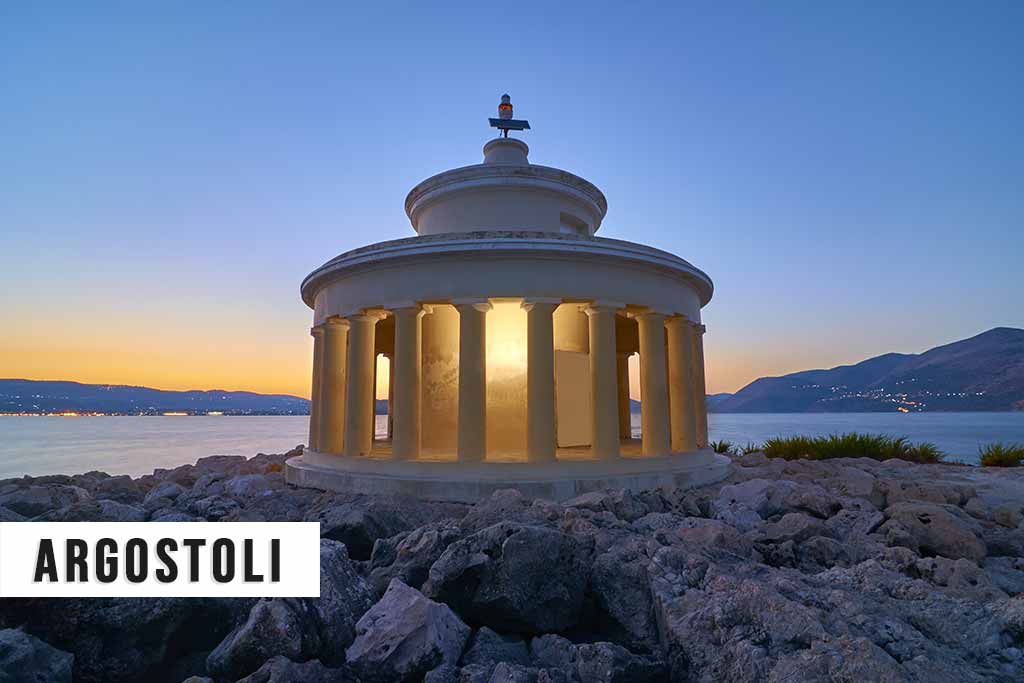
Saint Theodore Lighthouse is situated on a small peninsula about 3 km from the centre of Argostoli and about a 30 minute scenic walk along the coast. It was originally built by the British in 1828. Designed in a circular Doric style with 20 columns, it was rebuilt after being damaged in the 1953 earthquake. The lighthouse stands as a local landmark, offering clear views over the Ionian Sea. Easily accessible from the town, it remains one of Argostoli’s most recognisable coastal features and an example of neoclassical architecture on Kefalonia.
Google map 4.3/5
Katavothres (Sinkholes of Argostoli)
Katavothres is a rare geological phenomenon located near Argostoli, where seawater disappears into sinkholes in the rock. The water travels underground through the island and re-emerges on the opposite coast, a process confirmed by dye experiments in the 1960s. Historically used to power watermills, the site illustrates Kefalonia’s distinctive karst landscape. Today, it remains a point of scientific interest as well as a notable coastal attraction close to the town.
Google map 4.1/5
Churches of Argostoli
Church of Agios Spiridon
Google map 4.4/5
Mitropoli Argostoliou Church
Google map 4.7/5
Ekklisia Panagia
Google map 4.6/5
Agios Nikolaos
Catholic Church of Saint Nicholas
Google map 4.4/5
Church of Agios Eleftherios
Google map 5/5
Church of Taxiarxon
Google map 4.9/5
Lassi and Lassi Beaches
Lassi, situated close to Argostoli, is a developed resort area known for its series of sandy beaches. Makris Gialos and Platis Gialos are the most popular, offering clear waters and organized facilities. The area combines accommodation, restaurants, and coastal access, making it a central destination for visitors to Kefalonia.
Half Day Trips from Argostoli
Agios Gerasimos Monastery
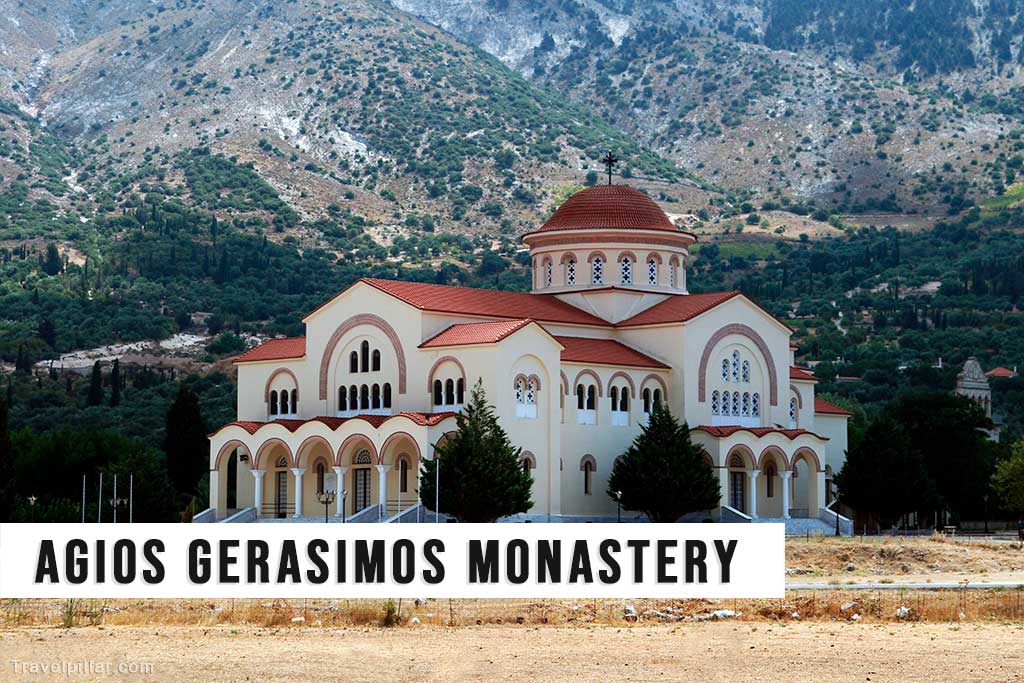
Agios Gerasimos Monastery, located in the Omala Valley about 15 km from Argostoli, is the most important religious site in Kefalonia. Dedicated to the island’s patron saint, it was founded in the 16th century by Saint Gerasimos himself. The complex includes a church, the saint’s relics, and his former cell. The monastery remains an active place of worship and pilgrimage, reflecting Kefalonia’s strong Orthodox traditions and playing a central role in the island’s religious identity.
Google map 4.7
Orealios Gaea Winery & Vineyards
Orealios Gaea Winery & Vineyards, located in the Omala Valley next to the Agios Gerasimos Monastery, specializes in the cultivation and production of Robola, Kefalonia’s most notable indigenous grape variety. The winery represents a cooperative of local growers committed to preserving traditional methods while using modern techniques. Visitors can tour the facilities, learn about the production process, and taste wines on-site. The estate highlights the importance of viticulture in Kefalonia’s economy and cultural identity, particularly through its association with Robola.
Google map 4.7/5
Gentilini Winery & Vineyards
Gentilini Winery & Vineyards, situated near Argostoli, is a family-run estate established in the 1970s that focuses on quality winemaking using indigenous and international grape varieties. The vineyard emphasizes sustainable practices and produces wines such as Robola, a variety native to Kefalonia. Visitors can tour the vineyards, learn about the production process, and sample wines in a tasting area. The estate highlights Kefalonia’s viticultural heritage and its growing reputation for distinctive regional wines.
Google map 4.6/5
Castle of Agios Georgios (Saint George)
The Castle of Agios Georgios, located about 7 kilometres from Argostoli, served as the island’s administrative centre during Venetian rule. Built in the 12th century and expanded later, it was the capital of Kefalonia until the 18th century. Today, its ruins include sections of walls, gates, and towers. The site provides panoramic views over the surrounding countryside and Gulf of Argostoli, illustrating the island’s medieval and Venetian history.
Google map 4.4/5