
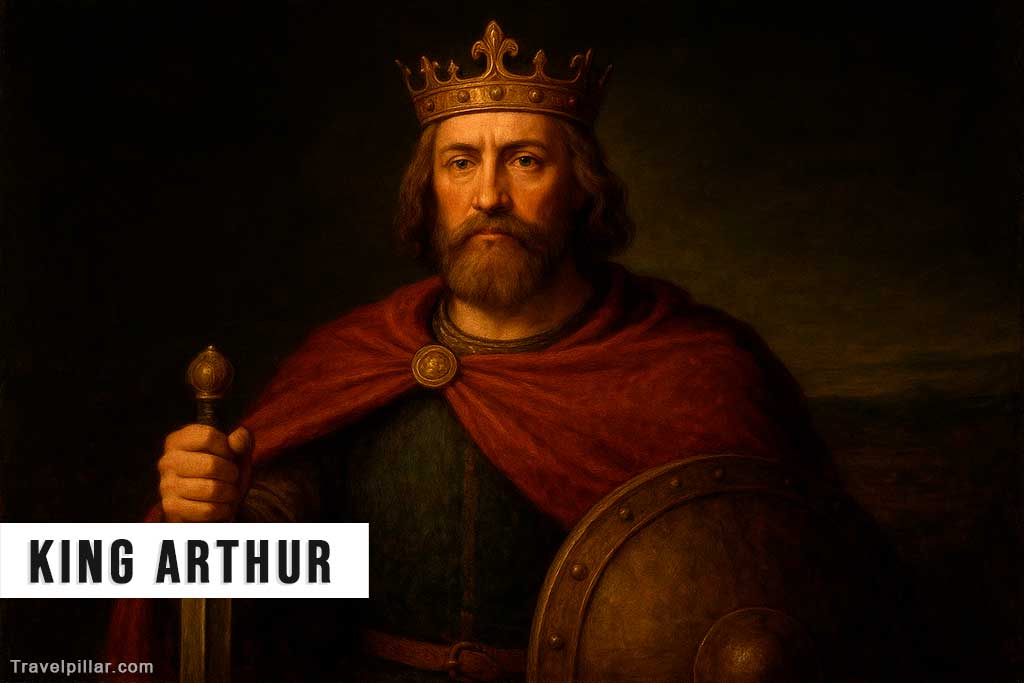
The Legend of King Arthur is one of the most enduring and widely recognized tales in Western literature. Rooted in medieval history and myth, the legend revolves around the supposed King of Britain, who led his knights in the defense of the realm and pursued ideals of chivalry and justice. While the historical existence of Arthur is debated, his story has become a central part of British cultural heritage.
The earliest references to King Arthur date back to the early medieval period. One of the first mentions is found in the 9th-century work “Historia Brittonum,” attributed to the Welsh monk Nennius. Here, Arthur is described as a warrior who fought against invading Saxons. The legend was further developed in Geoffrey of Monmouth’s 12th-century “Historia Regum Britanniae” (The History of the Kings of Britain), where Arthur is portrayed as a great ruler who established a vast kingdom. Geoffrey’s work significantly shaped the narrative, introducing characters such as Merlin the wizard and the legendary sword Excalibur.
The Arthurian legend expanded during the medieval period through various literary works. Chrétien de Troyes, a French poet, added elements like the Knights of the Round Table and the quest for the Holy Grail, focusing on themes of chivalry, romance, and moral quests. Sir Thomas Malory’s “Le Morte d’Arthur,” published in 1485, compiled these tales into a more comprehensive account, cementing Arthur’s narrative as we know it today.
Central to the legend is Camelot, Arthur’s court, often depicted as an idealized kingdom of justice and nobility. The Round Table, introduced by Wace in the 12th century, symbolizes equality among Arthur’s knights, as there is no head of the table, promoting ideals of unity and fairness.
The legend also involves mythical and magical elements. The sword Excalibur, gifted to Arthur by the Lady of the Lake, and the involvement of Merlin add layers of fantasy to the story, intertwining history with myth. Characters like Queen Guinevere and Sir Lancelot further enrich the narrative, introducing themes of love, betrayal, and honor.
Travellers intrigued by these stories may be interested in visiting sites associated with the Arthurian legends.

One such location is Tintagel Castle in Cornwall, England. Although the historical authenticity of Arthur’s connection to Tintagel is debated, the dramatic coastal ruins and the legendary associations make it a popular destination for travelers. The castle’s proximity to Merlin’s Cave, said to be inhabited by the enigmatic wizard Merlin, adds to its allure.
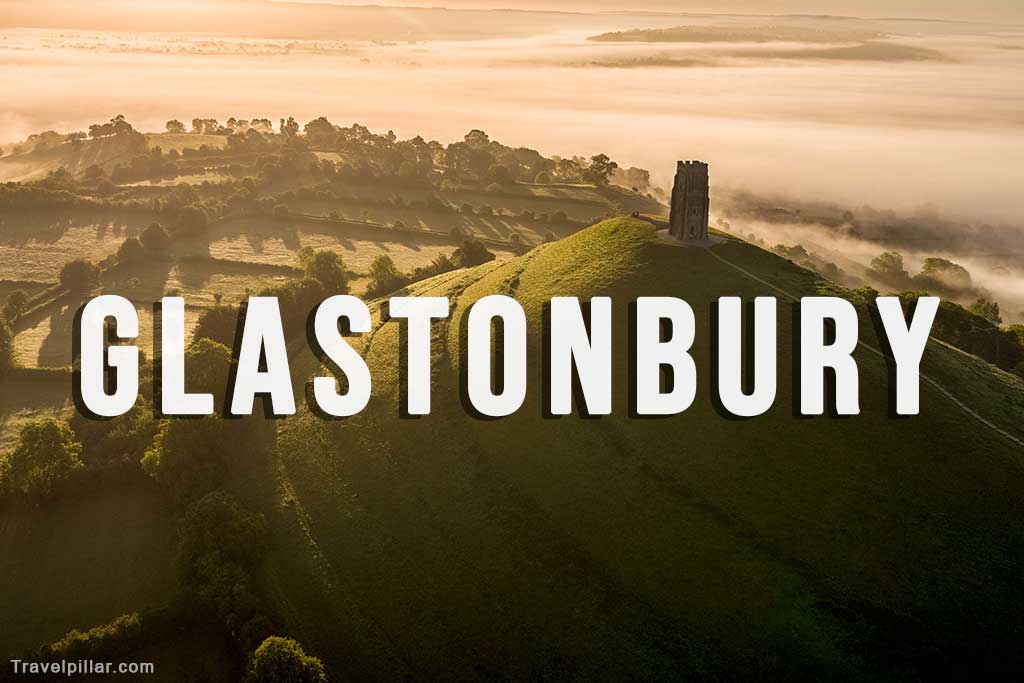
Glastonbury in Somerset is another place deeply entwined with the Arthurian legend. It is believed to be the location of Avalon, where King Arthur was said to be buried. Travelers can explore Glastonbury Abbey and the nearby Glastonbury Tor, both of which feature in Arthurian folklore.
For those wishing to explore the Arthurian legend beyond England, the Brocéliande Forest in Brittany, France, offers an intriguing connection. It is said to be the location of the magical forest of Brocéliande, which features in stories of the Lady of the Lake and Merlin. Travelers can wander through this enchanting forest and visit sites like the Fountain of Youth, believed to be associated with Arthurian legends.
While the historical existence of King Arthur remains uncertain, the enduring appeal of his legend is undeniable. Travelers interested in this mystical and mythical past can explore these sites, appreciating the rich tapestry of history, folklore, and literature that continue to captivate the imagination.