
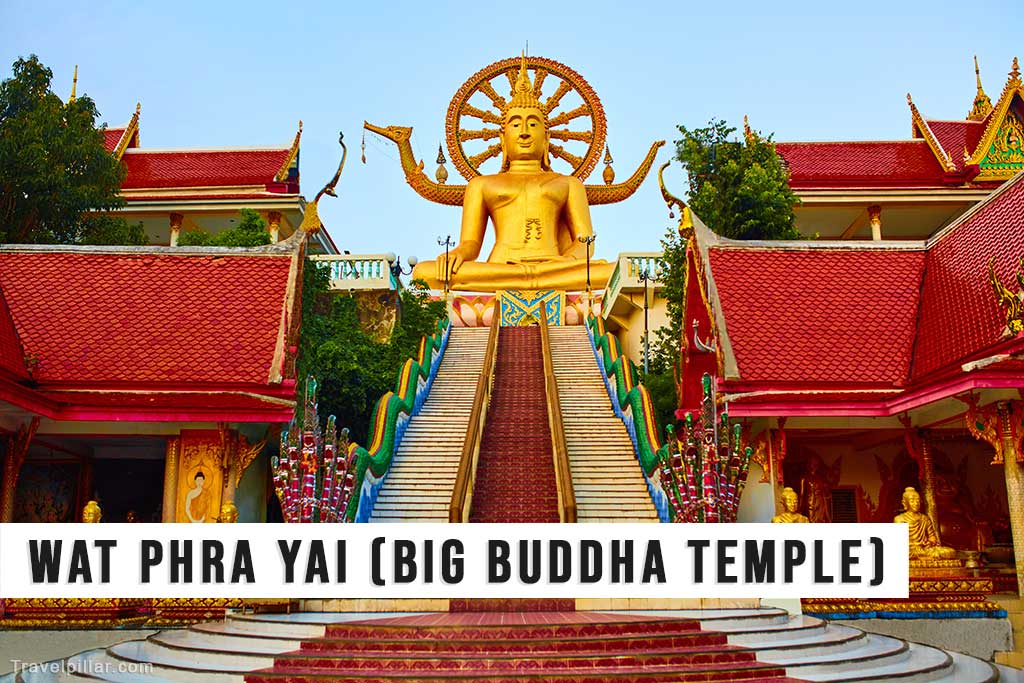
Wat Phra Yai, commonly known as the Big Buddha Temple, is one of Koh Samui’s most recognisable landmarks and an important Buddhist site on the island. The temple is located on the small rocky island of Koh Fan, which is connected to Koh Samui’s northeastern coast by a short causeway. Its most prominent feature is a large golden Buddha statue that rises above the surrounding temple complex and can be seen from several kilometres away.
The statue depicts the Buddha in the Mara posture, seated with one hand resting on the knee and the other facing downward, symbolising the moment of enlightenment when the Buddha called the earth to witness his victory over temptation. The figure stands approximately 12 metres high and was constructed in 1972, making it one of the island’s earliest major tourist landmarks. Over time the site has developed into a larger temple complex with shrines, bells and small meditation areas.

Visitors reach the statue by climbing a wide staircase decorated with colourful naga serpent railings. From the top of the steps there are views across the surrounding coastline, nearby fishing villages and the Gulf of Thailand. The elevated platform around the statue allows visitors to walk around the base of the monument and observe the surrounding temple buildings.
At the base of the staircase and around the temple grounds there are numerous small stalls selling drinks, souvenirs, clothing and religious offerings. Local visitors often purchase flowers or incense sticks to place at the shrines, and monks are sometimes present giving blessings.
Wat Phra Yai is located close to Koh Samui’s main airport and is easily accessible from the island’s main resort areas, including Chaweng and Bophut. Taxis, songthaews (shared pickup taxis) and rental scooters are common ways to reach the temple. Because the site is open and exposed to the sun, visiting earlier in the morning or later in the afternoon is generally more comfortable.
As with all Buddhist temples in Thailand, modest dress is expected. Visitors should ensure that shoulders and knees are covered, and shoes must be removed before entering certain temple buildings. Although the temple is a popular tourist stop, it remains an active religious site and visitors are expected to behave respectfully while exploring the complex.
Google map 4.5/5