
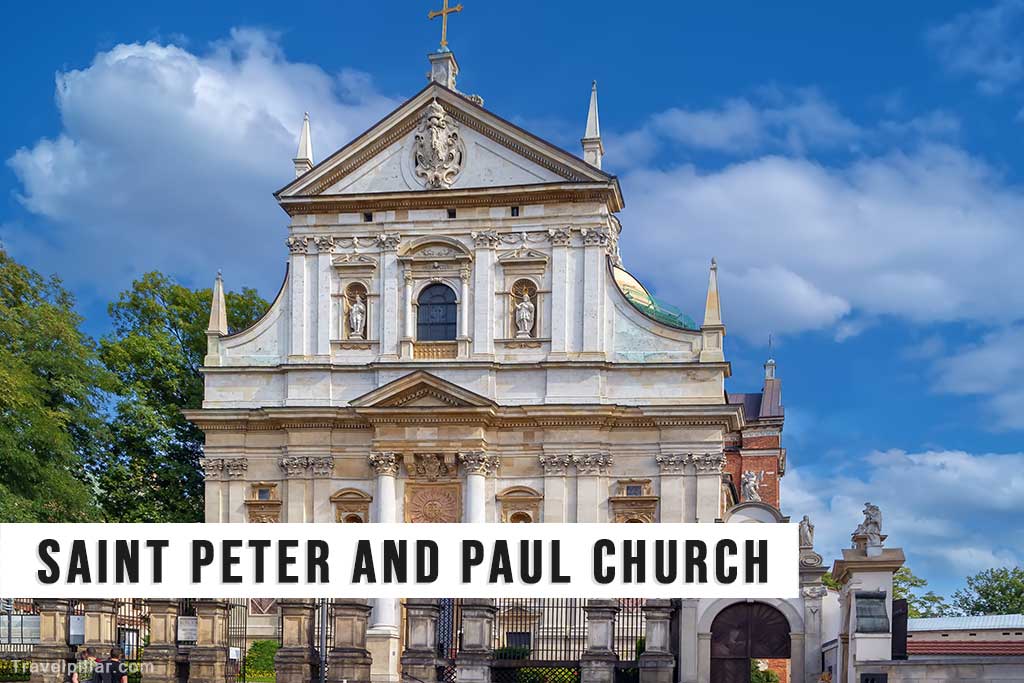
Saints Peter and Paul Church in Krakow is one of the city’s most notable Baroque landmarks. Situated on Grodzka Street, part of the Royal Route leading to Wawel Castle, it was the first Baroque-style church in Krakow and remains a significant architectural monument. Construction began in 1597 under the Jesuits, with Italian architect Giovanni Maria Bernardoni overseeing the design. The church was completed in 1619 and became a model for Baroque ecclesiastical buildings in Poland.
The church is distinguished by its monumental stone façade, inspired by Roman Baroque architecture. The façade features classical columns and niches filled with statues of Jesuit saints, while a row of later 18th-century sculptures of the twelve apostles stands in front of the churchyard, creating a striking visual approach. The overall design reflects the Jesuit aim of impressing congregations through grandeur and clarity of structure, a hallmark of Counter-Reformation architecture.
Inside, the church has a spacious nave flanked by side chapels, leading to a richly decorated high altar. The interior decoration includes stucco work, marble columns, and frescoes that enhance its Baroque character. The high altar features statues of Saints Peter and Paul, to whom the church is dedicated. The building also contains the crypt of Piotr Skarga, a prominent Jesuit preacher, adding to its historical significance.
The church is notable for its acoustics and is frequently used as a venue for classical music concerts, particularly chamber music and choral performances. This cultural role has made it an active part of Krakow’s artistic life in addition to its ongoing function as a place of worship.
As the first Baroque church built in Krakow, Saints Peter and Paul Church marked a transition from Gothic and Renaissance styles to a new architectural direction that would influence many later religious buildings in Poland. Its location on Grodzka Street and its architectural significance ensure that it remains a prominent site for both visitors and residents, combining historical importance, artistic merit, and active religious use.
Google map 4.7/5