
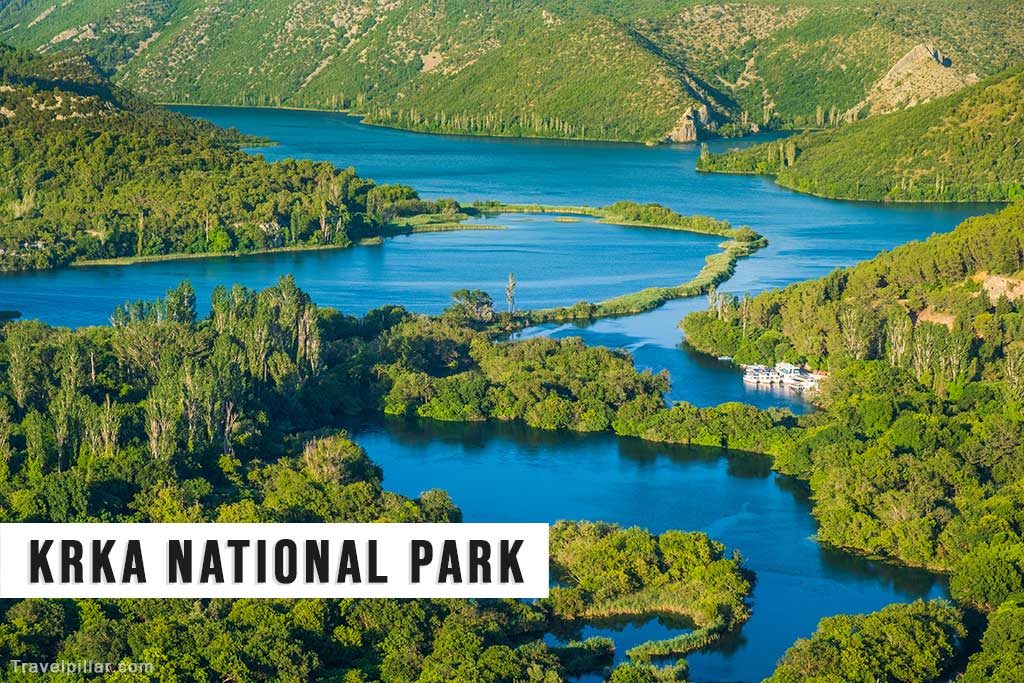
Krka National Park is located in central Dalmatia, Croatia, along the Krka River, between the towns of Knin and Skradin. Established in 1985, the park protects 109 square kilometres of river landscape, limestone gorges, and natural habitats. Its defining feature is a series of seven waterfalls, which highlight the interaction of water and karst geology. The park combines natural scenery with cultural monuments, reflecting both environmental and historical significance.
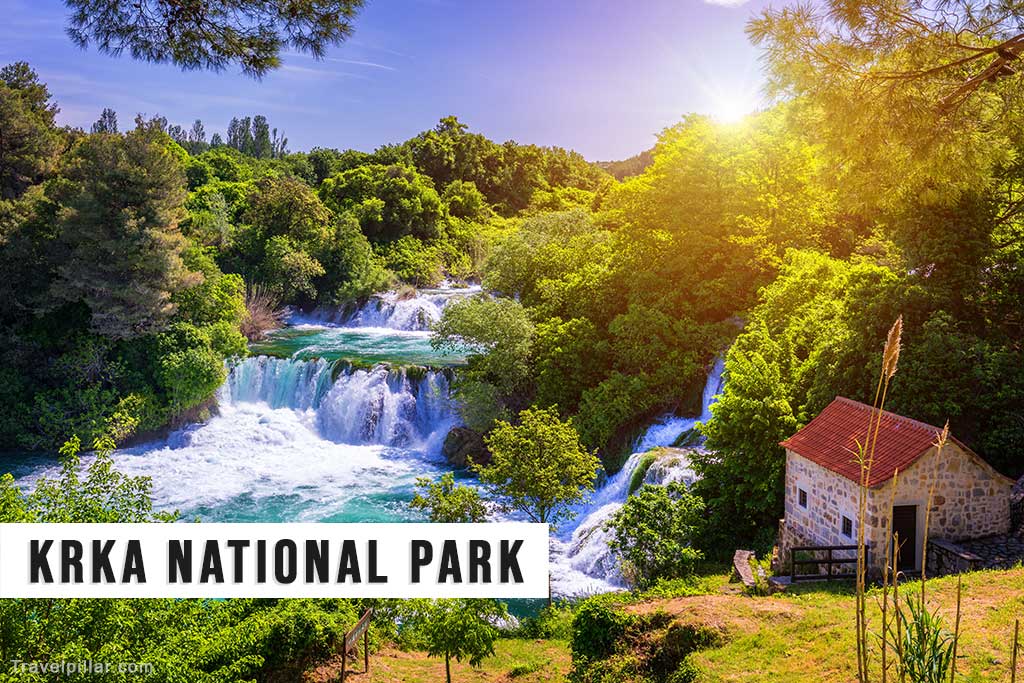
The most visited feature is Skradinski Buk, a large waterfall consisting of seventeen cascades spread across nearly a kilometre. Boardwalks and paths allow visitors to view the falls and surrounding pools, which are notable for their travertine formations. Another major site is Roški Slap, a series of cascades extending over 650 metres, framed by cliffs and vegetation. Together, these waterfalls represent some of the most striking natural features in Croatia.
The park is also notable for its biodiversity. It provides habitats for over 800 plant species and a range of animals, including fish, amphibians, reptiles, birds, and mammals. The Krka River’s clean waters and surrounding ecosystems support both endemic and migratory species, making the park an important area for ecological research and conservation.
Cultural landmarks are integrated into the park’s landscape. On the island of Visovac, a Franciscan monastery founded in the 15th century preserves manuscripts, artworks, and religious relics. Farther downstream, the Krka Monastery serves as an important Serbian Orthodox centre. Traditional watermills, some of which have been restored, illustrate the historical use of the river for industry.
Visitor facilities include marked trails, educational displays, and boat tours that connect various parts of the park. While swimming was once permitted near Skradinski Buk, current regulations restrict activities to protect natural systems. The park remains accessible from nearby towns, making it a popular day trip destination from Split or Šibenik.
Krka National Park offers a combination of waterfalls, karst landscapes, and cultural monuments. Its balance of natural beauty and historical heritage makes it one of Croatia’s most important inland attractions, complementing the coastal destinations of Dalmatia.
Official website: https://npkrka.hr/en_us/
Google map 4.5/5