
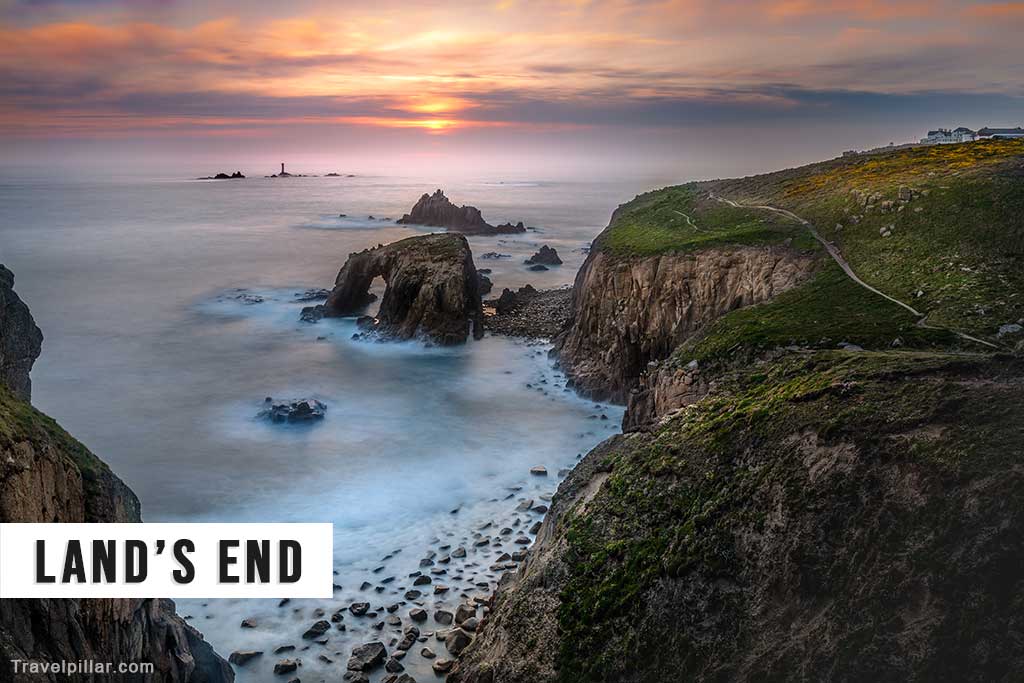
Land’s End, located at the westernmost point of mainland England in Cornwall, is one of the most iconic natural landmarks in the country. Known for its dramatic coastal scenery, it is a popular destination for visitors drawn to its rugged cliffs, expansive views of the Atlantic Ocean, and its symbolic significance as the “end” of the land.
The cliffs at Land’s End rise sharply from the sea, providing panoramic views of the surrounding waters and distant Isles of Scilly on clear days. The area is a favored spot for walkers and nature enthusiasts, as it forms part of the South West Coast Path, a long-distance footpath that stretches along the Cornish coast. The varied wildlife, including seabirds and occasional sightings of seals and dolphins, adds to the natural appeal of the site.
One of the key attractions at Land’s End is the famous signpost, which marks the distance to various locations, including John o’ Groats, the northernmost point of mainland Britain. Many visitors stop for a photograph at this landmark, which symbolizes the geographic extremities of the country.
Land’s End has a long history, with evidence of human settlement in the area dating back thousands of years. It is also associated with local myths and legends, particularly tales related to the ancient submerged kingdom of Lyonesse, said to have been lost beneath the sea.
The visitor center at Land’s End provides additional facilities, including exhibitions, shops, and cafes. While the area has been developed for tourism, it remains a place of natural beauty, attracting those interested in coastal landscapes and the wild, windswept environment.
For travelers to Cornwall, Land’s End is a key destination, offering a combination of scenic views, historical significance, and cultural interest. Its remote location and rugged surroundings provide a unique experience, making it a must-visit site for those exploring the Cornish coastline.
Google map 4.3/5