
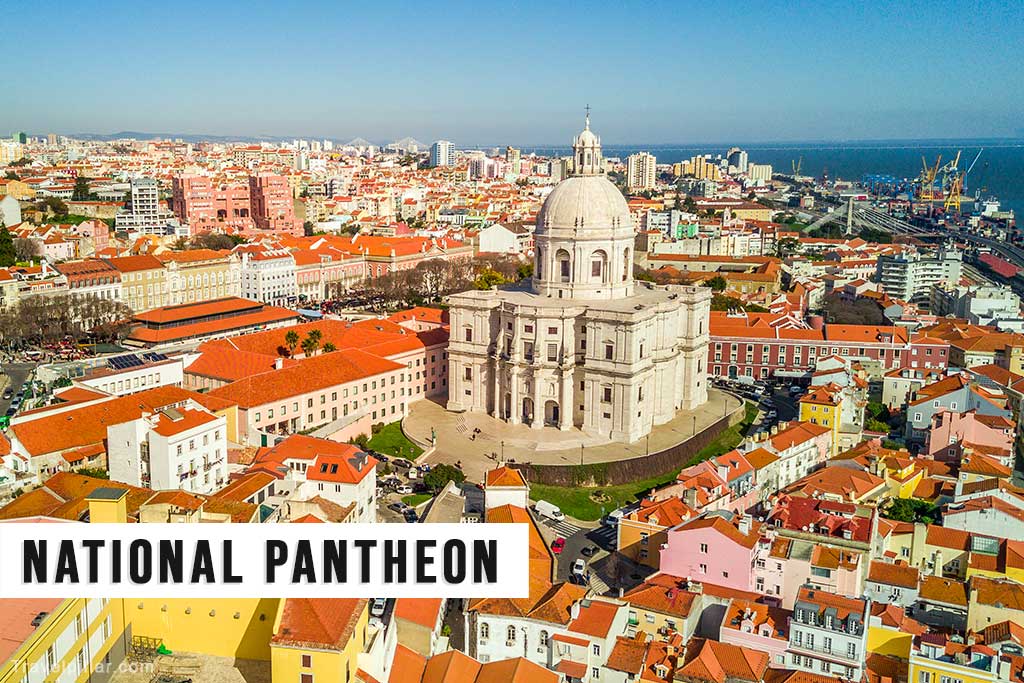
The National Pantheon, or Panteão Nacional in Portuguese, is a grand and historically significant monument located in the city of Lisbon, Portugal. This imposing structure serves as a final resting place for several notable Portuguese figures and stands as a symbol of the nation’s cultural and historical heritage.
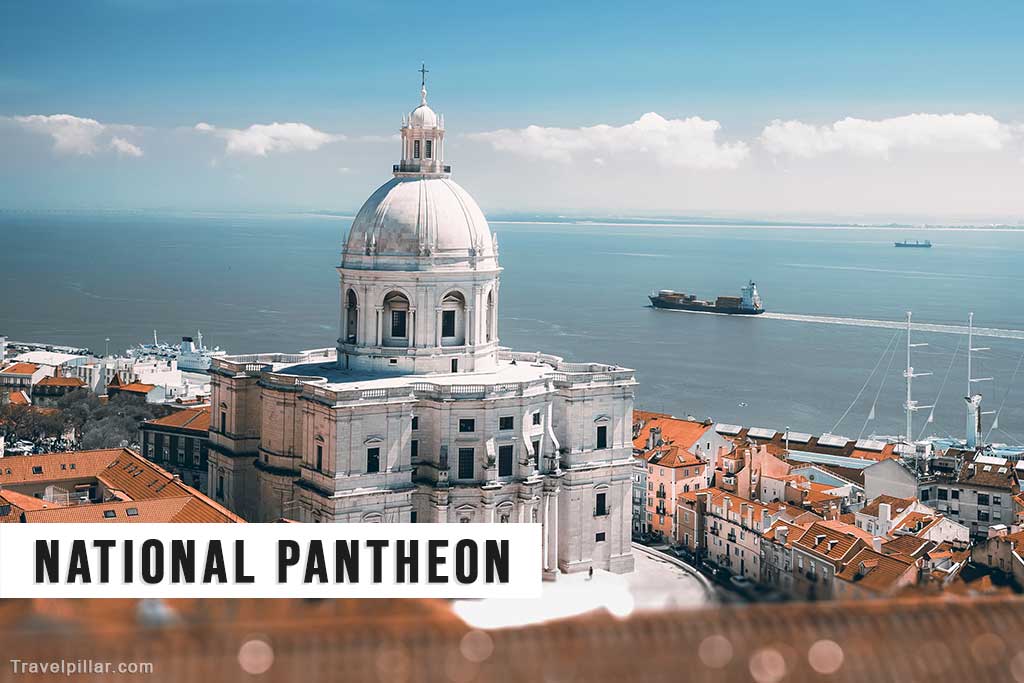
The National Pantheon was originally constructed as the Church of Santa Engrácia in the 17th century but was later repurposed to honor the memory of prominent Portuguese personalities. The church’s unique architectural style, characterized by its dome and ornate interior, reflects the Baroque and Neoclassical influences of the time.
The most distinctive feature of the National Pantheon is its massive dome, which is one of the largest in Portugal and is visible from many parts of Lisbon. The dome’s interior is adorned with stunning frescoes that depict scenes from the life of Saint Engrácia, to whom the original church was dedicated.
The National Pantheon houses the tombs and cenotaphs (empty tombs or memorials) of several notable Portuguese figures, including famous writers, poets, statesmen, and historical personalities. Some of the most well-known individuals interred here include Luís de Camões, Portugal’s greatest poet and author of “The Lusiads,” and Amália Rodrigues, the beloved Fado singer.
Visitors to the monument can explore its majestic interior, including the ornate chapel, and take in the artistic and architectural beauty of the monument. The church also features a crypt where the remains of the honored individuals rest.
The National Pantheon is located in the historic Alfama district of Lisbon, near other prominent landmarks such as the São Jorge Castle and the Miradouro de Santa Luzia, a viewpoint offering stunning views of the city and the Tagus River.
The monument also serves as a cultural center, hosting various events, exhibitions, and performances that celebrate Portuguese culture and history. Its location in the historic heart of Lisbon adds to its allure as a must-visit destination for tourists and a site of national pride for Portugal.
Official website: https://panteaonacional.gov.pt (Portugese)
Google map 4.5/5