
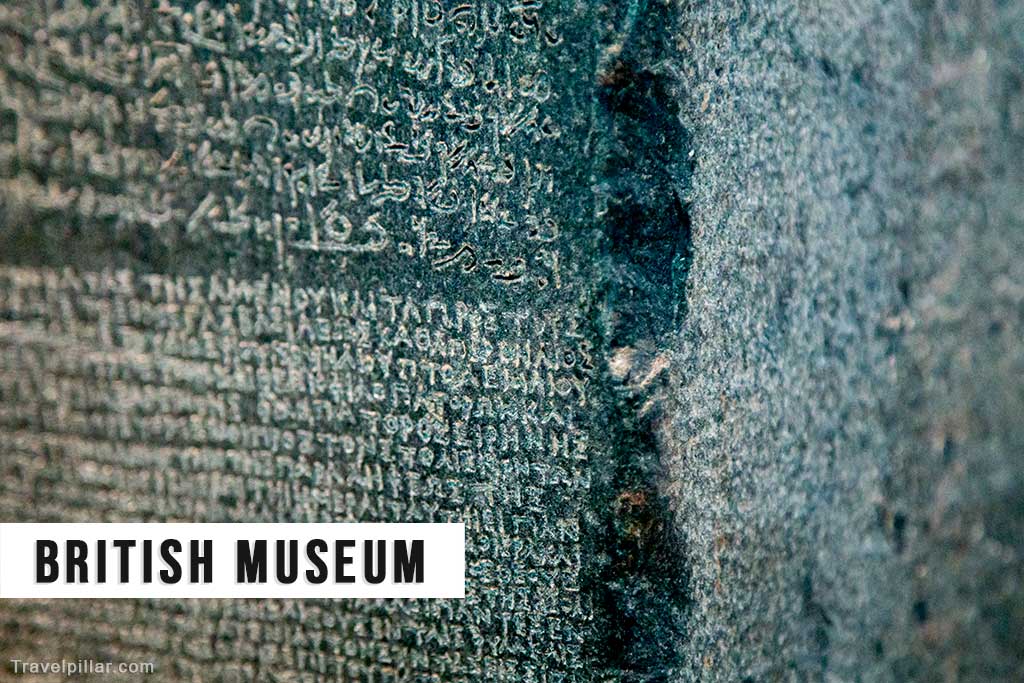
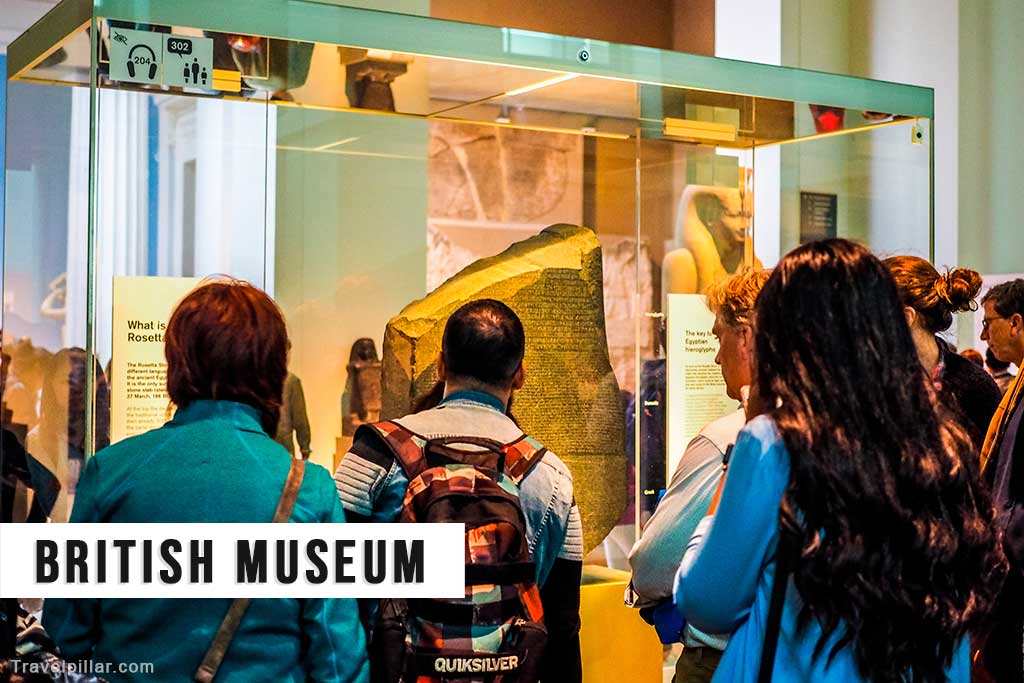
The Rosetta Stone is one of the most significant artifacts in the British Museum, pivotal to the modern understanding of ancient Egyptian language and culture. Unearthed in 1799 by French soldiers near the town of Rosetta (modern-day Rashid) in Egypt, this granodiorite stele dates back to 196 BCE during the Ptolemaic dynasty. Its inscription comprises three scripts: Ancient Greek, Demotic, and Egyptian hieroglyphs. This trilingual text provided the key to deciphering hieroglyphs, a script that had remained indecipherable for centuries.
The text on the stone is a decree issued by a council of priests during the reign of Ptolemy V. The decree affirms the royal cult and lists the king’s accomplishments. The Ancient Greek section, well understood by scholars at the time of its discovery, served as a linguistic bridge to unlock the meanings of the other scripts. French scholar Jean-François Champollion and English scientist Thomas Young played crucial roles in this process during the early 19th century.
Measuring 112.3 cm in height, 75.7 cm in width, and weighing approximately 760 kilograms, the Rosetta Stone is a fragment of a much larger stele. Its surface is marked by centuries of erosion and wear, yet the inscriptions remain legible enough to convey the monumental breakthrough it enabled.
The British Museum acquired the stone in 1802 under the terms of the Treaty of Alexandria, following the defeat of Napoleon’s forces in Egypt. It has since become one of the museum’s central attractions, symbolizing the intersection of archaeology, linguistics, and cross-cultural understanding.
The Rosetta Stone’s significance transcends its physical presence; it embodies a moment when ancient and modern worlds converged. Its decipherment unlocked vast troves of knowledge about ancient Egyptian civilization, shedding light on its religion, governance, and daily life. While the artifact continues to inspire scholarly study, its role as a cultural icon also raises broader discussions about the ethics of artifact ownership and repatriation, making it a focal point of both historical and contemporary dialogue.
Useful web link:
https://www.britishmuseum.org/blog/everything-you-ever-wanted-know-about-rosetta-stone