
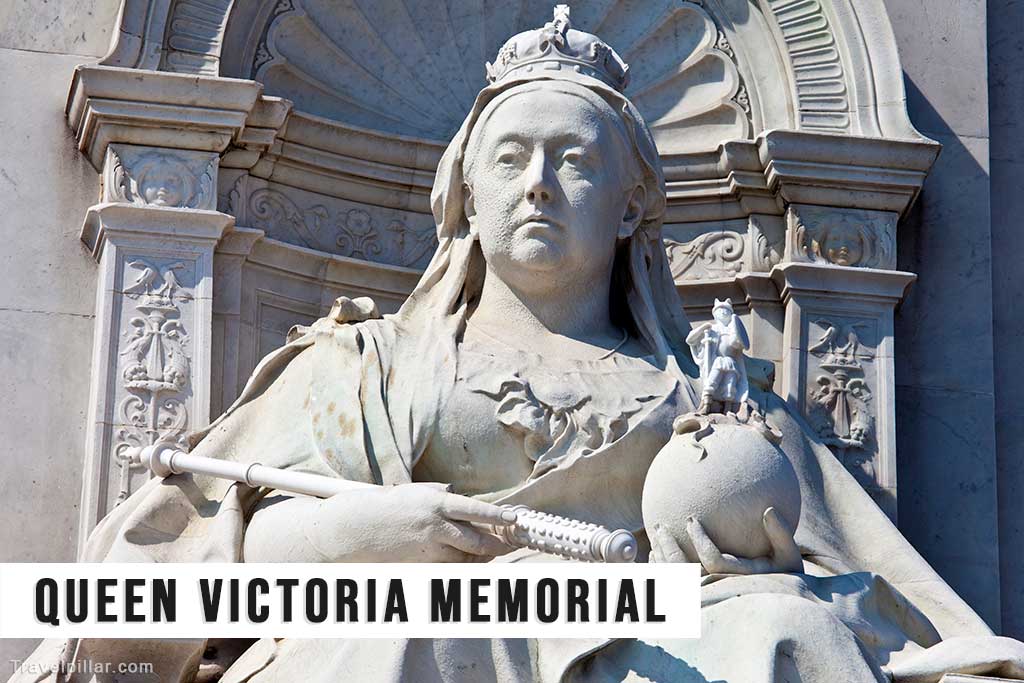
The Queen Victoria Memorial stands directly in front of Buckingham Palace and serves as a prominent commemorative monument to Queen Victoria, who reigned from 1837 to 1901. Commissioned shortly after her death, it was designed by the British sculptor Sir Thomas Brock and unveiled in 1911 by King George V.
Constructed primarily of white Carrara marble and gilded bronze, the monument rises to over 25 metres. At its summit stands a gilded, winged figure of Victory, posed atop a globe, symbolising imperial reach and triumph. She is flanked below by seated allegories of Courage and Constancy. Beneath them, a large seated statue of Queen Victoria occupies the central position, holding the sceptre and orb, the traditional emblems of monarchy.
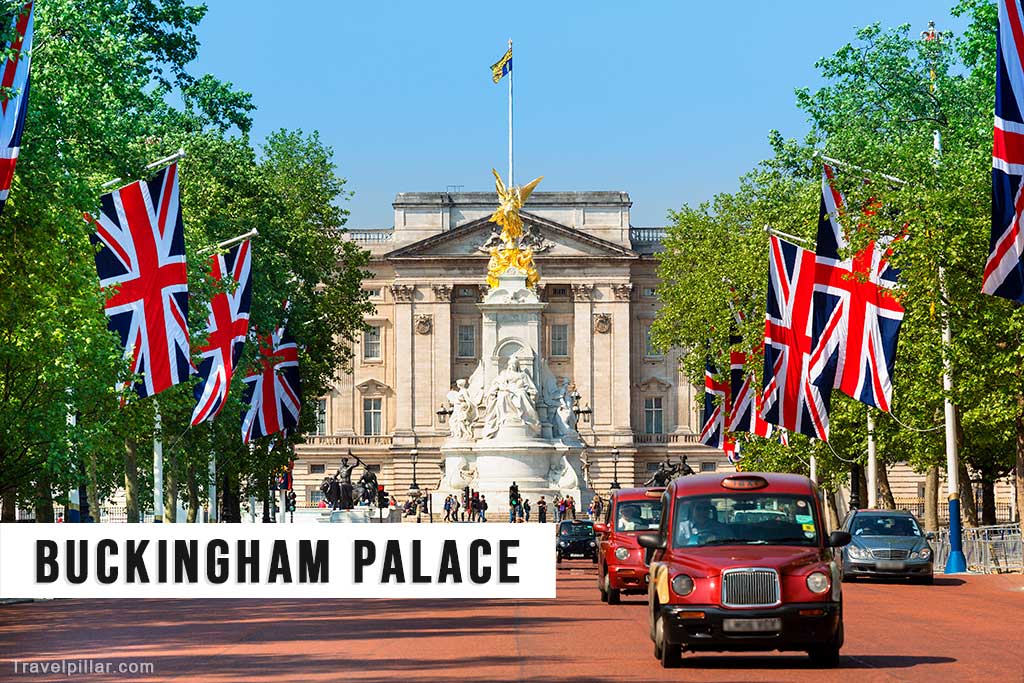
At the base are further allegorical figures representing Justice, Truth, and Motherhood, reflecting Victorian moral and national ideals. Flanking the structure are bronze sculptural groups symbolising naval and military power, each accompanied by lions, evoking strength and guardianship.
The steps and platform of the memorial serve as a popular viewing point during events such as the Changing of the Guard, the Trooping the Colour ceremony, and royal processions.
The Queen Victoria Memorial is not only a monument to a long-reigning monarch but also a symbol of the era she defined. It is frequently visited by tourists and features prominently in photographs and broadcasts involving Buckingham Palace. The memorial forms a visual and symbolic focal point along the ceremonial axis that stretches from Admiralty Arch through The Mall to the palace gates.
Access is free and unrestricted, though the area is particularly busy during state occasions and public holidays. Visitors can approach the memorial on foot from Green Park, St James’s Park, or Hyde Park Corner. It remains one of the most recognisable and photographed monuments in London.
Google map 4.7/5