
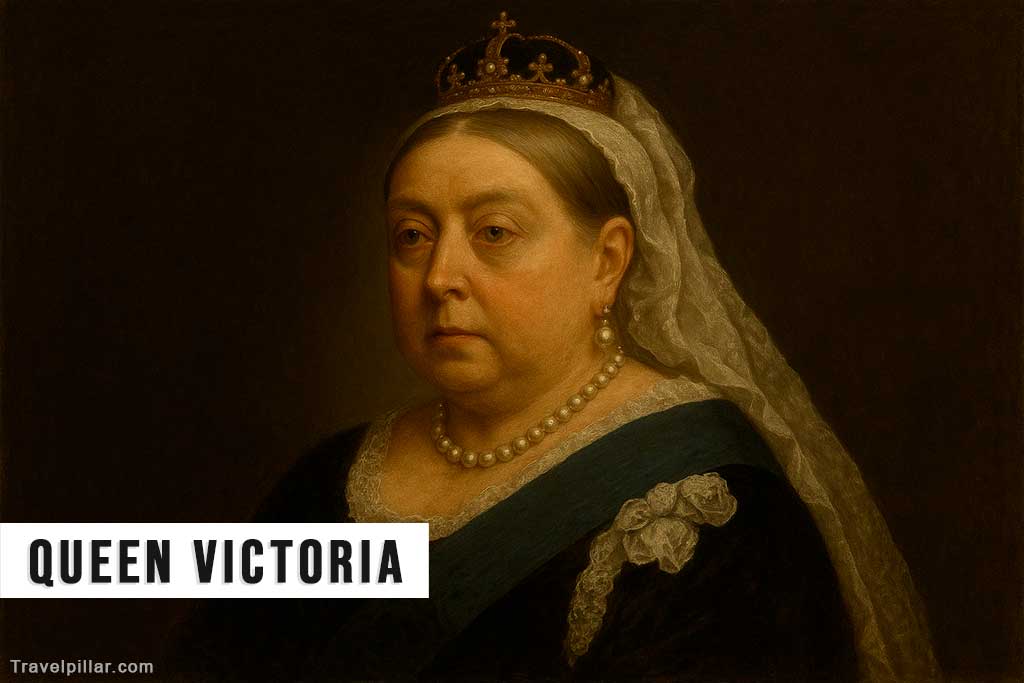
Queen Victoria, born on May 24, 1819, was the Queen of the United Kingdom of Great Britain and Ireland from June 20, 1837, until her death on January 22, 1901. Her reign of 63 years and seven months, known as the Victorian era, was longer than any of her predecessors and was a period of industrial, cultural, political, scientific, and military change within the United Kingdom.
Victoria was the daughter of Prince Edward, Duke of Kent and Strathearn (the fourth son of King George III), and Princess Victoria of Saxe-Coburg-Saalfeld. After the deaths of her father and grandfather in 1820, she became heir presumptive to her last surviving uncle, King William IV, in 1830.
Victoria became queen at the age of 18 following William’s death in 1837. Her coronation took place on June 28, 1838. In 1840, she married her first cousin, Prince Albert of Saxe-Coburg and Gotha, with whom she had nine children. Theirs was a close and supportive marriage, and Prince Albert became Victoria’s trusted advisor.
During Victoria’s reign, the United Kingdom experienced significant changes that included the expansion of the British Empire, industrial advances, political reforms, and developments in arts and science. The monarchy’s role also evolved to a more symbolic one, with power shifting towards Parliament.
Following the death of Prince Albert in 1861, Victoria plunged into deep mourning and largely withdrew from public life. Despite this, her popularity recovered in the later years of her reign. Her Golden and Diamond Jubilees were times of public celebration.
Queen Victoria’s long reign saw the United Kingdom evolve considerably, socially, politically, and economically. Today, she is remembered for her role in this transformation, as well as for her personal character, which was marked by strong sense of duty and devotion to her country.
Monuments and Memorials to Queen Victoria
Queen Victoria Memorial, Buckingham Palace, London
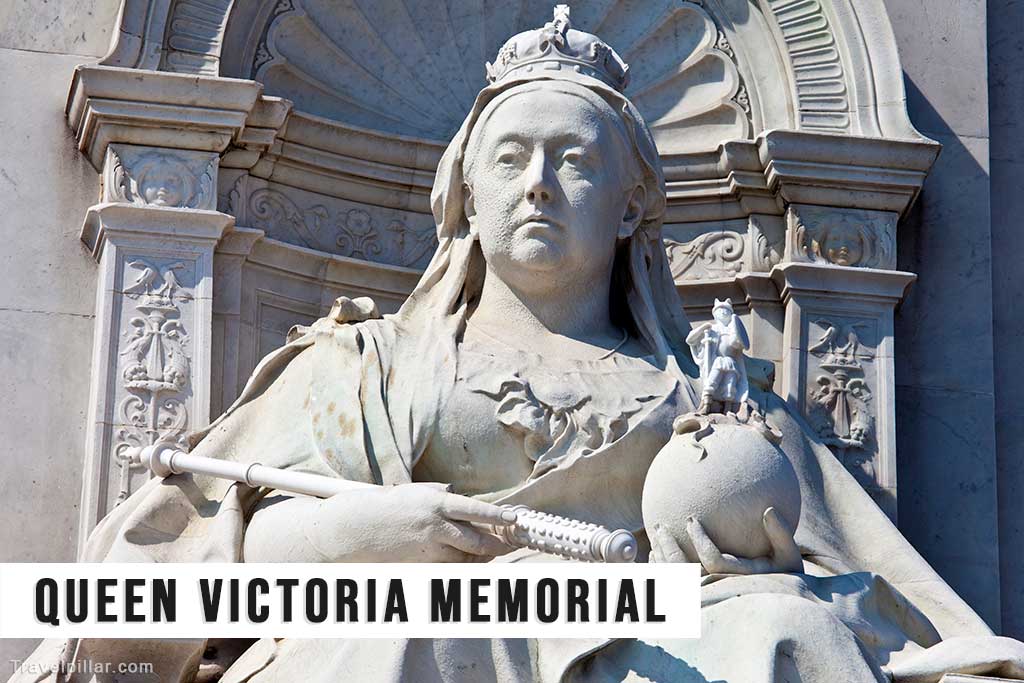
The Victoria Memorial stands directly in front of Buckingham Palace and was completed in 1911 to commemorate Queen Victoria. Designed in white marble, it features a central seated figure of the queen surrounded by allegorical statues representing virtues such as Justice and Truth. The monument forms the focal point of the ceremonial axis along The Mall and remains a key landmark within central London.
Google map 4.7/5
Queen Victoria Statue, Kensington Gardens, London
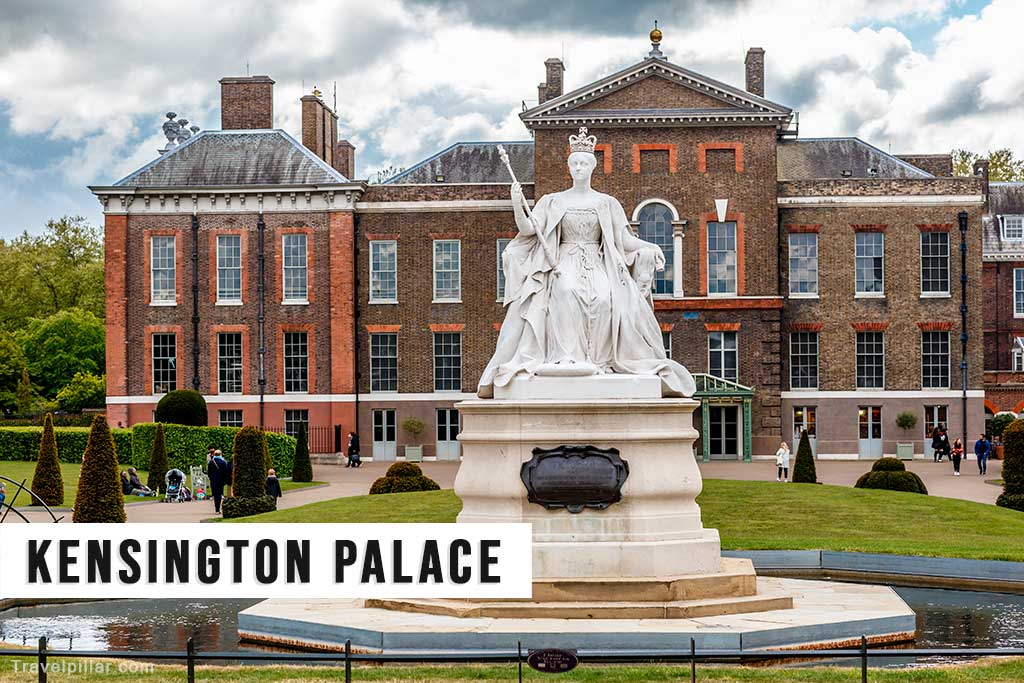
The Queen Victoria Statue in Kensington Gardens stands near Kensington Palace, where Victoria was born in 1819. The marble sculpture depicts her seated, holding orb and sceptre, emphasising her role as sovereign. Installed in the early 20th century, the statue marks the location associated with her early life and accession to the throne, providing historical context within the landscaped setting of the gardens.
Google map 4.6/5
Victoria and Albert Museum (V&A museum), London
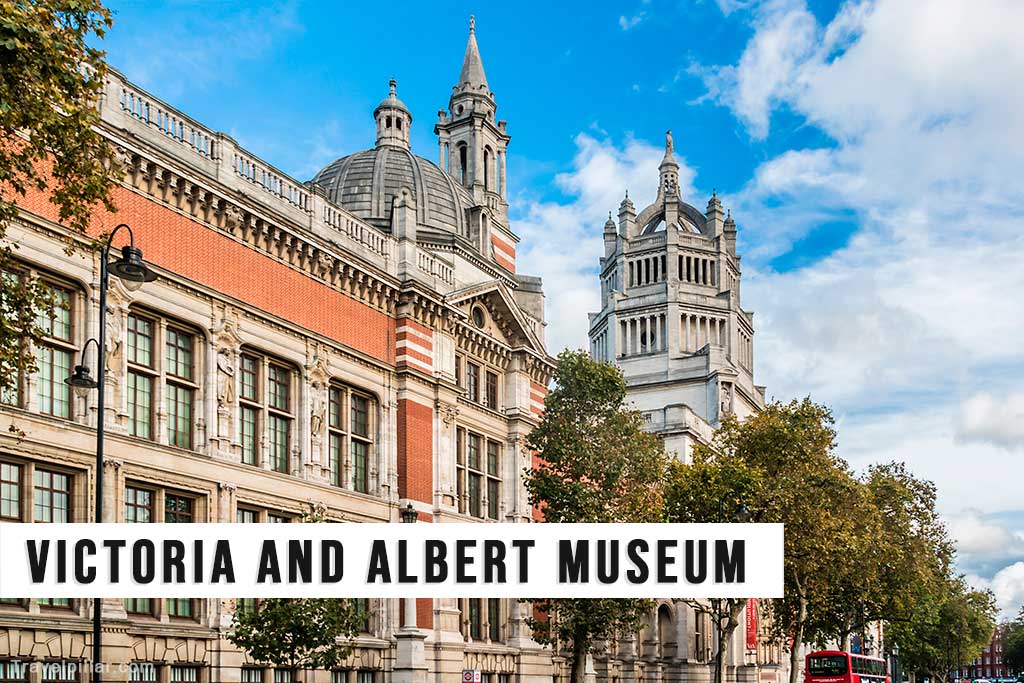
The Victoria and Albert Museum, commonly known as the V&A, was established in 1852 following the success of the Great Exhibition of 1851, strongly supported by Queen Victoria and Prince Albert. Located in South Kensington, it houses extensive collections of art, design and decorative objects. The museum reflects the Victorian commitment to education, industry and public access to culture.
Official website: https://www.vam.ac.uk
Google map 4.7/5