
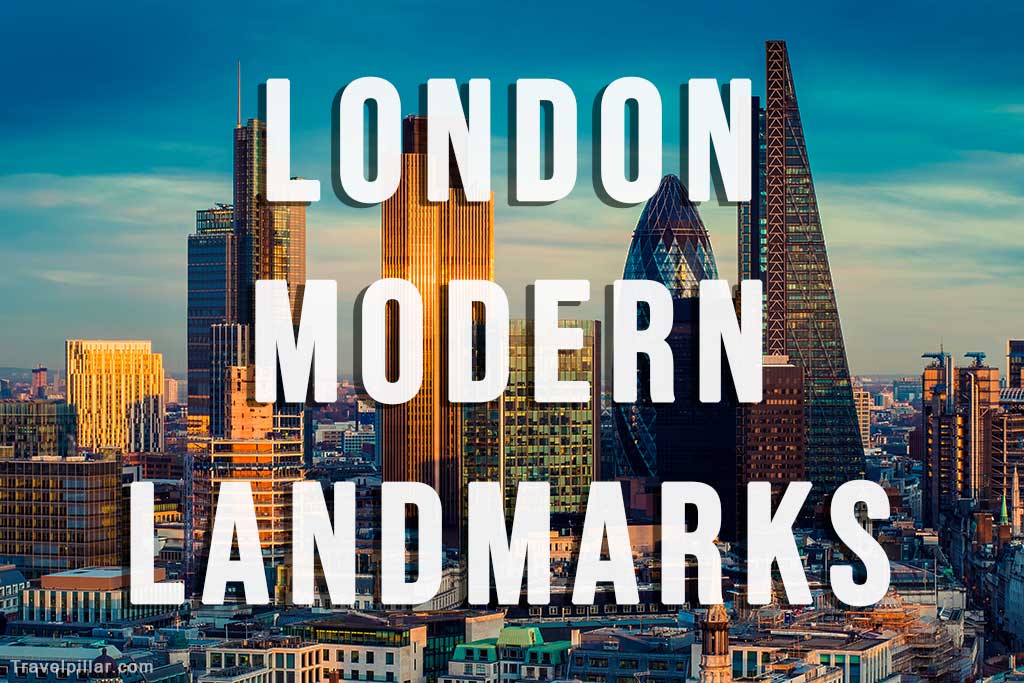
London features a range of modern landmarks that reflect its ongoing architectural and cultural development. These include contemporary buildings, public installations, and major infrastructure projects completed in recent decades. Often located alongside historic structures, they contribute to the city’s evolving skyline and urban identity. Many are accessible to the public and serve as offices, viewing platforms, or cultural venues. This guide outlines prominent modern landmarks of interest in London.
#01 London Eye
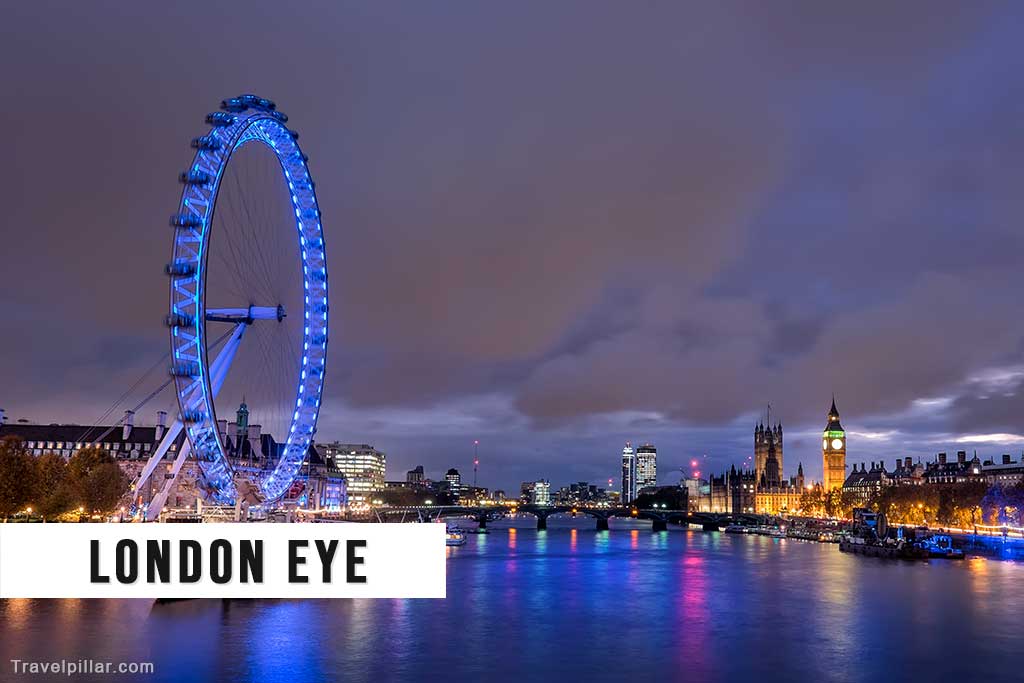
The London Eye is a large observation wheel located on the South Bank of the River Thames. Completed in 2000, it stands 135 metres tall and provides panoramic views of central London. Each of its enclosed capsules accommodates up to 25 people. Originally built as a temporary structure to mark the millennium, it has since become a permanent and popular attraction. The rotation takes approximately 30 minutes. Admission is ticketed.
Official website: https://www.londoneye.com
Google map 4.5/5
#02 The Walkie-Talkie Building
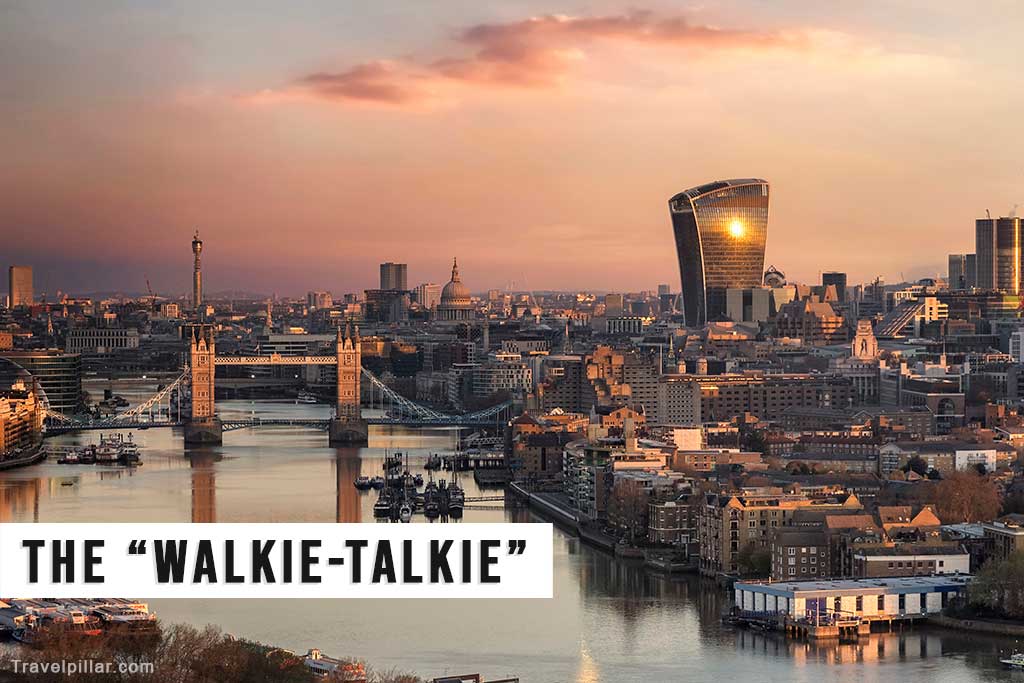
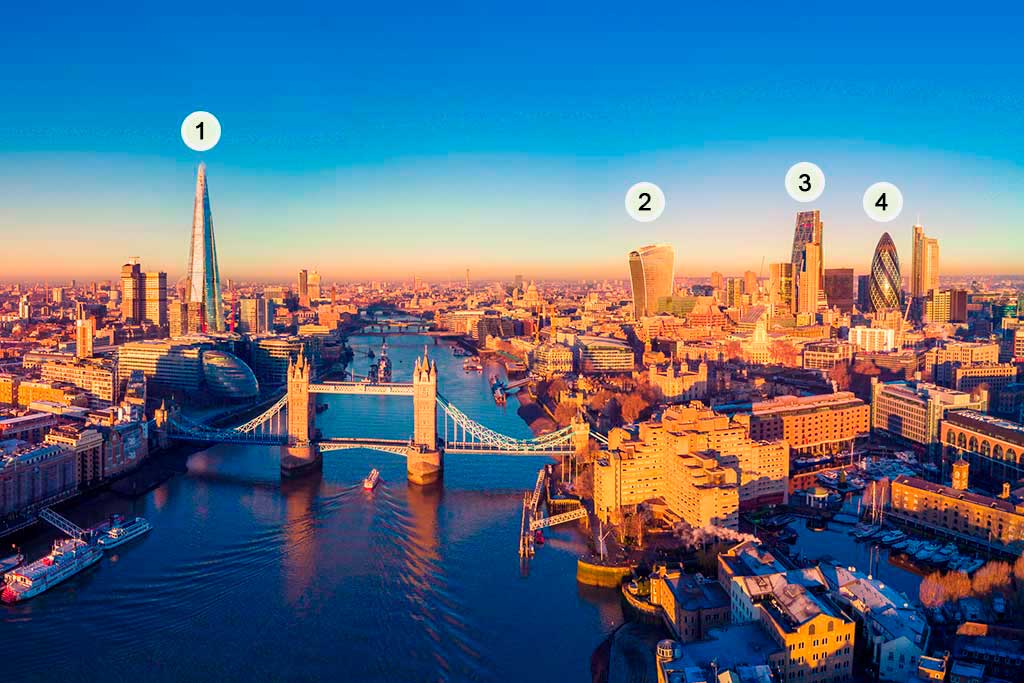
The Walkie-Talkie, officially known as 20 Fenchurch Street, is a commercial skyscraper in the City of London, completed in 2014. Designed by Rafael Viñoly, it is notable for its distinctive top-heavy shape. The building houses offices and includes the Sky Garden, a public space with landscaped gardens, restaurants, and panoramic views. At 160 metres tall, it contributes to London’s modern skyline and is accessible to visitors by advance booking.
Google map 4.7/5
#03 The Garden at 120

The Garden at 120 is a rooftop garden located on the 15th floor of 120 Fenchurch Street in London. Opened in 2019, it offers panoramic views of the city skyline, including iconic landmarks like The Shard and the Gherkin. The garden spans over 15,000 square feet and features lush greenery, seating areas, and a rooftop bar. It serves as a serene oasis in the heart of the financial district, providing visitors with a unique perspective of London’s architecture and urban landscape.
Google map 4.8/5
#04 The Gherkin
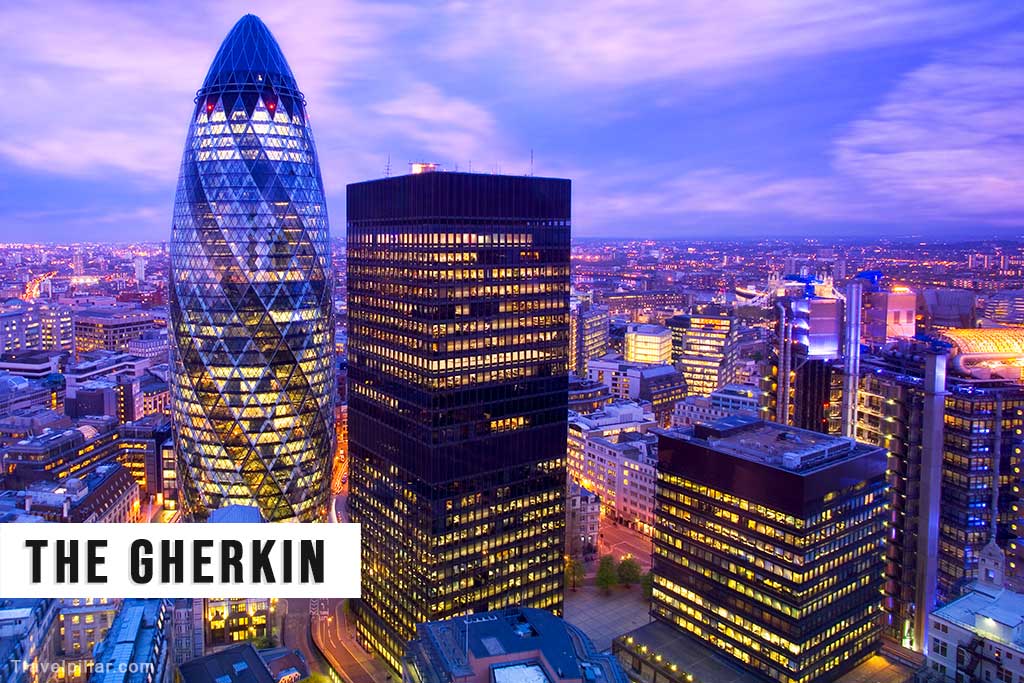
30 St Mary Axe, commonly known as The Gherkin, is a commercial skyscraper in the City of London, completed in 2004. Designed by Foster and Partners, it stands 180 metres tall and features a distinctive curved, tapering form with an energy-efficient glass façade. The building is primarily used for office space and is not generally open to the public. It remains a prominent example of contemporary architecture in London’s financial district.
Google map 4.6/5
#05 The Shard
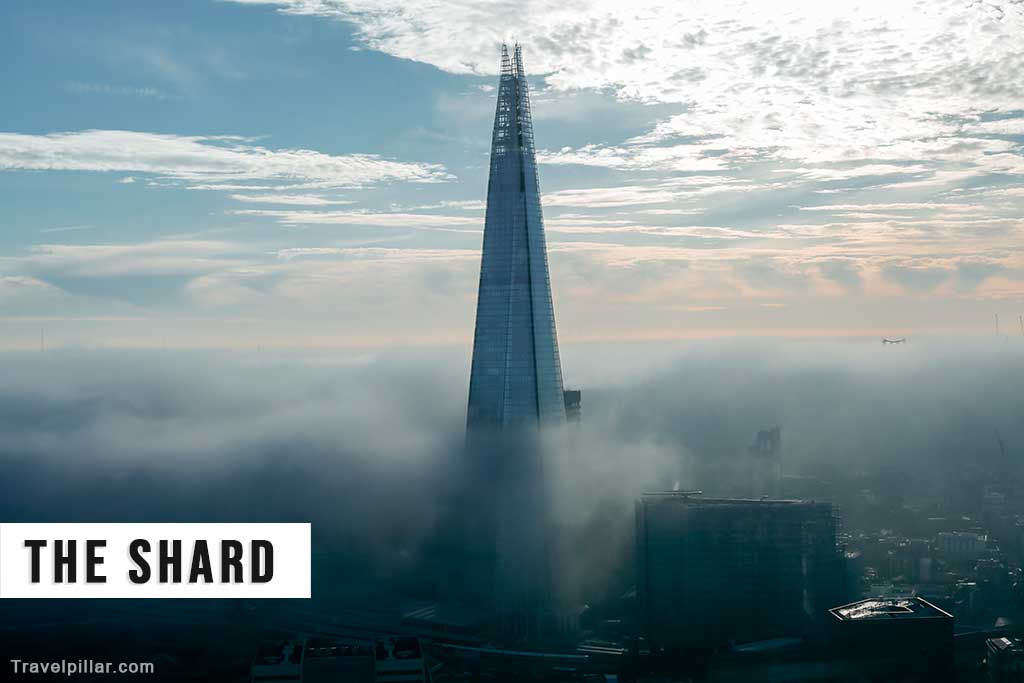
The Shard, located near London Bridge, is the tallest building in the United Kingdom, standing at 310 metres. Designed by architect Renzo Piano and completed in 2012, it features a glass-clad, tapering design resembling a shard of glass. The building houses offices, restaurants, a hotel, and residential units. Its public viewing platform, The View from The Shard, offers panoramic views of London. The structure is a prominent feature of the city’s skyline.
Google map 4.6/5
#06 Millennium Bridge
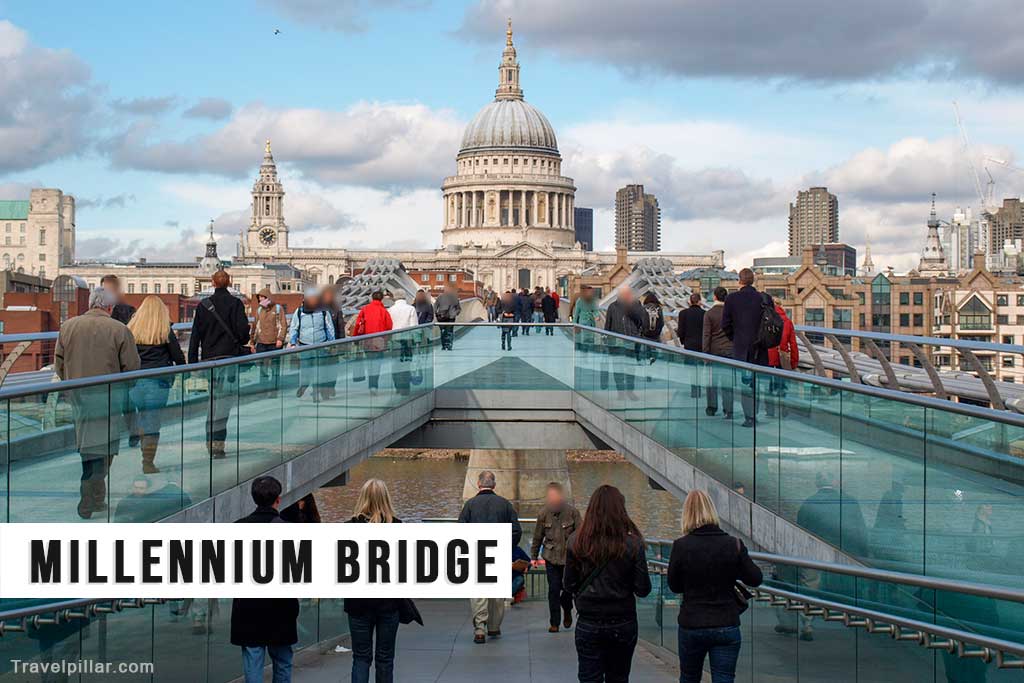
Millennium Bridge is a steel suspension footbridge that spans the River Thames, connecting the City of London with Bankside. Opened in 2000, it was designed by architect Sir Norman Foster, sculptor Sir Anthony Caro, and engineering firm Arup. The bridge’s sleek, modern design and unique “blade of light” appearance make it a striking addition to the city’s skyline. It offers pedestrians unparalleled views of nearby landmarks, such as St. Paul’s Cathedral, Tate Modern, and the Globe Theatre, making it a popular spot for sightseeing and photography.
Google map 4.6/5
The Tate Modern Switch House
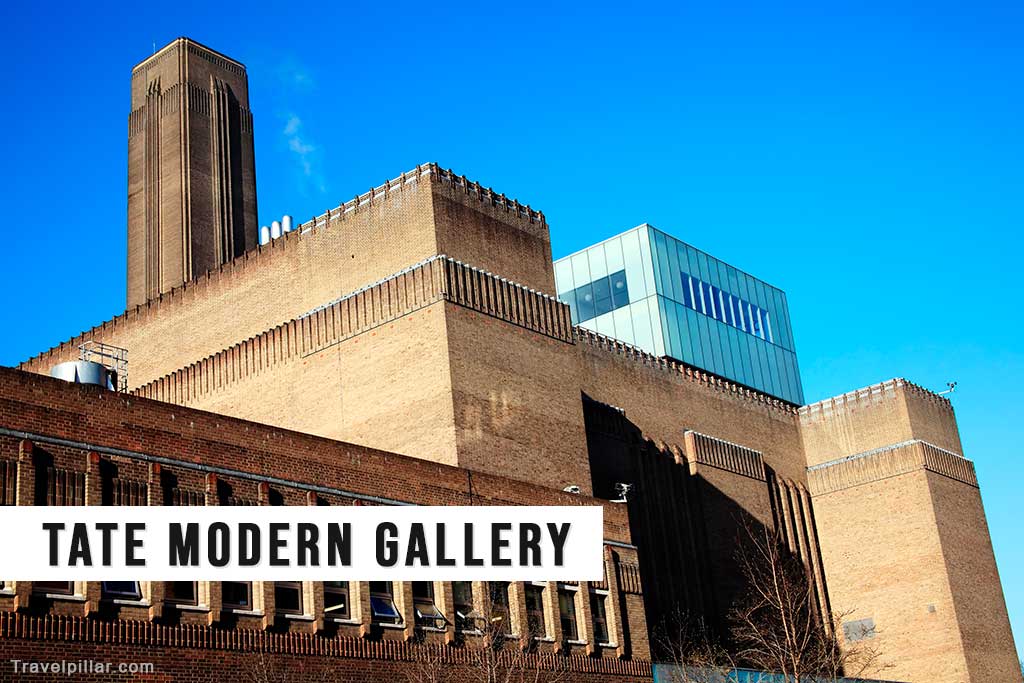
The Tate Modern Switch House, now known as the Blavatnik Building, is a ten-storey extension to the Tate Modern art gallery in London. Designed by Herzog & de Meuron and opened in 2016, it features a twisted brick form and expanded exhibition space. The building includes galleries, performance areas, and a rooftop viewing terrace. It complements the original power station structure and enhances the museum’s capacity for contemporary and experimental art displays.
Google map 4.5/5
The Leadenhall Building (The Cheesegrater)
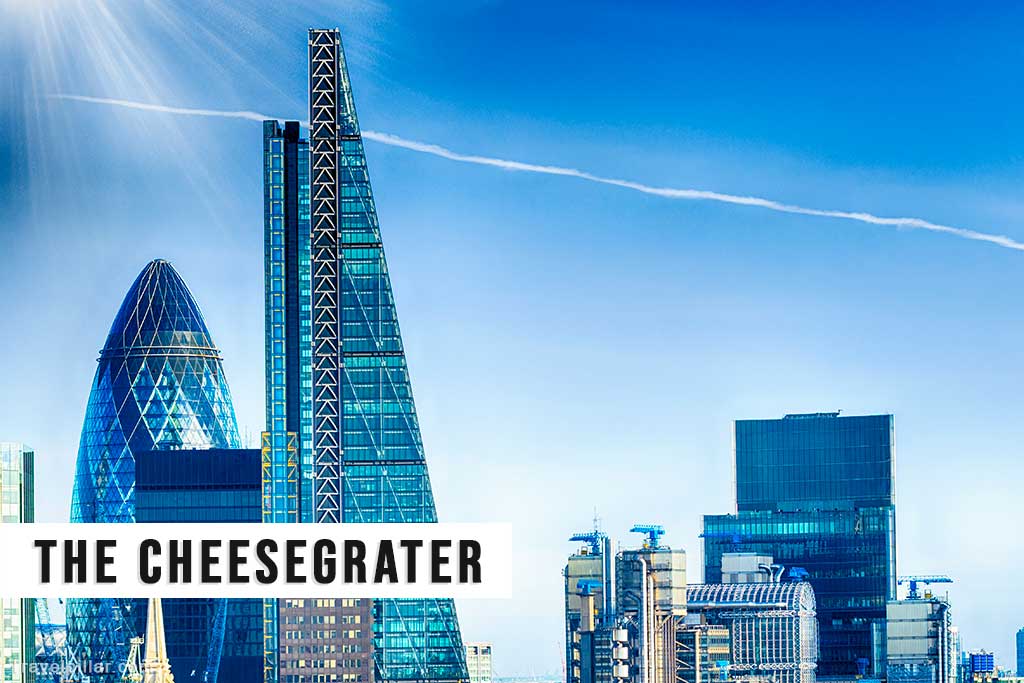
The Leadenhall Building, commonly known as The Cheesegrater, is a commercial skyscraper located in the City of London. Completed in 2014 and designed by Rogers Stirk Harbour + Partners, it stands 225 metres tall. Its distinctive sloping profile was designed to respect sightlines to St Paul’s Cathedral. The structure features external steel bracing and a tapered form. It is primarily occupied by offices and contributes to the modern skyline of London’s financial district.
Google map 4.6/5
One Canada Square
One Canada Square is a prominent skyscraper located in Canary Wharf, East London. Completed in 1991 and designed by César Pelli, it stands at 235 metres and was the tallest building in the UK until 2012. The tower features a distinctive stainless steel cladding and pyramid-shaped roof. Primarily used for office space, it is part of the Canary Wharf financial district and symbolises the area’s transformation into a major commercial centre.
Google map
City Hall
City Hall, located on the South Bank near Tower Bridge, served as the headquarters of the Greater London Authority from 2002 to 2021. Designed by Norman Foster, the building features a distinctive bulbous form intended to maximise energy efficiency. It housed the offices of the Mayor of London and the London Assembly. The structure includes a public viewing area and an interior spiral ramp. It remains an example of early 21st-century civic architecture.
Google map