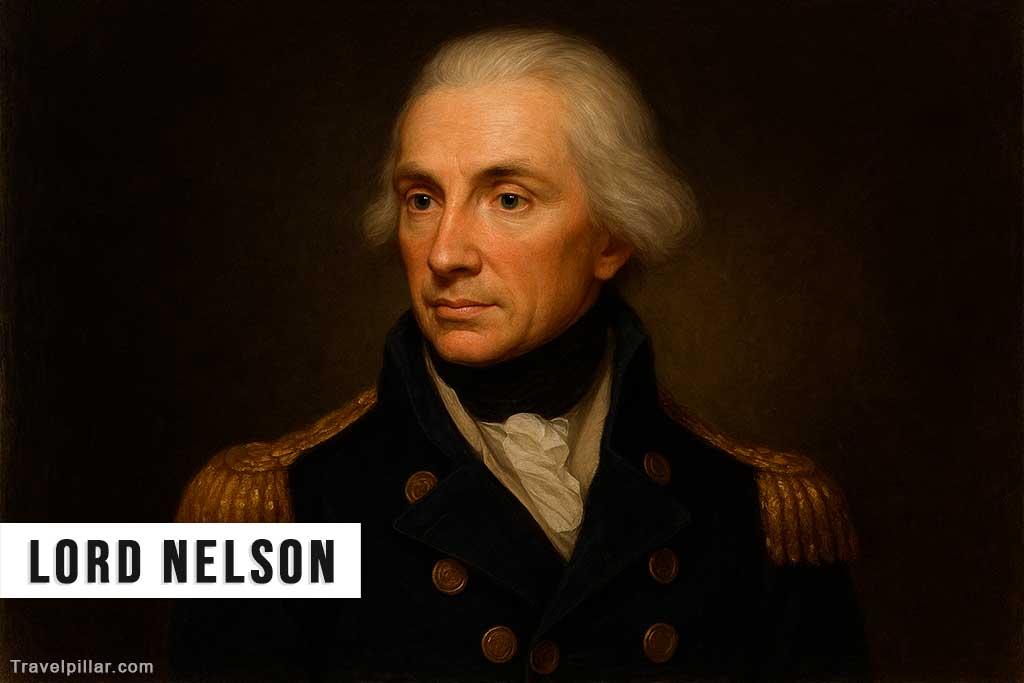
Admiral Horatio Nelson, commonly known as Lord Nelson, is a key figure in British naval history. Born on September 29, 1758, in Norfolk, England, he rose to prominence through his strategic military expertise and leadership during the Napoleonic Wars. Nelson’s legacy is primarily linked to his victories against the French and Spanish navies, securing British naval dominance during the late 18th and early 19th centuries.
Nelson joined the Royal Navy at the age of 12, quickly advancing through the ranks due to his skill and courage. He gained early recognition during the American War of Independence and later played a significant role in battles against Revolutionary France. His reputation grew with his bold tactics, including his willingness to disregard traditional naval strategies in favor of more aggressive maneuvers.
One of Nelson’s most famous victories came during the Battle of the Nile in 1798, where he successfully destroyed a significant portion of the French fleet, crippling Napoleon’s ambitions in the Eastern Mediterranean. This victory established Nelson as a national hero in Britain and significantly contributed to the Royal Navy’s reputation as a formidable force.
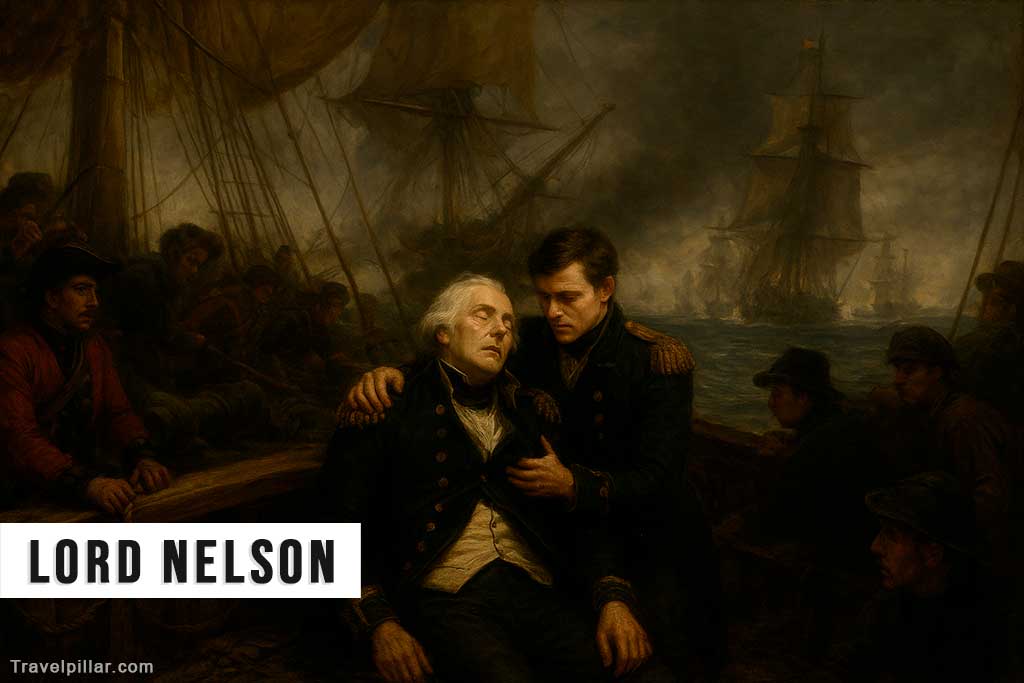
Nelson’s most celebrated and final battle was the Battle of Trafalgar on October 21, 1805. Commanding a fleet of 27 ships against a combined French and Spanish armada of 33 vessels, Nelson employed unconventional tactics that resulted in a decisive British victory. His approach ensured British naval supremacy for years to come. However, during the battle, Nelson was mortally wounded by a French sniper and died aboard his flagship, HMS Victory.
Lord Nelson is commemorated through various monuments and landmarks, the most notable being Nelson’s Column in Trafalgar Square, London. His tomb lies in St. Paul’s Cathedral, serving as a testament to his impact on British naval history.
Lord Nelson’s legacy endures as a symbol of naval excellence and strategic military innovation. His life and career continue to be a point of interest for those visiting the historical sites associated with his name and accomplishments.