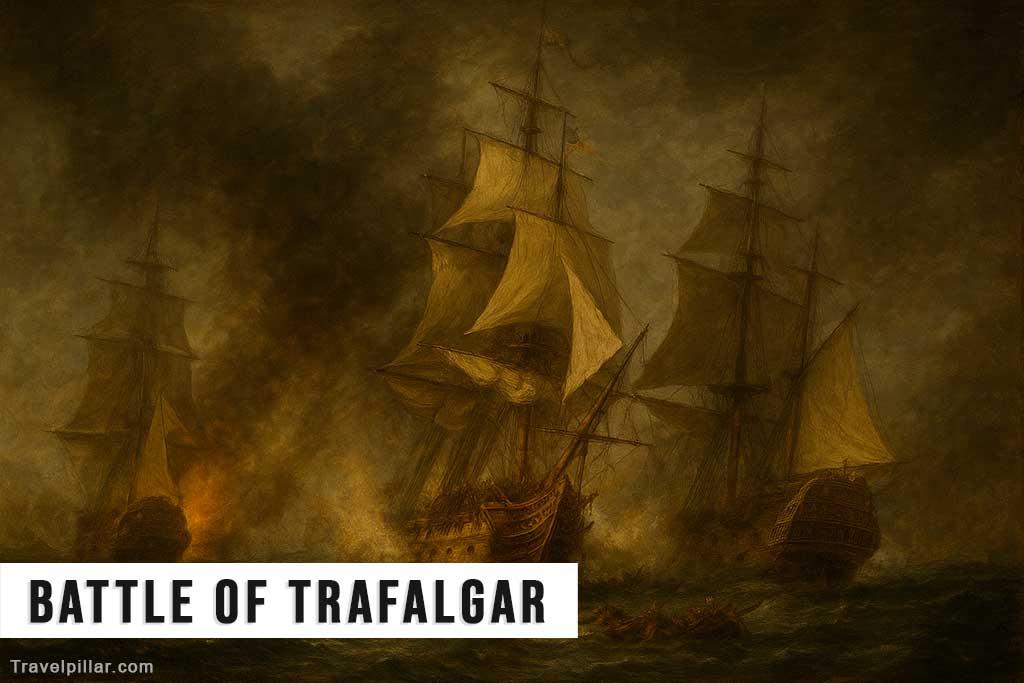
The Battle of Trafalgar, fought on October 21, 1805, was a significant naval engagement during the Napoleonic Wars. It took place off the southwest coast of Spain, near Cape Trafalgar. This decisive battle saw the British Royal Navy, commanded by Vice-Admiral Horatio Nelson, confront a combined fleet of French and Spanish ships. The outcome established British naval dominance and significantly influenced European power dynamics for years to come.
At the time, Napoleon Bonaparte aimed to invade Britain, but his plans relied on weakening the British Navy, which had maintained control over the seas. To challenge British naval supremacy, the French and Spanish navies united, forming a fleet of 33 ships under the command of French Admiral Pierre-Charles Villeneuve. In response, the British fleet, comprising 27 ships under Nelson, prepared to block this threat.
Nelson’s strategy at Trafalgar was unconventional. Instead of lining up his ships parallel to the enemy, as was customary in naval warfare, he split his fleet into two columns and sailed directly at the Franco-Spanish line. This maneuver, known as “crossing the T,” allowed the British ships to break through the enemy formation, creating confusion and making it difficult for the opposing fleet to coordinate its actions.
HMS Victory, Nelson’s flagship, led one of the columns and was heavily involved in the fighting. During the battle, Victory engaged several enemy vessels, delivering devastating broadsides. The intensity of the combat caused substantial casualties and damage on both sides. However, the British fleet’s disciplined gunnery and strategic maneuvering ultimately gave them a decisive advantage.
Despite the fierce resistance, the Franco-Spanish fleet was unable to recover from the disarray caused by Nelson’s tactics. The British destroyed or captured 22 enemy ships without losing a single vessel. The victory not only thwarted Napoleon’s invasion plans but also secured British control over the seas, a dominance that would continue for the next century.
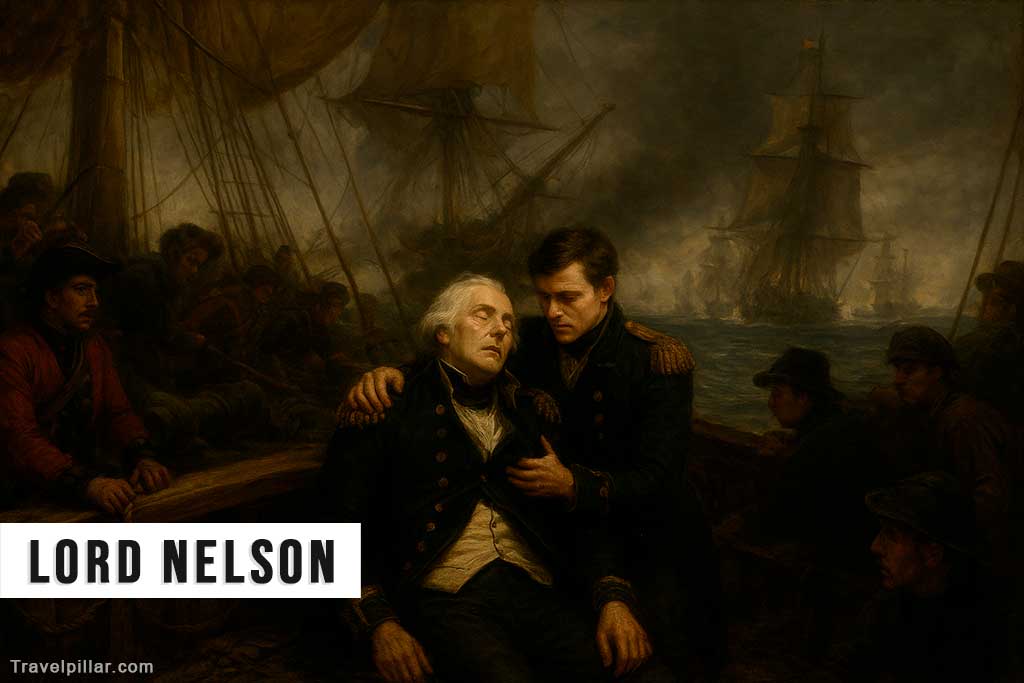
The Battle of Trafalgar came at a cost. Vice-Admiral Nelson was mortally wounded by a French sniper aboard HMS Victory and died shortly after the battle concluded. His death elevated him to national hero status in Britain, and his tactics at Trafalgar became a reference point for naval strategy.

Today, the legacy of the Battle of Trafalgar is commemorated in various ways, including Trafalgar Square in London, which features Nelson’s Column as a tribute to the fallen admiral. For visitors to the Portsmouth Historic Dockyard, HMS Victory provides a direct connection to this historical event, offering insight into naval warfare during the Napoleonic era. The battle remains a pivotal moment in maritime history, highlighting the impact of strategy and naval power in shaping world events.