
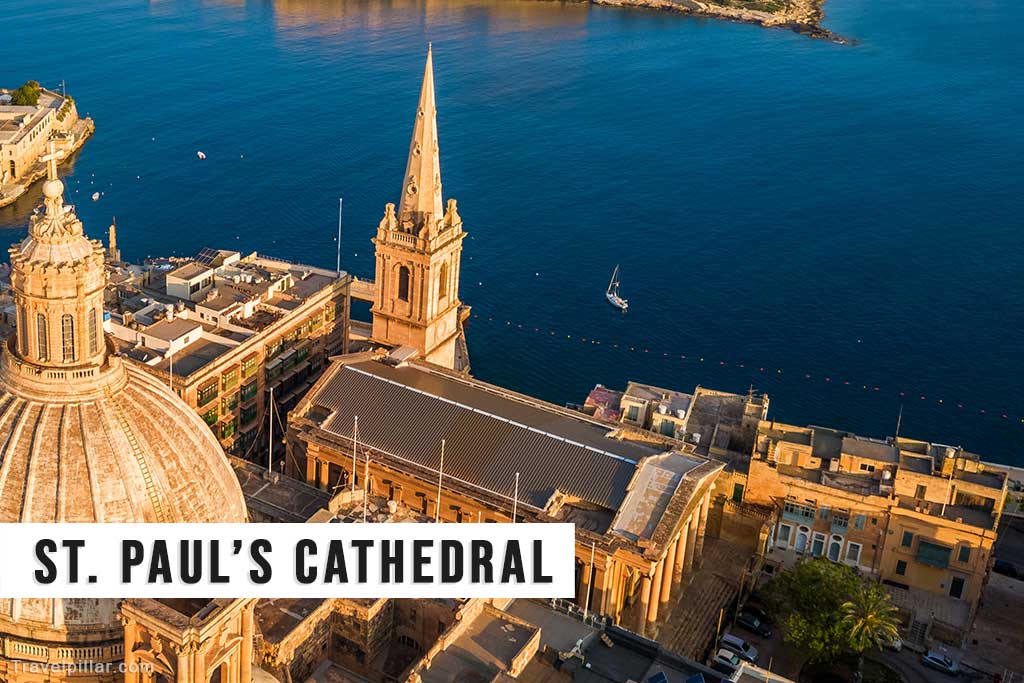
St. Paul’s Pro-Cathedral in Valletta, Malta, serves as one of the key Anglican churches on the island. It was constructed between 1839 and 1844 under the direction of Queen Adelaide, widow of King William IV, during her visit to Malta. Recognizing the need for an Anglican place of worship, she funded the construction of the cathedral, which now stands prominently in the heart of Valletta.
The cathedral was designed by the English architect William Scamp. Its neoclassical façade is marked by a tall, slender spire that dominates the Valletta skyline, making it a recognizable landmark from various vantage points around the city and the Grand Harbour. This spire reaches a height of 60 meters, emphasizing the building’s presence.
The interior of St. Paul’s Pro-Cathedral is relatively austere compared to the richly adorned Catholic churches in Malta, reflecting the Anglican tradition. The nave is spacious and well-lit, with wooden pews arranged in a traditional layout. Stained glass windows add a touch of color and depict various biblical scenes, contributing to the serene atmosphere within the cathedral.
The cathedral’s altar is simple yet elegant, emphasizing the Anglican focus on worship and the spoken word. Various memorial plaques and monuments within the cathedral commemorate British military personnel and other notable figures, highlighting Malta’s historical ties with Britain.
St. Paul’s Pro-Cathedral continues to serve the Anglican community in Malta, offering regular services and acting as a hub for religious and cultural activities. Its historical significance, architectural elegance, and active role in the community make it an important site for both worshippers and visitors exploring Valletta’s rich heritage.