
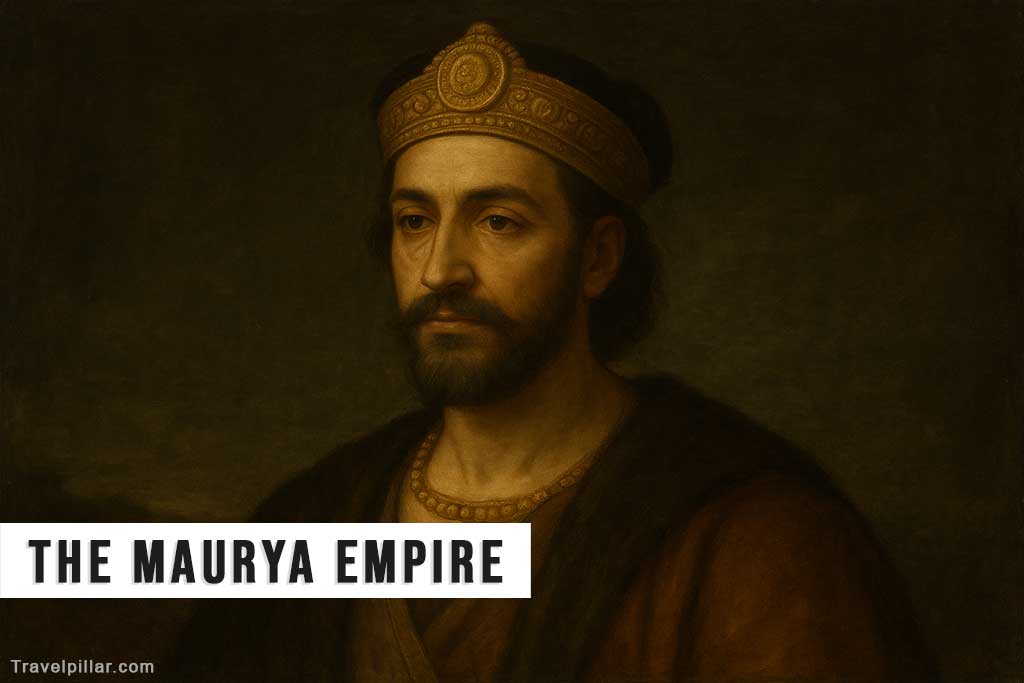
The Maurya Empire was one of the largest and most powerful empires in ancient India, lasting from approximately 322 BCE to 185 BCE. It was founded by Chandragupta Maurya, who established his rule by overthrowing the Nanda Dynasty in the Magadha region, located in present-day Bihar. The Mauryan Empire is notable for its administrative efficiency, military strength, and cultural achievements.
Chandragupta Maurya’s reign marked the beginning of a centralized and organized government. He implemented a hierarchical system of administration, dividing the empire into provinces governed by appointed officials. This structure allowed for effective control over a vast territory that extended from modern-day Afghanistan in the northwest to the Bay of Bengal in the east, and as far south as the Deccan Plateau.
One of the key figures of the Maurya Empire was Emperor Ashoka, Chandragupta’s grandson, who ruled from around 268 BCE to 232 BCE. Ashoka is renowned for his conversion to Buddhism after the bloody Kalinga War, which led him to renounce violence and promote the principles of dharma (righteousness). He played a crucial role in spreading Buddhism across Asia, sending missionaries to regions as far as Sri Lanka and Southeast Asia. The edicts of Ashoka, inscribed on pillars and rocks across the subcontinent, provide valuable insights into his policies and the ethical values of the time.
The Mauryan Empire is also known for its advancements in infrastructure, including roads, irrigation systems, and urban planning. Its capital city, Pataliputra (modern-day Patna), became a hub of political, economic, and cultural activities. The economic prosperity of the empire was driven by agriculture, trade, and the efficient collection of taxes.
Today, remnants of the Mauryan Empire can be explored in various archaeological sites across India, particularly in Bihar and Uttar Pradesh. The Ashoka Pillars, found in locations like Sarnath and Vaishali, are key attractions for visitors interested in ancient Indian history. The Maurya Empire remains a significant chapter in India’s historical narrative, illustrating the complexities of early governance, religion, and cultural development.