
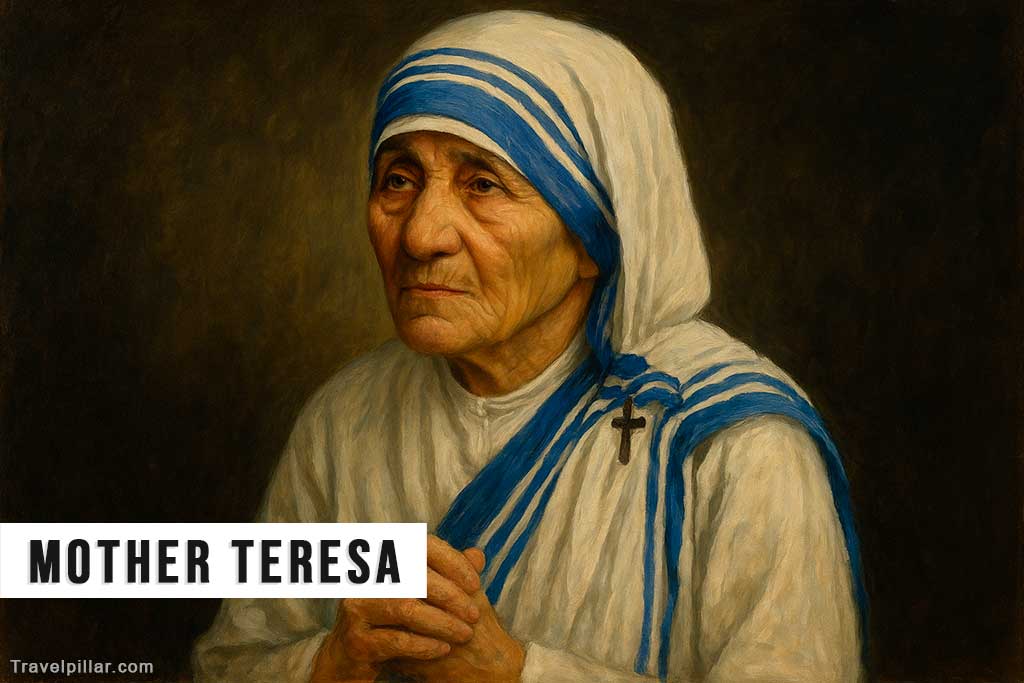
Mother Teresa, born Anjezë Gonxhe Bojaxhiu on August 26, 1910, in Skopje, then part of the Ottoman Empire, now North Macedonia, was an Albanian-Indian Roman Catholic nun and missionary. She is globally recognized for her charitable work among the poor and disenfranchised, for which she was awarded the Nobel Peace Prize in 1979.
In 1928, Mother Teresa moved to Ireland and then to India, where she lived most of her life. In 1948, she became an Indian citizen and founded the Missionaries of Charity, a Roman Catholic religious congregation, in Kolkata in 1950. The congregation manages homes for people dying of HIV/AIDS, leprosy, and tuberculosis; soup kitchens; orphanages; schools; and dispensaries.
Mother Teresa dedicated her life to serving the sick and poor. Her work expanded internationally, and by the time of her death, the Missionaries of Charity had over 4,000 nuns and was operating 610 missions in 123 countries.
She was controversially criticized for her opposition to contraception and for the poor conditions in her houses for the dying. Despite this, Mother Teresa’s commitment to the “least of these” made her a global symbol of charitable work, and she is often revered as a saint.
In 2003, she was beatified as “Blessed Teresa of Calcutta”. A second miracle credited to her intercession was approved by Pope Francis in December 2015, paving the way for her to be recognized as a saint by the Catholic Church.
Mother Teresa died on September 5, 1997. Her life and works continue to inspire countless individuals to selfless service and charity, truly exemplifying a life dedicated to others. Her legacy lives on in the organization she founded and the millions who find inspiration from her life.