
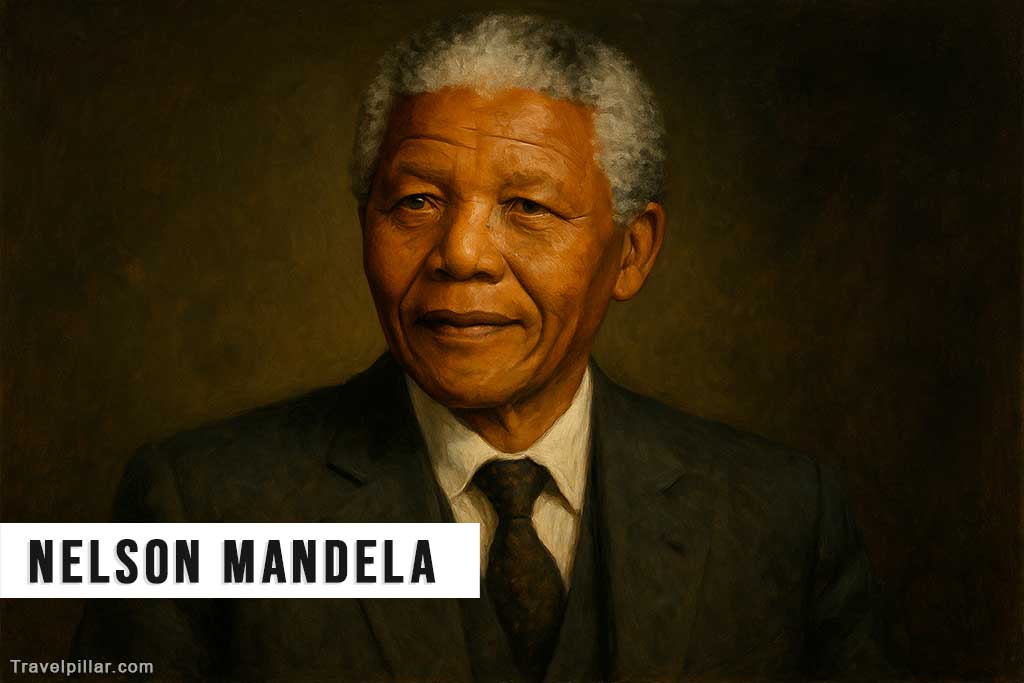
Nelson Mandela, born on July 18, 1918, in Mvezo, South Africa, was a prominent political leader and the first black president of South Africa, serving from 1994 to 1999. His tireless fight against apartheid, a policy of systemic racial segregation and discrimination, and his commitment to reconciliation in the post-apartheid era earned him global admiration and recognition.
Mandela initially adopted nonviolent resistance against apartheid, joining the African National Congress (ANC) in 1943. However, in the face of the South African government’s brutal crackdown on protests, he later embraced armed resistance, leading the ANC’s military wing.
In 1962, Mandela was arrested and charged with sabotage and conspiracy to overthrow the government. He was sentenced to life imprisonment and spent 27 years in jail, primarily on Robben Island, where he became an international symbol of resistance to apartheid.
In 1990, amid increasing domestic and international pressure, the South African government released Mandela and began negotiations to end apartheid. These talks resulted in Mandela’s election as president in South Africa’s first multiracial elections in 1994.
As president, Mandela prioritized reconciliation and sought to heal the racial divisions created by apartheid. He established the Truth and Reconciliation Commission to investigate past human rights abuses and promoted policies to alleviate poverty and inequality.
Mandela stepped down as president in 1999 but continued to advocate for social and human rights issues globally. In 2009, the United Nations declared July 18 “Nelson Mandela International Day” in recognition of his contributions to peace and freedom.
Nelson Mandela passed away on December 5, 2013. His dedication to the cause of racial justice and his commitment to reconciliation have made him one of the most significant political leaders of the 20th century, leaving an indelible legacy in South Africa and the world.