

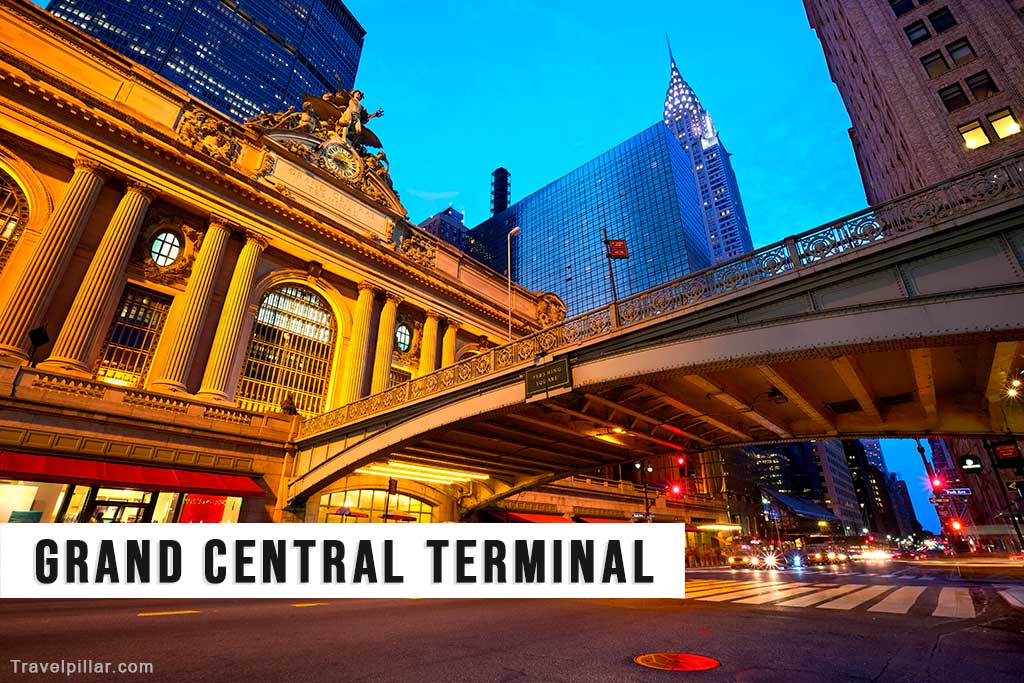
Located at 42nd Street and Park Avenue in Midtown Manhattan, Grand Central Terminal stands as an enduring symbol of New York City‘s dynamism and architectural prowess. Completed in 1913 and designed by the architectural firms of Reed and Stem and Warren and Wetmore, the Beaux-Arts style terminal is a monumental testament to the city’s growth during the early 20th century.
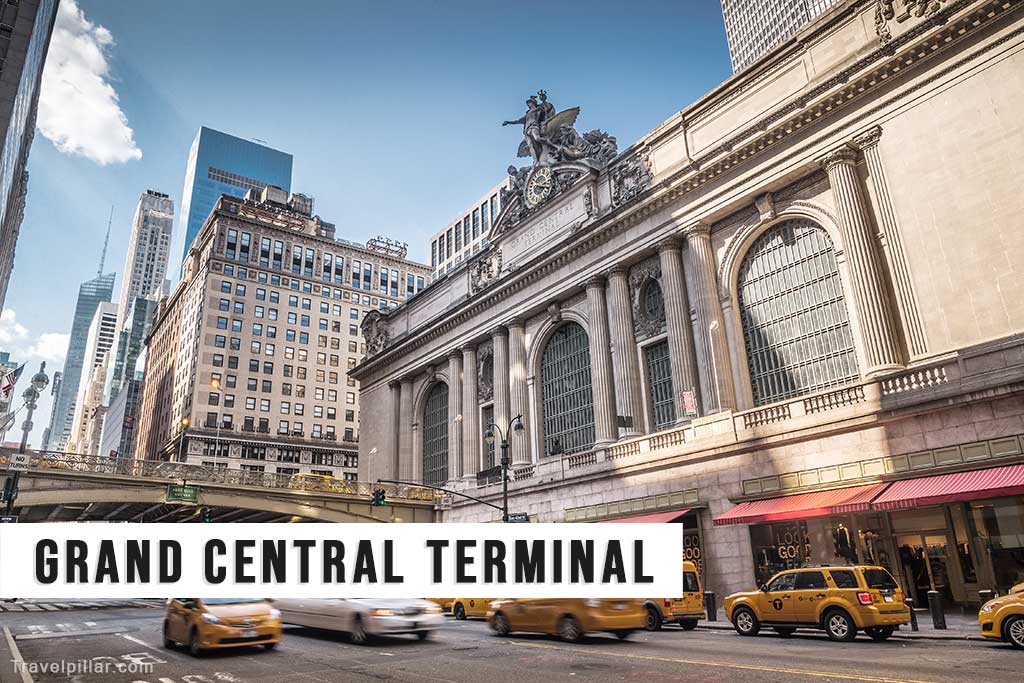
Often mistakenly referred to as “Grand Central Station,” the structure is indeed a terminal, as trains terminate their journeys here. Covering 48 acres, the terminal is one of the world’s largest and features 44 platforms that serve 67 tracks along its two levels. It was constructed to serve the New York Central and Hudson River Railroads and remains a vital hub for Metro-North Railroad services today.
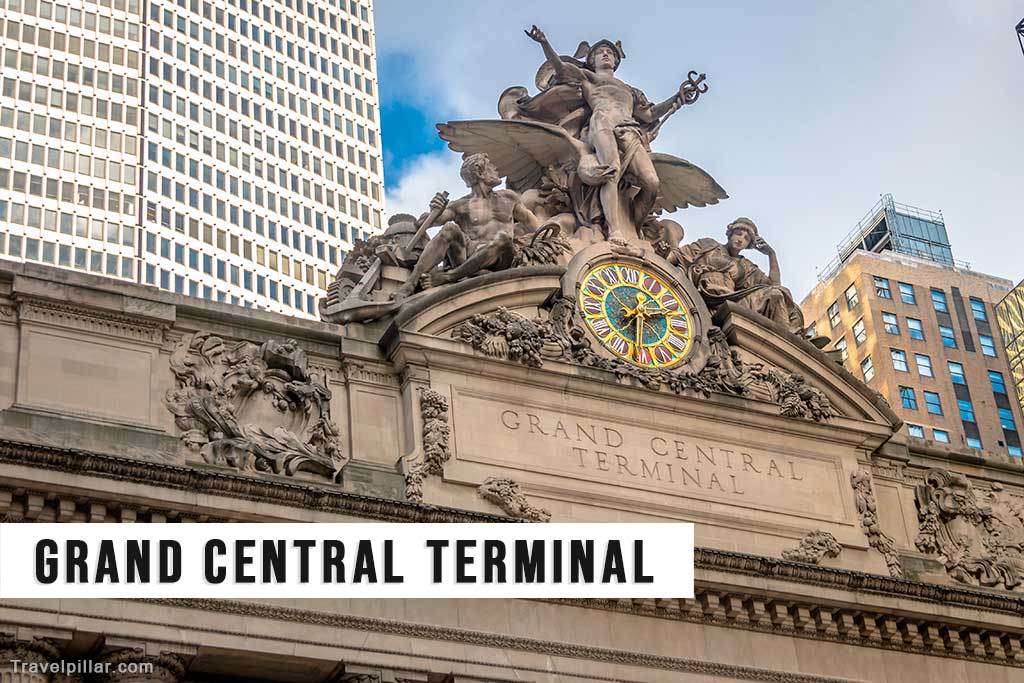
The exterior of Grand Central is graced with a magnificent sculpture group designed by French artist Jules-Félix Coutan. The 50-foot statuary features Mercury, the god of travel, flanked by Hercules and Minerva, representing strength and wisdom. These figures are set against a clock, the world’s largest example of Tiffany glass, 13 feet in diameter.
Inside, the Main Concourse, an expansive space of 275 feet long by 120 feet wide by 125 feet high, draws immediate attention with its celestial ceiling. Painted in 1912 by French artist Paul César Helleu, the astronomical mural depicts a Mediterranean sky with October-to-March zodiac constellations.
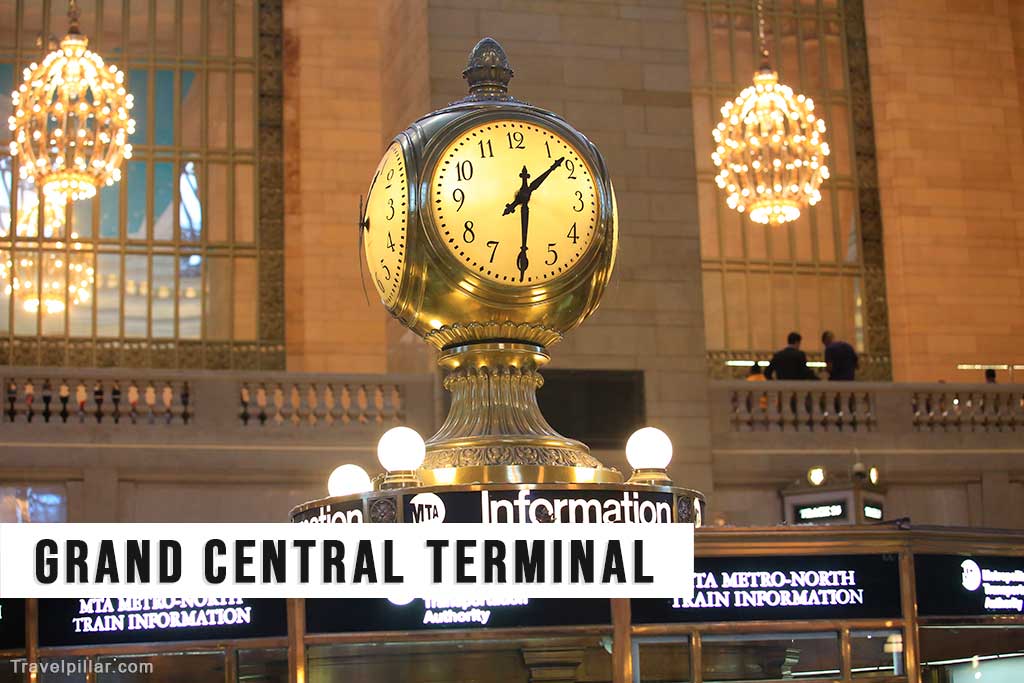
The terminal is also home to an array of retail outlets and eateries, including the renowned Oyster Bar with its Guastavino-tiled vaults, and the ‘whispering gallery,’ where a whisper into one corner can be heard diagonally across the space due to the unique acoustics.
In summary, Grand Central Terminal, with its architectural grandeur, sophisticated detailing, and vital role in urban transportation, stands as a testament to New York City‘s architectural and cultural heritage.
Official website: https://grandcentralterminal.com
Google map 4.8/5