

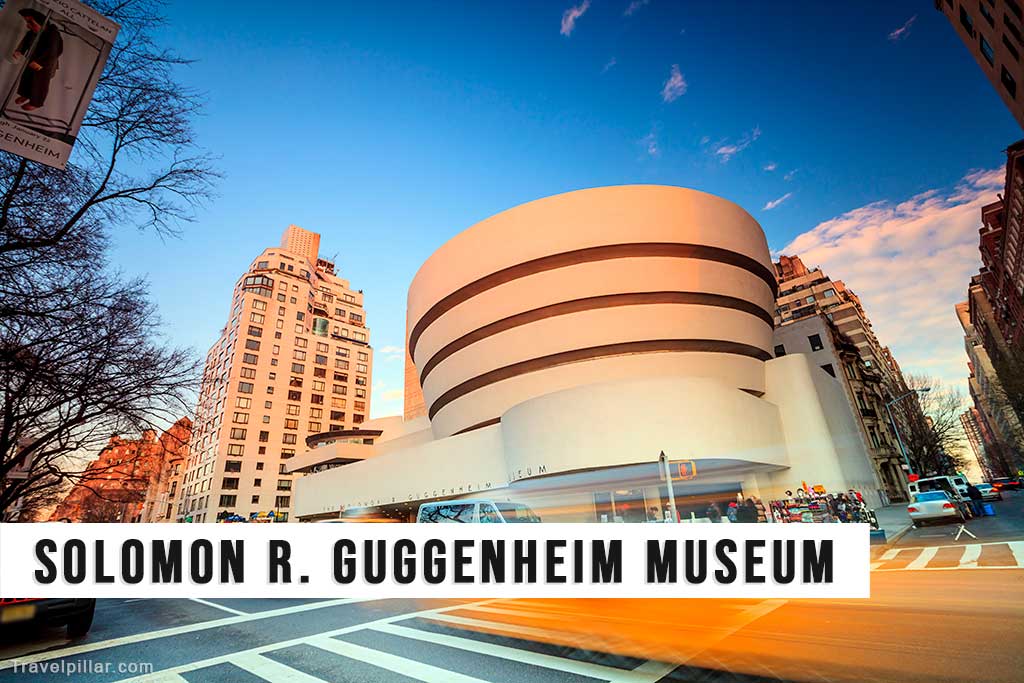
The Solomon R. Guggenheim Museum is located on Fifth Avenue in Manhattan, New York City, opposite Central Park. Opened in 1959, it was designed by architect Frank Lloyd Wright and is widely regarded as one of the most distinctive museum buildings in the world. Its cylindrical form and continuous spiral ramp depart from traditional museum layouts, making the structure itself a significant work of modern architecture.
The museum was founded by Solomon R. Guggenheim, an industrialist and art collector who focused on modern and non-objective art. His collection, assembled with the guidance of artist and curator Hilla Rebay, formed the basis of the institution. The museum’s permanent holdings include works by artists such as Wassily Kandinsky, Pablo Picasso, Paul Klee, and Marc Chagall, reflecting key movements in 20th-century art.
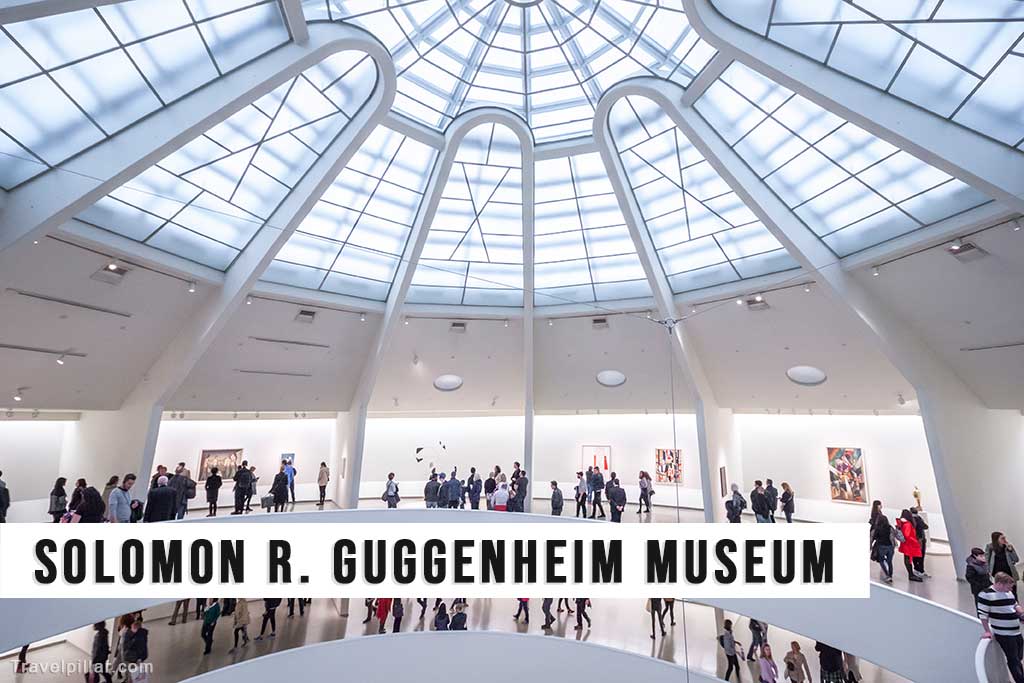
Frank Lloyd Wright’s design emphasises a continuous viewing experience. Visitors ascend by elevator and then walk down a gently sloping spiral ramp that encircles a central atrium. The open rotunda, illuminated by a large skylight, creates a unified exhibition space rather than a sequence of separate galleries. This approach encourages visitors to experience artworks in a fluid and uninterrupted manner.
In addition to its permanent collection, the museum hosts temporary exhibitions covering modern and contemporary art. Educational programmes, lectures, and publications contribute to its role as a centre for research and public engagement. The building itself was designated a UNESCO World Heritage Site in 2019 as part of a group of Frank Lloyd Wright structures recognised for their architectural significance.
The Solomon R. Guggenheim Museum remains one of New York’s principal cultural institutions. Its combination of innovative architecture and influential modern art collections ensures its continuing relevance within the city’s broader museum landscape.
Official website: https://www.guggenheim.org
Google map 4.4/5