
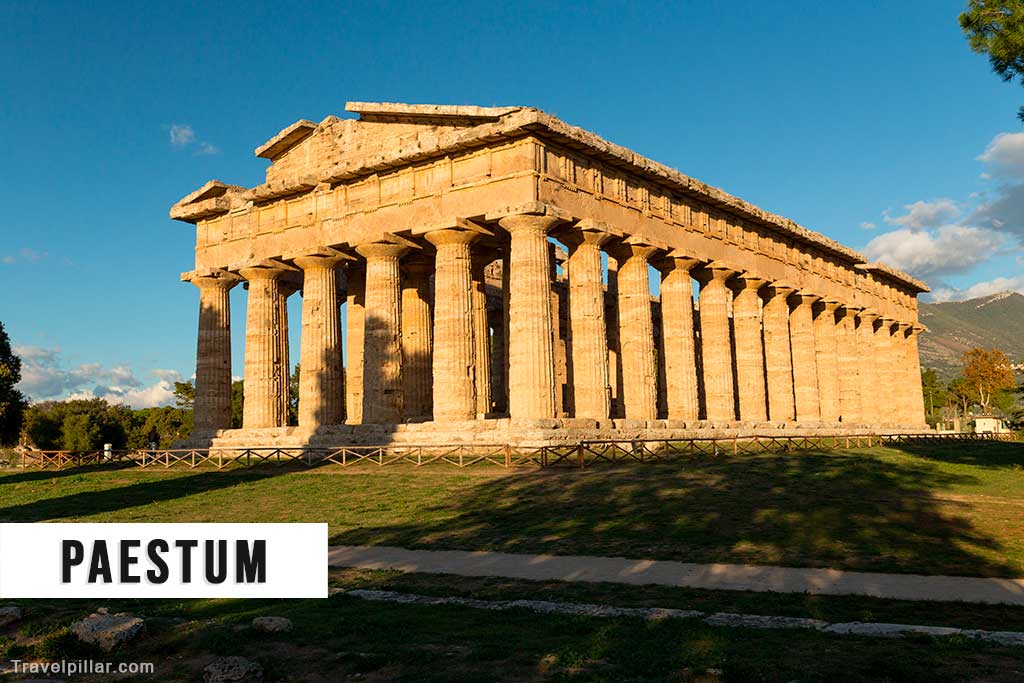
Paestum is an archaeological site located in the Campania region of southern Italy, approximately 100 kilometres southeast of Naples. It was originally founded as a Greek colony under the name Poseidonia in the 6th century BCE and later became a Roman settlement. The site is notable for its well-preserved ancient Greek temples, making it one of the most significant classical heritage sites in Italy.
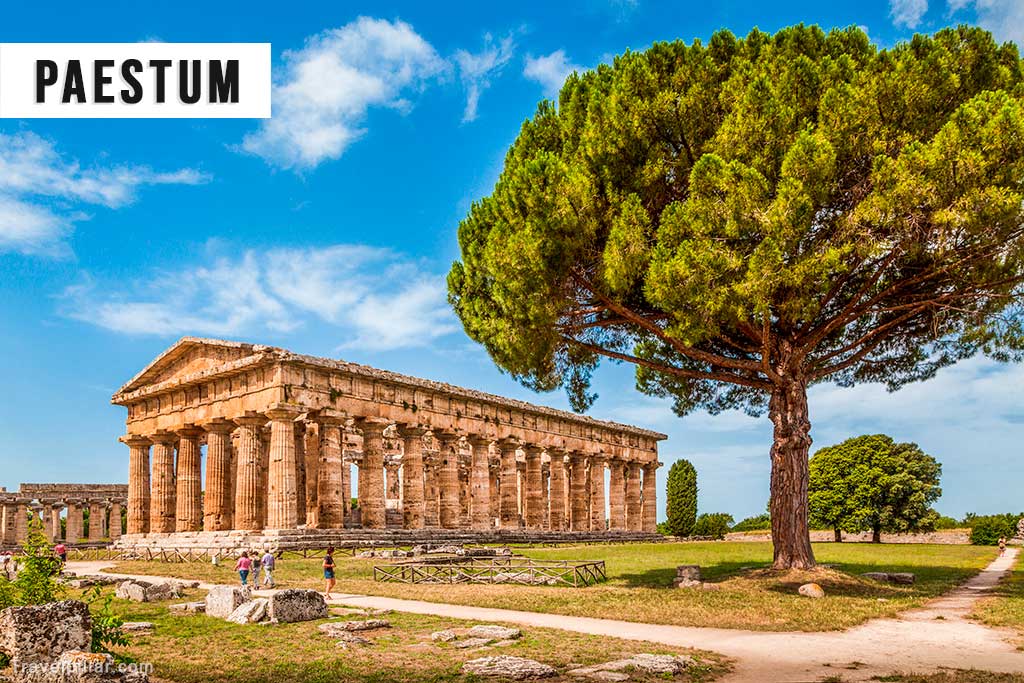
Three large Doric temples dominate the site: the Temple of Hera I, the Temple of Hera II (also referred to as the Temple of Neptune), and the Temple of Athena. These structures date from between the 6th and 5th centuries BCE and are among the best-preserved examples of Greek temple architecture outside of Greece. The temples are constructed from local limestone and remain structurally intact, with standing columns and architectural details still visible.
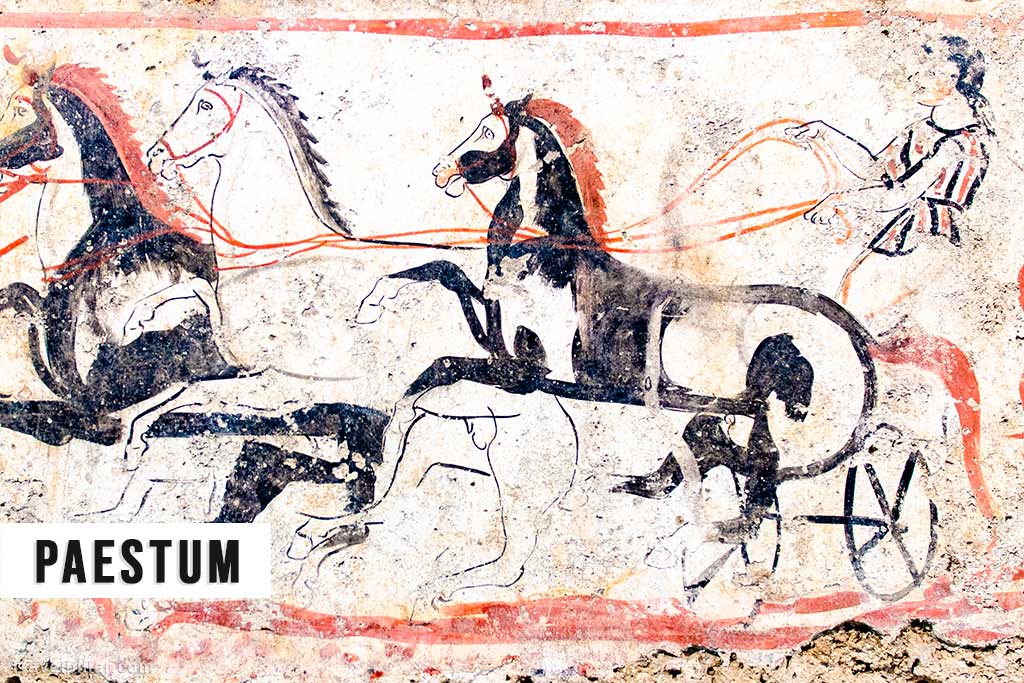
In addition to the temples, the site includes remnants of a Roman forum, amphitheatre, city walls, and residential buildings. The layout reflects the transition from Greek to Roman urban planning. Paestum also has a well-documented necropolis, and many of its tombs feature painted frescoes. One of the most famous artefacts discovered here is the Tomb of the Diver, a rare example of Greek painting from this period, now housed in the site’s museum.
The on-site Paestum Archaeological Museum displays artefacts from both the Greek and Roman periods, including sculptures, pottery, and funerary items. It provides historical context for the development of the site and its role within Magna Graecia, the area of southern Italy colonised by Greek settlers.
Paestum is a UNESCO World Heritage Site and is accessible by road and regional rail from Salerno and Naples. The surrounding area includes agricultural land, particularly known for buffalo mozzarella production. Visitor facilities include a ticket office, guided tours, and basic amenities. The site is open year-round and attracts both academic interest and general tourism. Paestum offers a comprehensive view of ancient Mediterranean urban development and religious architecture in a relatively compact and accessible setting.
Official website: https://parchipaestumvelia.cultura.gov.it/en/
Google map Archaeological Park of Paestum 4.7/5