
Plymouth is a historic port city on the south coast of Devon, renowned for its maritime heritage, naval history and spectacular waterfront. Situated between the mouths of the Rivers Plym and Tamar, the city overlooks Plymouth Sound, one of Britain’s most important natural harbours. Its strategic coastal position has shaped centuries of naval activity, international trade and maritime exploration, including the famous voyage of the Mayflower in 1620.
Today, Plymouth is one of southwest England’s largest cities and a popular destination for visitors interested in history, culture and coastal scenery. The city combines historic waterfront districts with modern shopping areas, museums and cultural attractions. Visitors can explore the famous Plymouth Hoe, discover the cobbled streets of the Barbican, visit the National Marine Aquarium or enjoy panoramic views across Plymouth Sound from Smeaton’s Tower.
The Best Places to Visit in Plymouth Devon
Plymouth Hoe
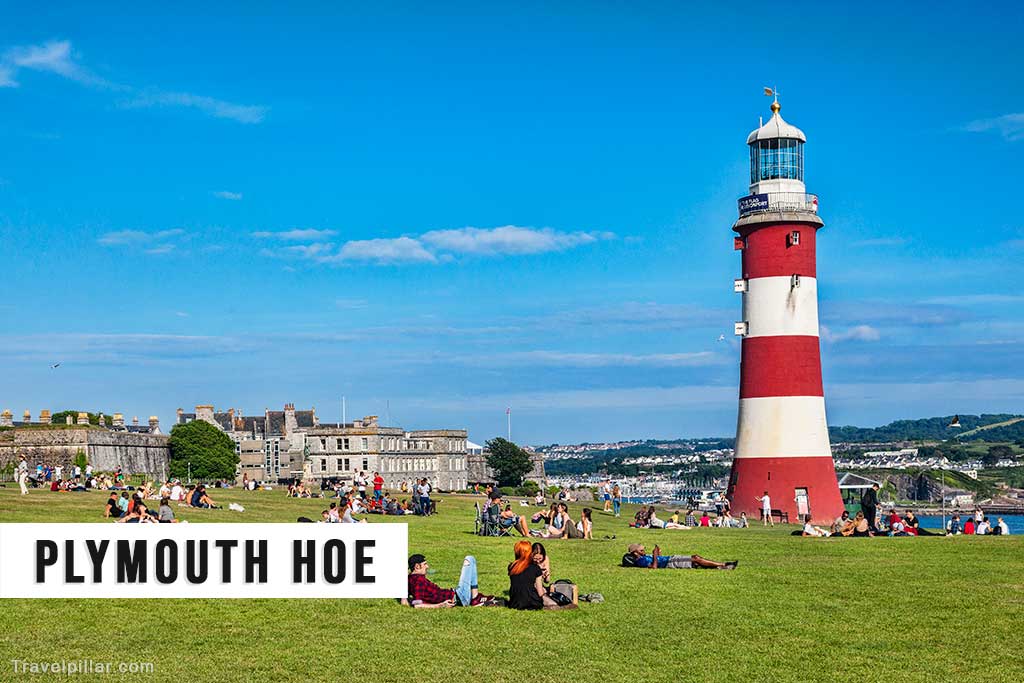
Plymouth Hoe is a prominent waterfront promenade and public open space overlooking Plymouth Sound. Renowned for its spectacular coastal views, the Hoe contains several important landmarks, including Smeaton’s Tower, the Royal Naval War Memorial and the Armada Memorial. The area is closely associated with Sir Francis Drake and the Spanish Armada of 1588. Its landscaped lawns and coastal paths make it one of Plymouth’s most popular public spaces.
Smeaton’s Tower
Smeaton’s Tower is a distinctive red-and-white lighthouse standing on Plymouth Hoe. Originally constructed in 1759 on the dangerous Eddystone Rocks, the lighthouse was dismantled and re-erected on the Hoe during the 1880s. Today, visitors can climb the historic tower to enjoy panoramic views across Plymouth Sound, the city and surrounding coastline. The lighthouse is one of Plymouth’s most recognisable landmarks.
The Barbican
The Barbican is Plymouth’s historic waterfront district, characterised by narrow cobbled streets, traditional buildings and a picturesque harbour. Once an important centre for maritime trade, the area now contains independent shops, art galleries, restaurants and traditional pubs. Visitors can explore the historic streets, discover the Mayflower Steps or enjoy views across Sutton Harbour, where fishing boats and leisure craft remain an important feature.
Mayflower Steps
The Mayflower Steps commemorate the departure of the Mayflower from Plymouth in 1620, carrying English settlers across the Atlantic to North America. Located near the Barbican waterfront, the memorial marks the approximate area from which the historic voyage began. The original departure point is not precisely known, but the site remains an important landmark associated with Plymouth’s maritime history and transatlantic connections.
National Marine Aquarium
The National Marine Aquarium is one of Plymouth’s leading family attractions, situated beside Sutton Harbour. The aquarium contains extensive displays of marine life from British coastal waters and tropical oceans, including sharks, rays and colourful reef fish. Its exhibitions explore marine conservation, ocean ecosystems and the importance of protecting aquatic environments. The attraction is particularly popular with families and visitors interested in marine biology.
Official website: https://www.national-aquarium.co.uk/
The Box
The Box is Plymouth’s principal museum, art gallery and cultural heritage centre, opened in 2020. Its extensive collections cover archaeology, natural history, maritime exploration, local history and fine art. Exhibitions include material relating to Plymouth’s naval heritage and its connections with international exploration. The museum occupies a combination of historic and contemporary buildings in the city centre.
Official website: https://www.theboxplymouth.com/
Royal William Yard
Royal William Yard is an impressive former naval victualling complex situated beside the River Tamar, west of Plymouth Hoe. Constructed during the 19th century, its monumental limestone buildings originally supplied food and provisions to Royal Navy ships. Today, the restored waterfront development contains restaurants, cafés, galleries and residential apartments. Its historic architecture and attractive harbour setting make it a popular destination for visitors.
Mount Edgcumbe House and Country Park
Mount Edgcumbe House and Country Park is a historic estate situated across the River Tamar from Plymouth, on the Cornish side of Plymouth Sound. The estate features an impressive Tudor mansion, formal gardens, extensive parkland and scenic coastal walking routes. Visitors can reach the area by passenger ferry from Plymouth, making it a popular excursion combining history, gardens and spectacular waterfront views.
Saltram House
Saltram House is an elegant Georgian country house situated on the eastern outskirts of Plymouth, overlooking the River Plym. Managed by the National Trust, the estate contains beautifully preserved interiors, historic paintings, landscaped gardens and extensive parkland. Its collections reflect the wealth and cultural interests of the Parker family, while the surrounding grounds provide attractive woodland and riverside walks.
Official website: https://www.nationaltrust.org.uk/
Some More Things You Can Do
Coastal Walks: Plymouth offers attractive waterfront walking routes around the Hoe, Barbican and Royal William Yard. Longer walks are available along the South West Coast Path and the nearby coastline of the South Devon National Landscape.
Boat Trips: Passenger ferries and harbour cruises provide opportunities to explore Plymouth Sound, the River Tamar and the surrounding coastline. Popular services include ferries to Mount Edgcumbe and scenic trips around the harbour.
Maritime History: Discover Plymouth’s naval heritage through its historic waterfront, military memorials, former dockyard buildings and museums.
Food and Drink: Plymouth has a wide selection of restaurants, traditional pubs and independent cafés, particularly around the Barbican and Royal William Yard.
Shopping: The city centre contains major shopping streets, modern retail developments and independent businesses, while the Barbican offers galleries, boutiques and specialist shops.