
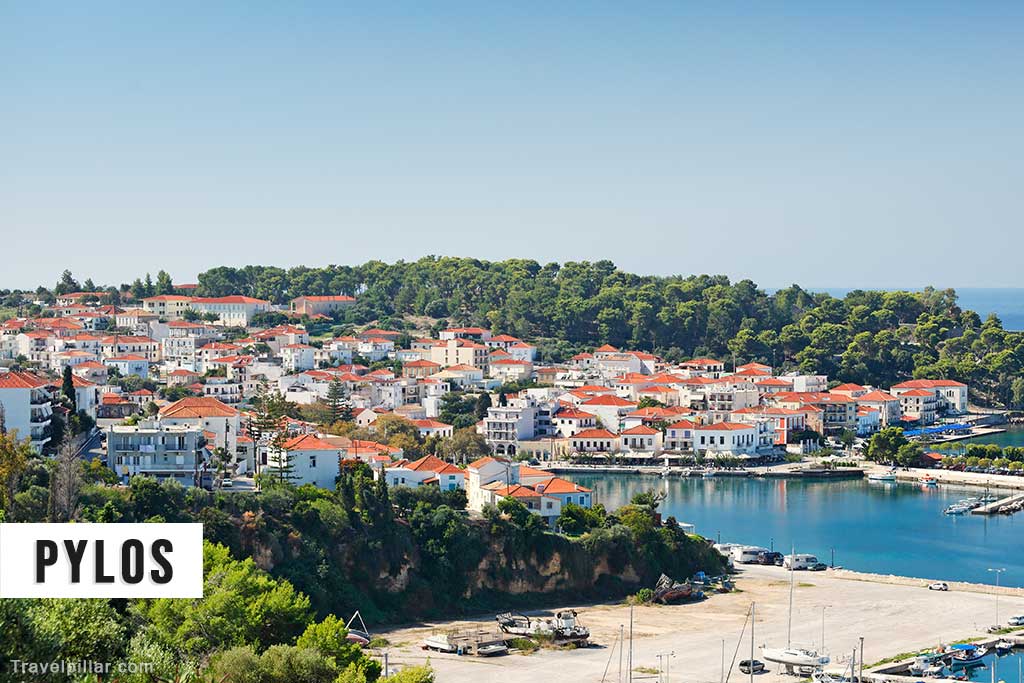
Pylos is a coastal town located in the southwestern Peloponnese, within the region of Messenia. Situated along Navarino Bay, it has a long history shaped by its strategic maritime position. Known in antiquity as the site of the Mycenaean Palace of Nestor, Pylos played an important role in Homeric legend and later in historical events such as the Battle of Pylos during the Peloponnesian War.
The town gained renewed prominence in the modern era following the Battle of Navarino in 1827, a decisive naval engagement during the Greek War of Independence. Allied British, French, and Russian fleets defeated the Ottoman-Egyptian armada, contributing to the eventual establishment of an independent Greek state. A memorial on the waterfront commemorates the battle.
Pylos’s contemporary layout reflects 19th-century urban planning introduced under French influence. The central square, Plateia Trion Navarchon, is surrounded by neoclassical buildings, cafes, and shaded by large trees. The town’s harbor remains active with fishing and recreational vessels, and ferry services are available to nearby destinations during the summer season.
To the south of the town lies Neokastro, or the New Castle, a 16th-century Ottoman fortress that later passed into Venetian and French hands. The fortress is open to visitors and includes a museum and restored sections such as the hexagonal bastion and church of Metamorphosis. From the ramparts, there are views across the bay and surrounding landscape.
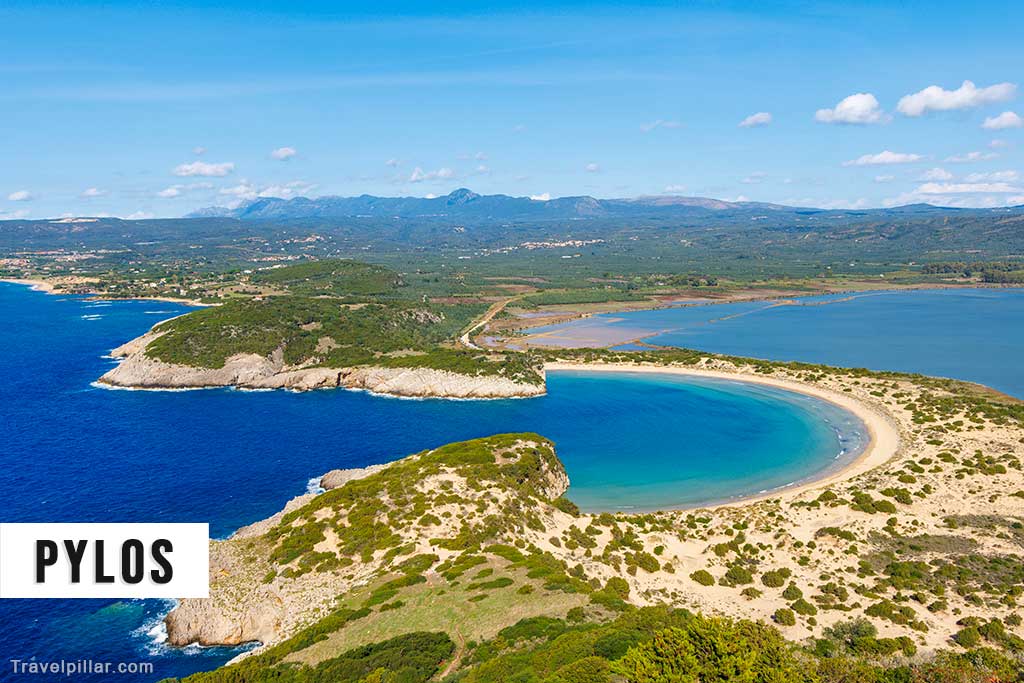
Nearby attractions include the Mycenaean Palace of Nestor, located approximately 15 kilometers to the north. Excavated in the 20th century, it provides insight into Bronze Age administration and architecture. Additionally, the Gialova Lagoon and Voidokilia Beach are situated close to Pylos and are notable for their ecological and scenic value.
Pylos serves as a base for exploring the broader Messenian region and offers accommodations, restaurants, and access to local archaeological and natural sites. It is accessible by road from Kalamata and other parts of the Peloponnese, with regional transport services operating throughout the year.