
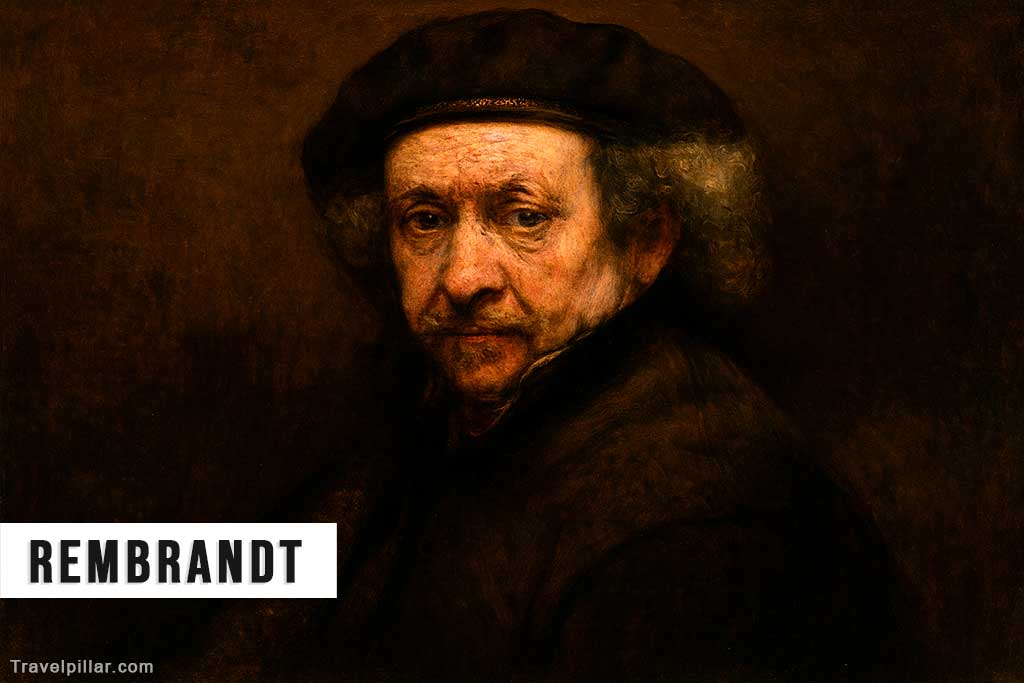
Rembrandt Harmenszoon van Rijn (1606-1669), one of the most celebrated artists of the Dutch Golden Age, left an indelible mark on the history of Western art. Born in Leiden, he studied under Pieter Lastman before opening his own studio. Eventually, he moved to Amsterdam, a thriving city that was the center of commerce and art in the 17th century.
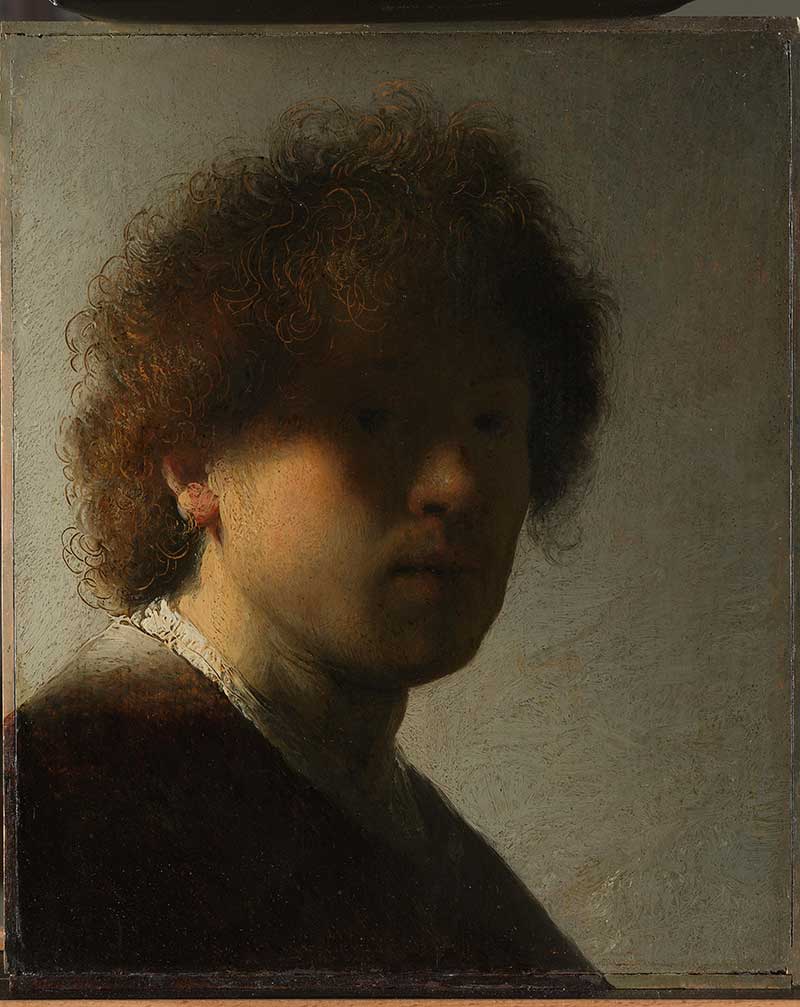
Rembrandt’s oeuvre is vast, including around 300 etchings, 2,000 drawings, and 300 paintings. His works encompass a wide range of genres, including self-portraits, historical scenes, landscapes, and portraiture. His signature style, marked by innovative techniques in illumination and shadowing (chiaroscuro), results in dramatic, deeply emotional compositions. The depth of human emotion that he achieved in his works remains unparalleled.
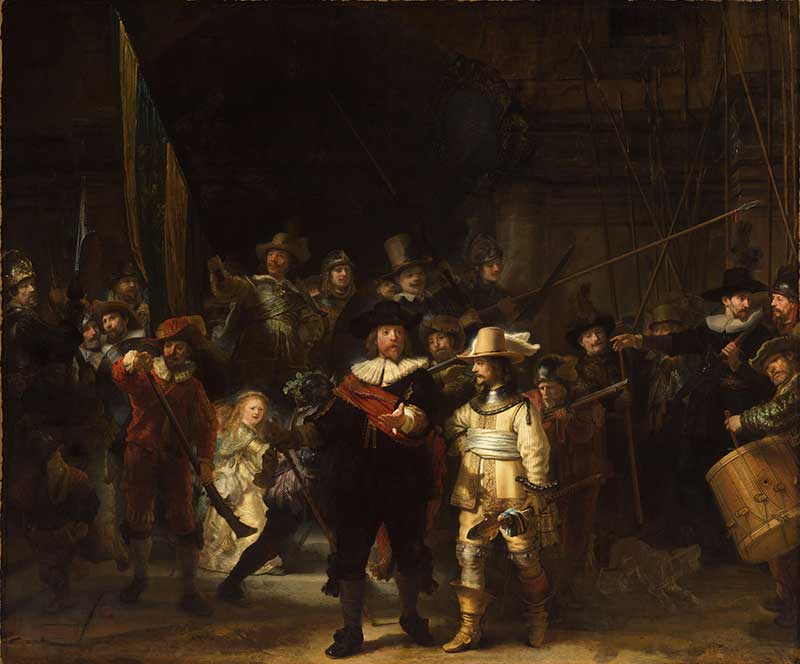
Some of his most notable works include “The Night Watch,” “Self-Portrait with Two Circles,” and “The Jewish Bride.” His series of self-portraits, created throughout his life, provide an intimate look into his personal and artistic evolution, documenting his ageing process with unparalleled honesty.
Rembrandt’s life was marked by periods of success and tragedy. While he gained substantial recognition and wealth, he also experienced personal losses and financial struggles, ultimately dying insolvent.
Despite the turbulence of his life, Rembrandt’s influence on European art was profound. He is particularly celebrated for his ability to make the viewer feel a deep connection with the subject matter, allowing the viewer to experience the humanity and inner life of the figures depicted. His revolutionary use of light and shadow had a significant impact on the development of painting techniques and has continued to inspire artists to this day. In the realm of visual art, Rembrandt remains a titan, revered for his extraordinary ability to depict the human condition.