
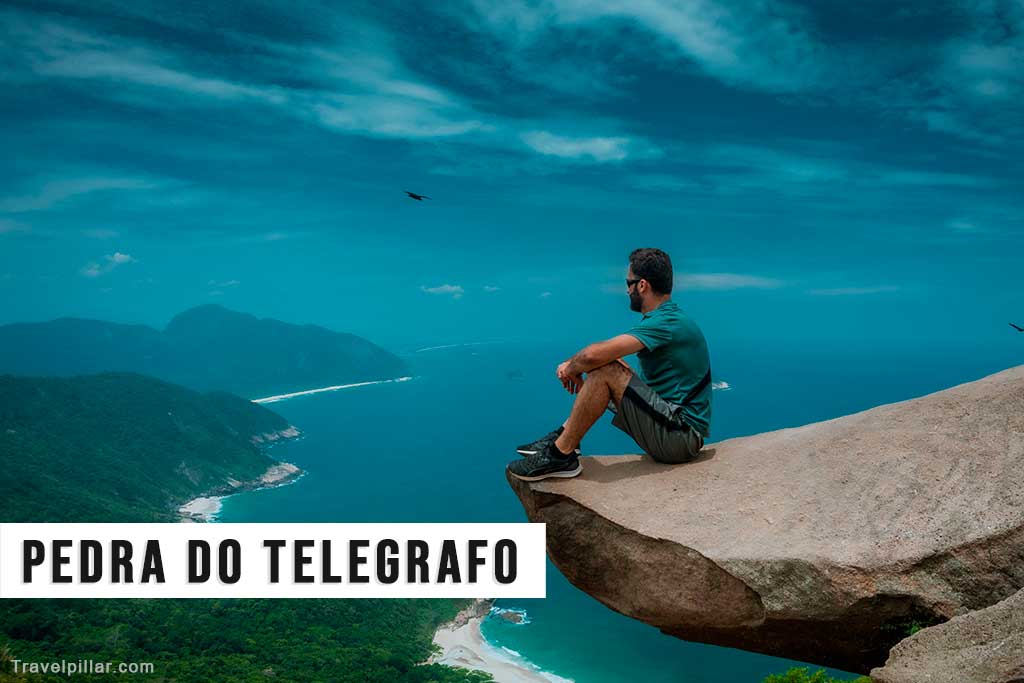
Pedra do Telegrafo is a rocky outcrop located in the Pedra Branca State Park, in the western zone of Rio de Janeiro. It has become well known for photographs that create an optical illusion of people hanging over a steep cliff, although the drop is far less dramatic than it appears in images. The site is situated in the Barra de Guaratiba neighborhood, approximately 60 kilometers from the city center, and is reached via a hiking trail.

The trail to Pedra do Telegrafo begins near Praia Grande in Barra de Guaratiba and is roughly 1.5 kilometers in length, with a moderate level of difficulty. It typically takes 40 to 60 minutes to complete, depending on fitness level and weather conditions. The path passes through sections of Atlantic Forest, offering views over the coastline and nearby beaches, including Grumari, Prainha, and Barra de Guaratiba. On clear days, it is also possible to see Pedra da Gávea, the Restinga da Marambaia sandbank, and parts of the city’s western coastline.
The summit area is small, with several rock formations that serve as popular photo spots. Visitors often queue to take pictures, particularly during weekends and holidays, as the attraction has become widely promoted on social media. Early morning visits are recommended to avoid crowds and to experience more favorable lighting conditions for photography.
Facilities near the base of the trail are limited, although there are small local shops and restaurants in Barra de Guaratiba. It is advisable to bring water, sunscreen, and insect repellent. The area is part of a protected natural environment, and visitors are encouraged to follow conservation guidelines, including carrying out all litter and avoiding damage to vegetation.
Pedra do Telégrafo combines a short hike, panoramic views, and a distinctive photographic opportunity. While its reputation is largely tied to its social media appeal, the site also offers access to less-visited areas of Rio de Janeiro’s western region, providing an alternative to the city’s more central attractions. Its location within the state park ensures a natural setting, contributing to its appeal for those interested in outdoor activities and coastal landscapes.