
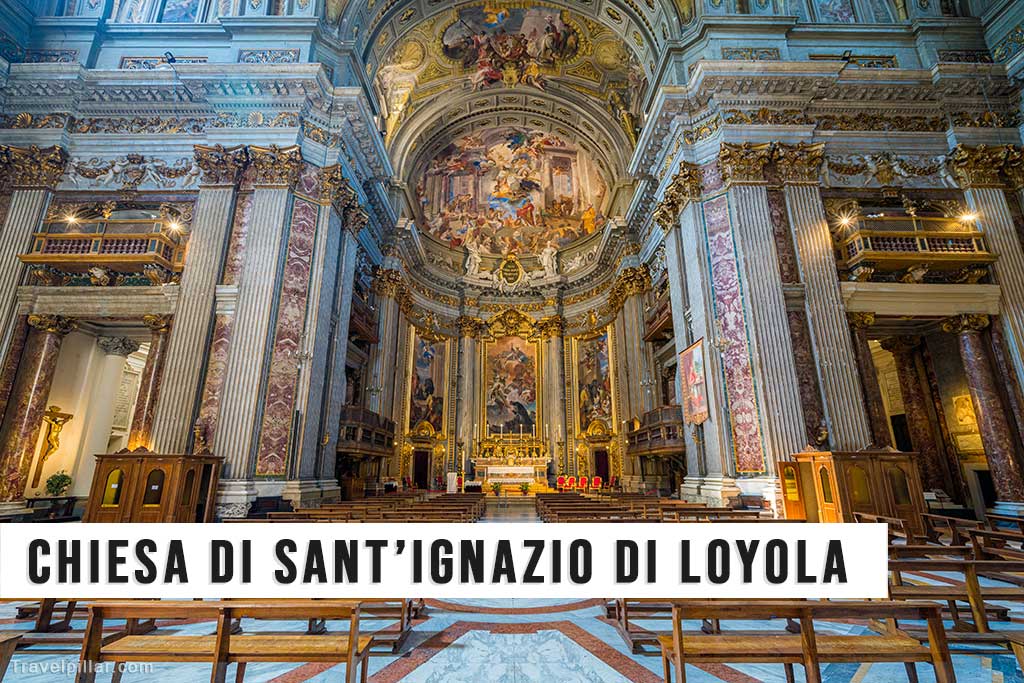
Chiesa di Sant’Ignazio di Loyola, located in the center of Rome, is a prominent Baroque church dedicated to St. Ignatius of Loyola, the founder of the Jesuit order. Constructed in the 17th century, the church is a significant example of Baroque architecture and art, reflecting the grandeur and religious fervor of the period.
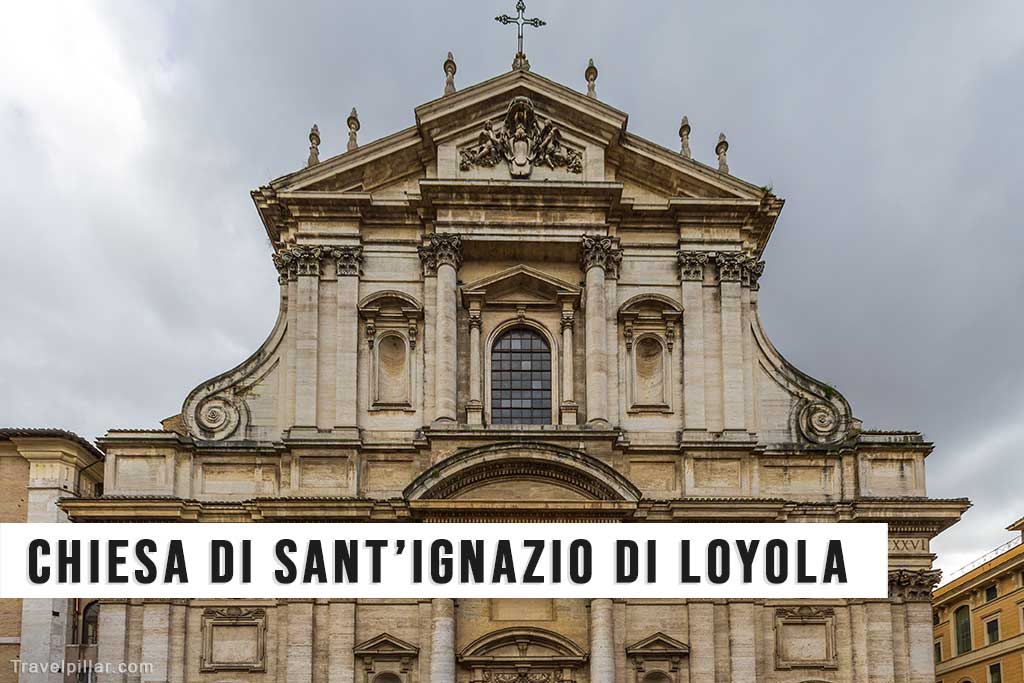
The church was designed by Jesuit architect Orazio Grassi and was completed in 1650. It was intended to serve as the church of the Roman College, the principal educational institution of the Jesuit order. The facade of Sant’Ignazio is a notable example of Baroque style, characterized by its symmetry, classical columns, and decorative elements that emphasize the vertical lines, drawing the viewer’s eye upward.
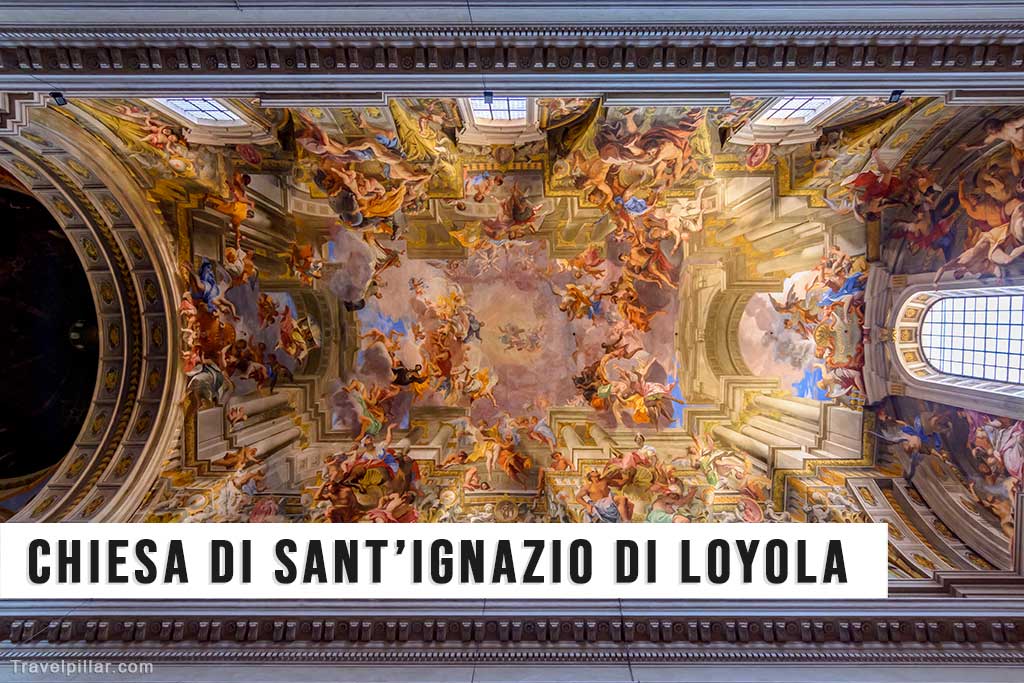
The interior of the church is renowned for its elaborate frescoes and optical illusions, particularly the trompe-l’oeil ceiling painted by Andrea Pozzo. The ceiling fresco, The Apotheosis of Saint Ignatius, depicts St. Ignatius being welcomed into heaven, surrounded by allegorical figures representing the continents where Jesuits were active. Pozzo’s use of perspective creates the illusion of a domed ceiling, where none exists, showcasing the Baroque interest in illusion and visual spectacle.
Another remarkable feature of the church is Pozzo’s painted “dome,” a flat ceiling designed to appear as a three-dimensional dome when viewed from a specific spot on the floor. This innovative use of perspective was a hallmark of Baroque art and reflects the Jesuits’ emphasis on education and engagement through visual and artistic means.
The church also houses several chapels dedicated to various saints and Jesuit figures, each adorned with paintings, sculptures, and altars. The main altar, richly decorated with marble and gilded details, serves as the focal point of the church.
Chiesa di Sant’Ignazio di Loyola remains an active place of worship and a significant tourist attraction in Rome. Its artistic achievements, particularly its Baroque frescoes and architectural features, make it a notable site for visitors interested in art, architecture, and religious history.