
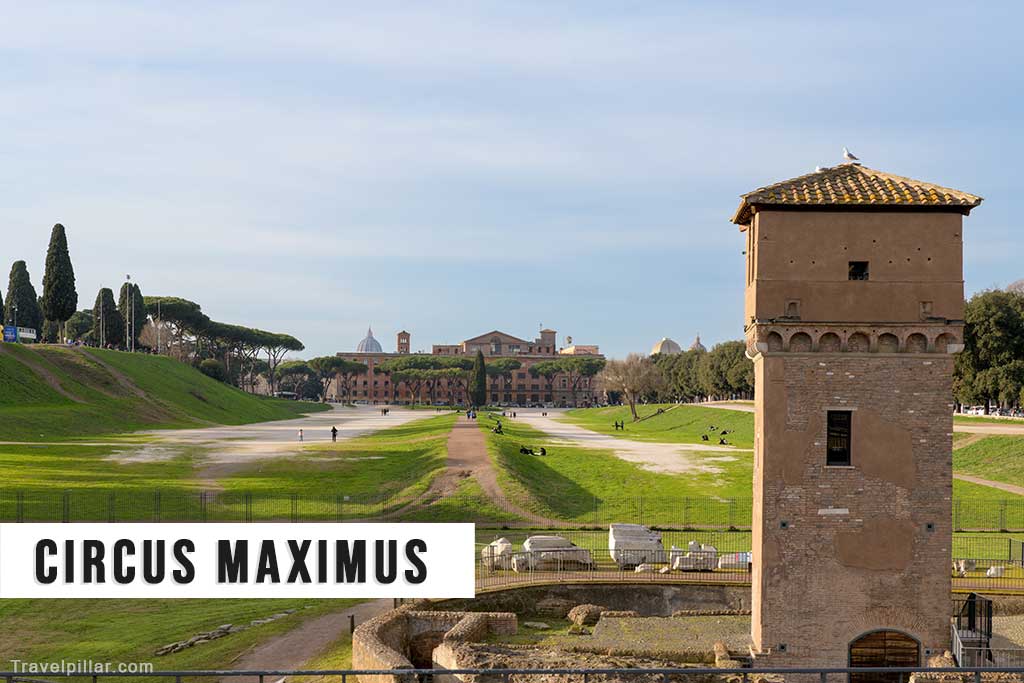
The Circus Maximus, located between Palatine Hill and Aventine Hill, was ancient Rome’s largest stadium and one of its most important public entertainment venues. Measuring approximately 600 metres in length and 140 metres in width, it could accommodate an estimated 150,000 to 250,000 spectators, making it the largest chariot racing stadium in the Roman world.

Originally constructed as a simple track in the 6th century BCE under the reign of the Tarquin kings, it underwent multiple renovations and expansions over the centuries. Julius Caesar rebuilt it in the 1st century BCE, adding seating and improving its structure, while later emperors such as Augustus and Trajan further enlarged and embellished it. The Circus Maximus was primarily used for ludi, public games held in honour of Roman gods, which included chariot races, religious processions, and occasionally other spectacles such as beast hunts.
The spina, a central barrier running down the middle of the track, was decorated with obelisks, statues, and turning posts (metae). One of its obelisks, originally from Egypt, now stands in Piazza del Popolo, while another is in Piazza San Giovanni in Laterano. Races consisted of seven laps and were often fast and dangerous, with teams competing fiercely for victory and public favour.
After the fall of the Western Roman Empire, the Circus Maximus fell into disuse, serving as farmland during the medieval period. Excavations have revealed the layout of the seating tiers and the remains of the starting gates (carceres), offering a clear understanding of its original structure.
Today, the site is a large public park and open space used for concerts, celebrations, and public gatherings. While little remains of the original seating structures, its vast scale is evident in the open field, allowing visitors to visualise its historical significance. The Circus Maximus remains an essential site for understanding Rome’s social life, public entertainment, and engineering achievements during its imperial peak.
Google map 4.5/5