
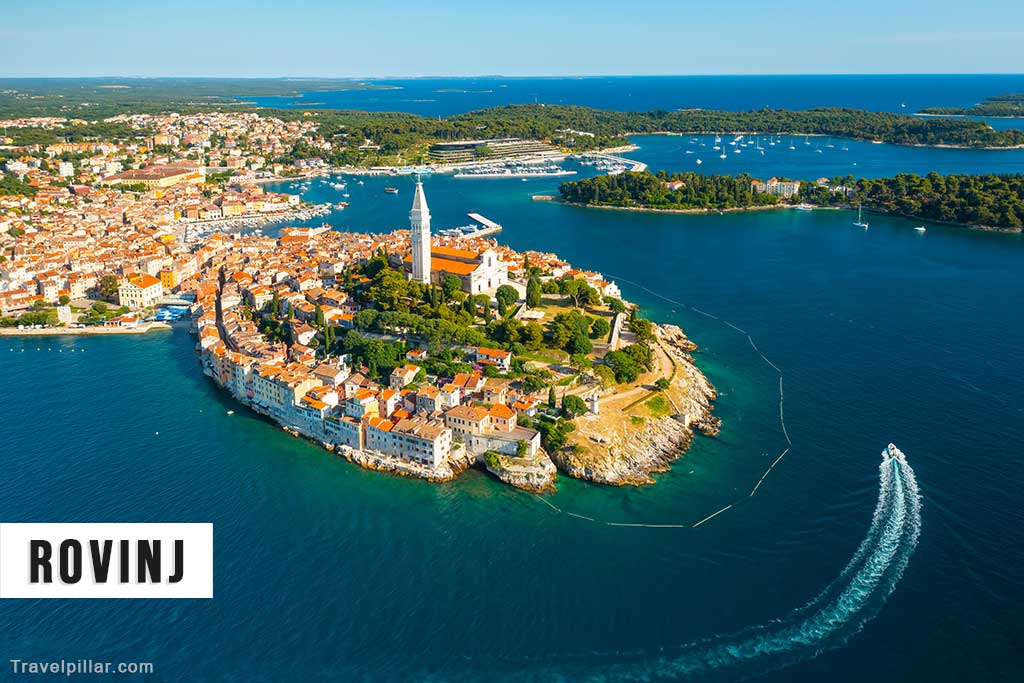
Rovinj is a historic town on the Istrian peninsula, situated on Adriatic coast of Croatia. Originally an island, it was connected to the mainland in the 18th century, creating its present-day layout. The town developed under Venetian influence from the 13th to the 18th centuries, leaving a legacy of narrow streets, squares, and architecture that remains a defining feature. Today, Rovinj is both a working fishing port and a leading tourist destination.
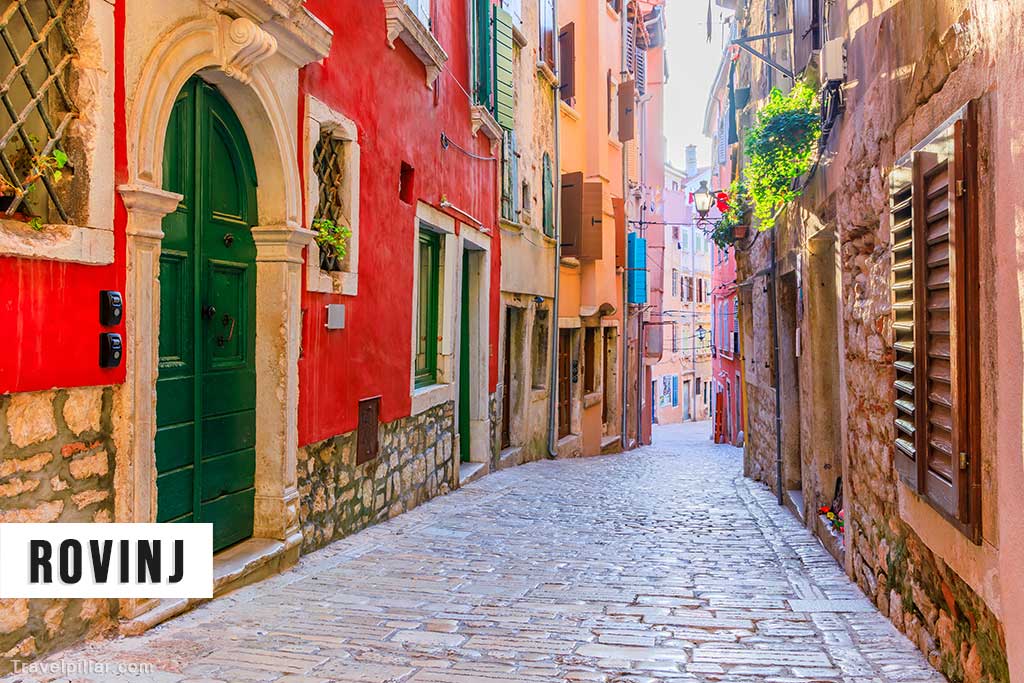
The old town is characterised by winding cobbled streets, stone houses with colourful facades, and a compact layout that reflects its medieval origins. Central to the skyline is the Church of St. Euphemia, a baroque structure built in the 18th century on the site of earlier churches. Its tall bell tower, modelled on that of St. Mark’s in Venice, dominates Rovinj and provides views across the Adriatic and surrounding countryside.
Rovinj’s harbour has historically been central to its economy, with fishing remaining a visible part of daily life. The waterfront is lined with cafes, restaurants, and boats, blending traditional activity with modern tourism. The town is also known for its art scene, with numerous galleries and annual cultural events. The Grisia art exhibition, held each summer in one of Rovinj’s streets, is among the most notable cultural gatherings in Istria.
Natural surroundings add to Rovinj’s appeal. The nearby Punta Corrente Forest Park, established in the late 19th century, offers walking and cycling paths among pine trees and Mediterranean vegetation. Offshore, the Rovinj Archipelago consists of 14 small islands, adding opportunities for boat trips and exploration. Beaches in the area are primarily rocky or pebble-covered, consistent with the wider Istrian coastline.
Rovinj’s combination of Venetian heritage, fishing traditions, and natural landscapes makes it one of Croatia’s most visited towns. Its old town retains a strong sense of history, while its cultural life and coastal setting ensure its continuing significance as a centre for both residents and visitors in Istria.
Official tourism website: https://www.rovinj-tourism.com/